Shared Story
Black-Eyed Harvest
5 segments
The field is a ruin of trampled grass and dark stains. Morning light sits on it, too clean for what it shows. You stand with your boots half sunk in mud and blood, breathing hard enough to hurt, scanning the wrecked bodies until your eyes catch on Jack.
He is curled near the sideline fence, gray hoodie filthy, fists locked so tight the knuckles have gone white. One sneaker has come off. The laces trail in the grass like a loose thread.
“Jack. Look at me.”
He lifts his head a fraction. His face looks emptied out by shock.
Across the lot, men are stumbling into one another, helping, accusing, praying, laughing too loud. One has both hands pressed to a torn cheek. Another sits in the dirt, rocking, whispering the same broken phrase. Sirens are coming now, faint and growing, but they might as well be from another town. This place has already changed.
Then you see Ron at the edge of the parking lot. Dark jacket. Dust on the sleeves. His camera bag hangs open at his hip, and the side pocket is empty where a lens should be. He is not shocked. He looks drawn. Listening. He turns his head toward the spot where the craft vanished, as if something there is still scraping at him from the inside.
When he sees you, relief hits his face fast and ugly, like he has been holding it down with both hands.
“Lucas, don’t come closer yet. There’s something wrong with the others, and I think it started before they landed.”
Jack scrambles to his knees beside you, shaking now that he has found you. He grabs your sleeve. Not hard. Just enough to say he is afraid to let go.
Behind him, one of the men starts screaming for his wife.
At the same time, it lands on you. You do not know if Martha is alive, trapped, or already beyond your voice. Ron takes one slow step toward you, then stops, eyes fixed on the field like he expects it to speak first. What did he see before the others came down?
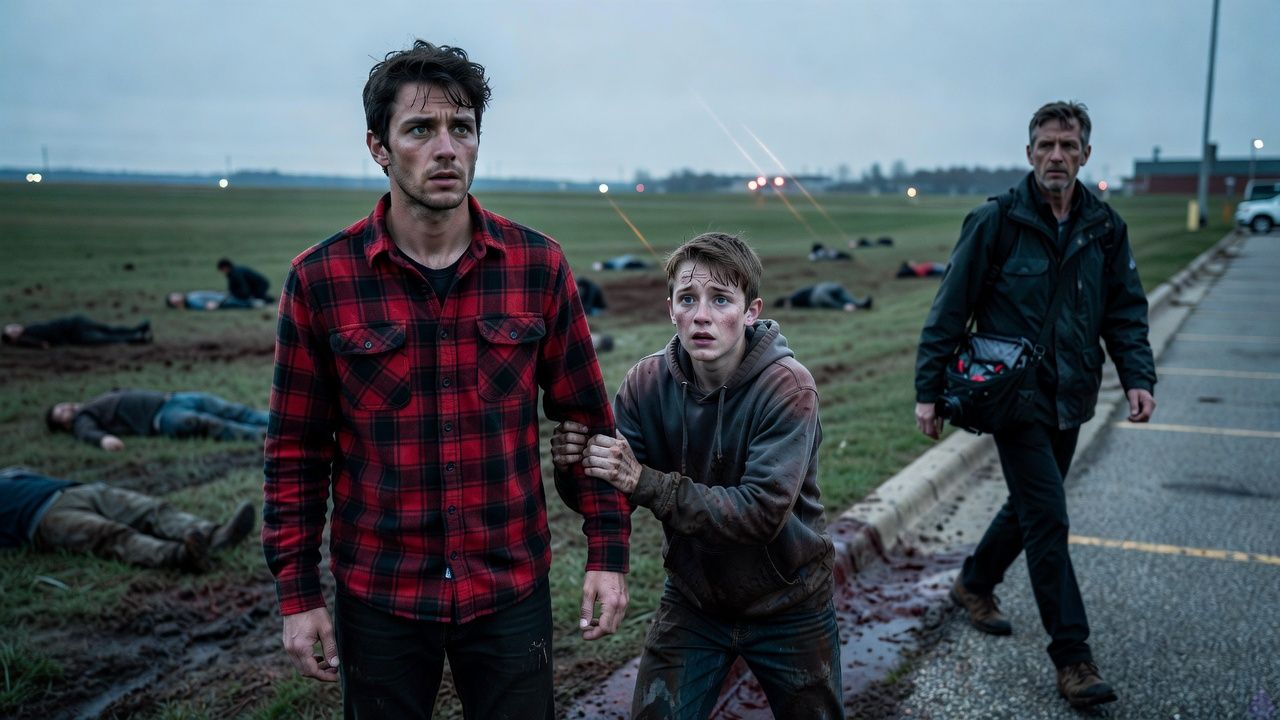
You tighten your grip on Jack’s shoulder and haul him up before the fear can dig in deeper. He stumbles once. Catches himself. His jaw locks so hard a twitch jumps in his cheek.
You keep him moving, one hand flat between his shoulder blades, steering him around the darkest patch of blood and the people who are staring too long at it.
“Walk,” you tell him. Rough. Steady enough to obey. “Stay with me.”
Jack swallows. Starts forward. Not fast. Just enough.
His breathing comes in strips. Every few steps he looks back at the field like he expects the ground to split again. You don’t let him turn all the way. You keep him angled toward the trucks, the church lot, anywhere with walls, engines, and fewer dead men on the grass. Not safe. Just less exposed. Good enough for now.
Ron falls in on your other side. Close, but not crowding. His eyes keep moving in short, exact cuts across the field, taking inventory no one wants. His shirt sleeve is torn at the cuff. One button near his collar is missing. You notice because he notices everything else.
He lowers his voice. “I saw them take Martha and the others like they were following a signal. Not fear. Not choice. A pull. Some of the men here reacted before the sound hit.”
He glances toward the church lot. “This started earlier than we thought. Maybe earlier than the blackout.”
That hits hard. Earlier than the scream. Earlier than the lights dying. Earlier than anyone should have been moving like puppets.
You look at Jack. Seventeen. Pale under the dirt, trying to hold himself together with a rigid back and a face that says he won’t ask for comfort even when he needs it. He catches you looking and straightens higher, as if posture can make him whole again.
“Dad,” he says, low and thin. “Mom’s still alive, right?”
The question hangs there.
You have no answer that won’t break something. Only the road ahead, Ron’s warning, and the fact that Jack is moving because you made him move.
Behind you, the field keeps groaning with the injured. Ahead, the parking lot waits under the church lights, and Ron is watching you like he already knows the next choice will cost more than the last one did. If the pull started before the blackout, what else did you miss?
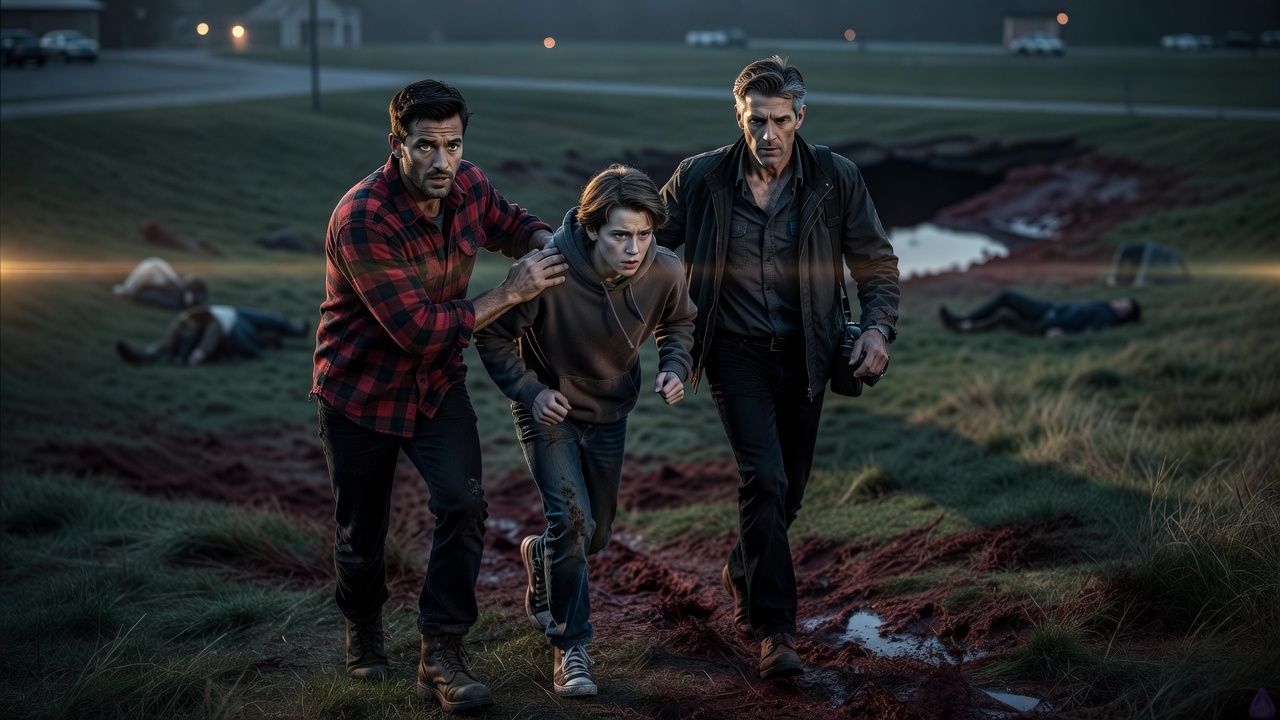
You stop so fast Jack nearly clips your shoulder. He catches himself, sucking in air, and Ron halts a step later, careful not to crowd you. The field noise falls away. Not gone. Just farther off, as if the three of you have stepped behind a sheet of glass.
“Tell me exactly what you saw,” you say. Low. Flat. “Before the blackout. Before any of this got worse.”
Ron drags a hand over his mouth, thinking. Planning. When he drops it, dust has turned the skin around his lips gray. “Not the landing. Earlier. I was by my truck, shooting the sky over the field because the clouds looked wrong.” His eyes flick to the road, then back. “Then I saw the women. Martha was with them. So were the girls. They were walking like they’d heard something no one else could hear. No panic. No arguing. Just moving. Blank-faced. One by one. Like they’d been called.”
Jack makes a small noise beside you, half disbelief, half a choke. His fingers close on your flannel for balance.
Ron goes on before either of you can stop him.
“Then I saw one of them. One of the tall figures with the black eyes. It raised a hand toward the men near the fence. Not at them. Over them. Like it was aiming past the body. Pressure, maybe. Command.” He swallows. “The sound hit a second later. I only stayed standing because I had my camera up and went down with it.”
A thought clicks into place. The same kind of timing. The same rhythm. First the women. Then the sound. Then the collapse.
Ron watches you take that in.
“I think the device is part of it,” he says. “I think the sound is part of it. But the women started moving before that. Which means the take was already in progress.”
That hits hard. Not chaos. A sequence. A trap with steps you missed.
Jack stares at the grass, jaw working, trying not to come apart. Behind you, a man starts yelling for his sister. Another voice answers with a laugh that sounds wrong in the throat. The morning keeps moving anyway.
Ron draws a breath. “There was one more thing. Martha looked straight past the field, like she saw something inside the craft before she boarded. Like she knew it.”
You go still. Martha. Not afraid. Not surprised. Recognizing.
Which means this did not start with strangers falling out of the sky. So what, exactly, did Martha know?
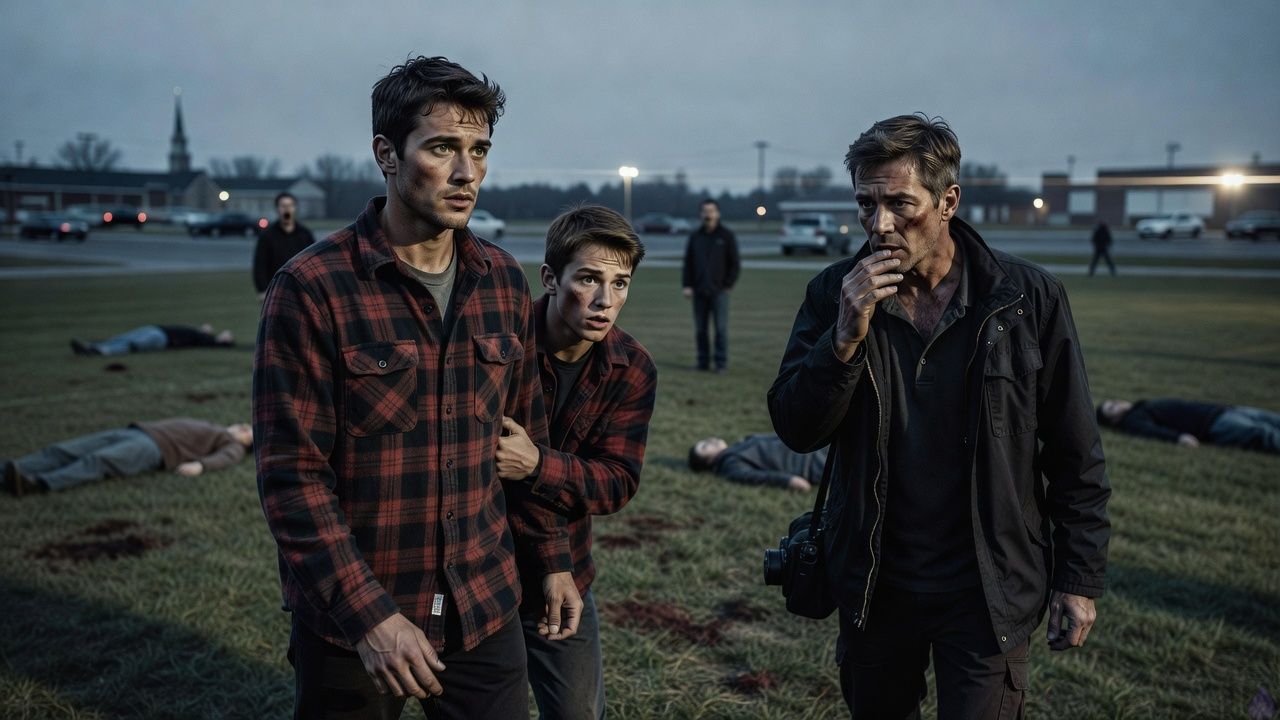
You take the camera bag from Ron before he can finish his next breath. He lets you, though his hand stays on the strap a second too long. Protective. Guilty.
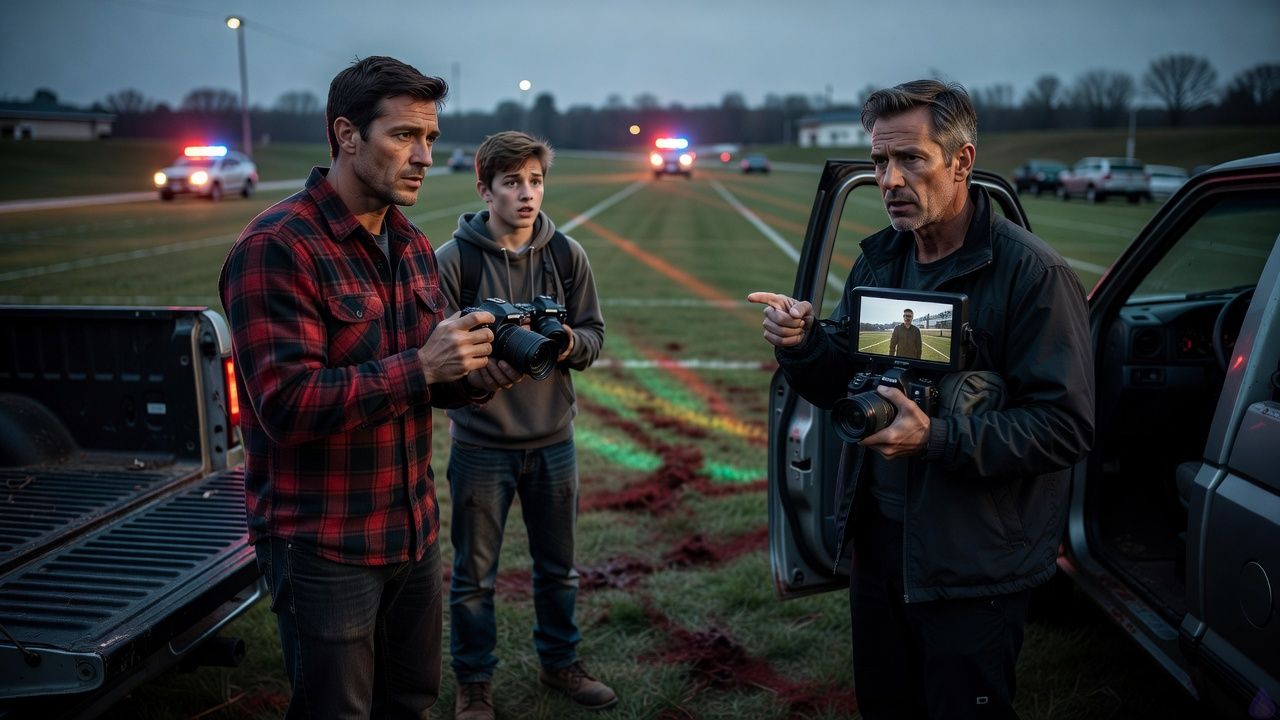
Jack stays close while you kneel by the dusty pickup’s tailgate and unzip the bag. The camera body is scraped at one corner. The lens cap is gone. Inside, wrapped in a soft cloth, you find a stack of memory cards and a second battery pack. Ron watches your hands as if they might accuse him.
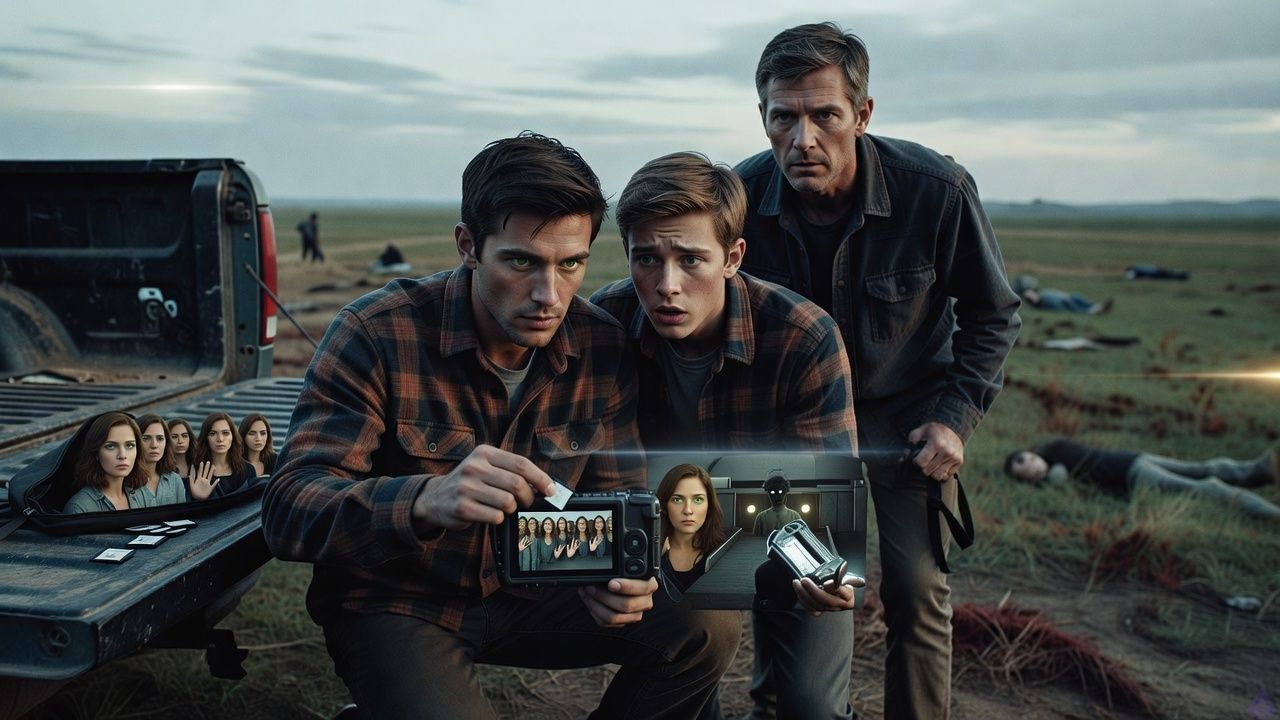
You slot the first card into the small display screen. The thumbnail comes up at once.
The field. The craft. The women.
Martha stands in the center of the frame, face blank, eyes fixed on something past the camera. Not asleep. Not drugged. Worse. Her body is moving, but she’s not in it. Pulled tight toward the craft like a line under strain.
Jack makes a sharp sound through his teeth.
You flip to the next image. A row of women near the open ramp, all of them wearing the same empty look. One has her hand lifted slightly, fingers curled as if reaching for a voice only she can hear. In the corner of the frame, one of the black-eyed figures stands half-turned, the device in its hand catching the light. The angle is wrong for a weapon. It looks like a trigger.
Ron’s voice is low. “That’s why I kept the cards. I knew nobody would believe it without proof.”
You keep scrolling.
The sequence gets uglier, not in blood, but in certainty. Every frame shows the same pattern. The women are already in motion before the sound. Their faces go blank before the men start screaming. Martha’s last clear image is the hardest. She has turned her head just enough to look straight at the craft, mouth slightly open, like she almost said something to whoever was inside.
Then the screen freezes on a dim, blurred shot of the ramp.
A figure stands just inside the craft. Human-shaped. Wrong in the way it holds itself. Not one of the two tall visitors. Someone else. Smaller. Waiting.
Jack leans in so hard his shoulder brushes yours. “Dad,” he says, and his voice has changed. He is not asking if his mother is alive anymore. He is asking who was waiting for her.
The question hangs there, between you and Ron and the dead screen, and none of you can move past it yet.
You turn on Ron so fast the camera nearly slips from your hands.
“Who was that?” you snap. “The figure inside the ramp. Don’t tell me you don’t know.”
Ron goes still. The field noise drops away. For a second, the professional mask he’s worn since dawn cracks clean through. He looks older without it. Tired. Cornered.
“It wasn’t one of them,” he says. “Not exactly.”
Jack jerks his head up. You tighten your grip on the camera body and wait.
Ron draws a breath and points at the frozen frame. “I saw someone in there before the women finished boarding. A man. Local. Standing in the dark just inside the craft. He had a chain around one wrist.” His jaw ticks. “Sheriff Harlan.”
That lands hard. The sheriff who was supposed to keep order. The man who’d spent the morning in his official truck, telling people to go home, telling them to stay calm.
Ron nods once. Grim. “I didn’t say it because I thought I was wrong. Then I got the next shot and he was gone. But the women kept moving like they were following him. Not the aliens. Him.”
You thumb back through the images. There he is, or part of him: half-shadowed near the ramp, one sleeve dark as if wet, face turned away. The camera caught him before the town knew anything was happening. Not a victim. Not fully. A door left open.
The truth settles in with a sick weight. The trance didn’t begin with the sound. It was guided. Maybe practiced. Maybe arranged by someone who knew exactly how to open the way and bring the others through it.
Jack’s voice comes rough. “So he helped them take Mom?”
Ron shakes his head once. Not comfort. “I think he helped them take all of them.”
You close the camera and hand it to Jack, then look past the field to the road where the first emergency vehicles are finally arriving. Blue and red wash over the wet grass. Too small. Too late for the dead. Too late for the missing. Not too late for whoever opened that ramp.
“Get in the truck,” you tell Jack.
He does. No argument this time.
Ron climbs into the passenger seat with the camera bag held like evidence. The three of you leave the field behind, carrying the proof, the name, and one hard fact: the craft did not simply take the women. Someone from town let it.
And Martha may have known his face before they took her.
What ending did you get?
Play the same story and make your own choices. Every path leads to a different ending.