How AI Interactive Fiction Works: A Complete Guide
You click a choice. The story shifts. A character you thought was trustworthy reveals their true motives, or maybe that slow-burn romance finally sparks into something more. But here’s what’s fascinating: the AI didn’t just pick from pre-written options. It generated this entire new direction based on your decision.
AI interactive fiction represents the biggest leap in storytelling since the printing press. Unlike traditional choose-your-own-adventure books with predetermined paths, modern ai story generator systems create narratives in real-time, adapting to your choices with unlimited branching possibilities.
The Engine Behind AI Stories
At its core, how ai stories work comes down to sophisticated language models trained on millions of stories. These systems understand narrative structure, character development, and genre conventions at a deep level. When you make a choice, the AI considers:
- Narrative momentum: Where should this story go next?
- Character consistency: How would this character realistically respond?
- Genre expectations: What do romance readers want vs. horror fans?
- Pacing requirements: Is this a slow-burn moment or time for action?
Think of it like having a writing partner who’s read every book in existence and can instantly craft the perfect next chapter based on your preferences.
From Prompt to Prose: The Generation Process
Here’s how ai interactive fiction transforms your choices into compelling narrative:
Step 1: Choice Processing When you select “Confront the mysterious stranger” instead of “Slip away quietly,” the system analyzes the implications. This involves more than determining what happens next. It’s about how this choice reshapes the entire story trajectory.
Step 2: Context Assembly The AI reviews everything that’s happened so far: character relationships, plot threads, established world-building details, and your reading preferences. It’s building a comprehensive understanding of where your unique story stands.
Step 3: Generation The system crafts the next scene, typically 200-400 words, maintaining narrative voice, advancing character arcs, and setting up future choice points. This involves genuine creative writing, not template filling.
Step 4: Quality Enhancement Advanced systems like NovelFlame run stories through a proprietary quality pipeline that refines prose, catches awkward phrasing, improves flow, and ensures the writing meets publication standards.
Real Examples: Before and After AI Processing
Let’s examine how choice impacts generation with concrete examples from a fantasy romance:
Your Choice: “Trust the dragon shifter with your secret”
Basic AI Output: “I have to tell you something,” you said. The dragon shifter looked at you with interest. “I’m not really a merchant. I’m actually the lost heir to the throne.” He seemed surprised by this revelation.
After Quality Processing: “There’s something you need to know.” Your voice caught as the words formed. The dragon shifter’s golden eyes sharpened, reading the tension in your shoulders, the way you clutched the pendant at your throat. “I’m not the merchant you think I am. I’m the lost heir everyone’s been searching for.” His stillness was profound. Not surprise, but the careful quiet of someone recalculating everything they thought they knew about you.
The difference? The enhanced version includes internal conflict, sensory details, character-specific reactions, and emotional subtext that pulls readers deeper into the story.
Branching Narratives: Infinite Paths Forward
Traditional interactive fiction creates decision trees with finite branches leading to predetermined endings. AI interactive fiction generates infinite possibility space. Your choices don’t just select from existing options. They create new narrative DNA.
Consider this branching example:
Choice A: Save the wounded enemy soldier Choice B: Leave them behind
In traditional systems, these lead to Path A or Path B. With AI generation, your choice influences:
- How other characters view your moral compass
- What information the soldier might provide later
- Whether enemy forces track your party
- How your romantic interest responds to your decision
- The types of moral dilemmas you’ll face ahead
Each choice ripples forward, creating a story that’s uniquely yours.
Genre Intelligence: Why Romance Feels Different from Horror
The most sophisticated ai story generator systems understand genre expectations deeply. Here’s how the same choice generates different outcomes:
Choice: “Enter the abandoned mansion”
Horror Generation: The floorboards groaned under your weight, each step echoing through rooms that hadn’t seen light in decades. Something scuttled in the walls. The air tasted of decay and secrets better left buried.
Romance Generation: Moonlight streamed through broken shutters, casting silver patterns across dust-covered furniture. This had been someone’s sanctuary once. You could feel the love that had filled these rooms. Maybe it could be again.
Same choice, completely different emotional trajectory and story setup.
Pacing Control: Adapting to Your Reading Style
Advanced systems let you control narrative pacing. Want a slow-burn romance? The AI extends tension, builds anticipation, focuses on emotional development. Prefer faster pacing? It accelerates plot beats, increases action, and reaches climactic moments sooner.
This involves more than changing scene length. It’s adjusting the fundamental rhythm of storytelling to match your preferences.
The Human Touch: Where AI Meets Craft
The best AI interactive fiction combines computational power with human insight. Writers craft initial premises, design choice frameworks, and fine-tune AI responses. The result feels natural because it blends artificial creativity with human understanding of what makes stories compelling.
The AI handles infinite variation and real-time adaptation. Humans ensure the stories resonate emotionally and deliver satisfying narrative arcs.
Visual Integration: Stories That Show and Tell
Modern platforms enhance AI-generated text with inline images. As your story unfolds, the system generates visual moments—the brooding love interest, the mystical forest, the climactic confrontation. These aren’t stock photos but AI-created images that match your specific story details.
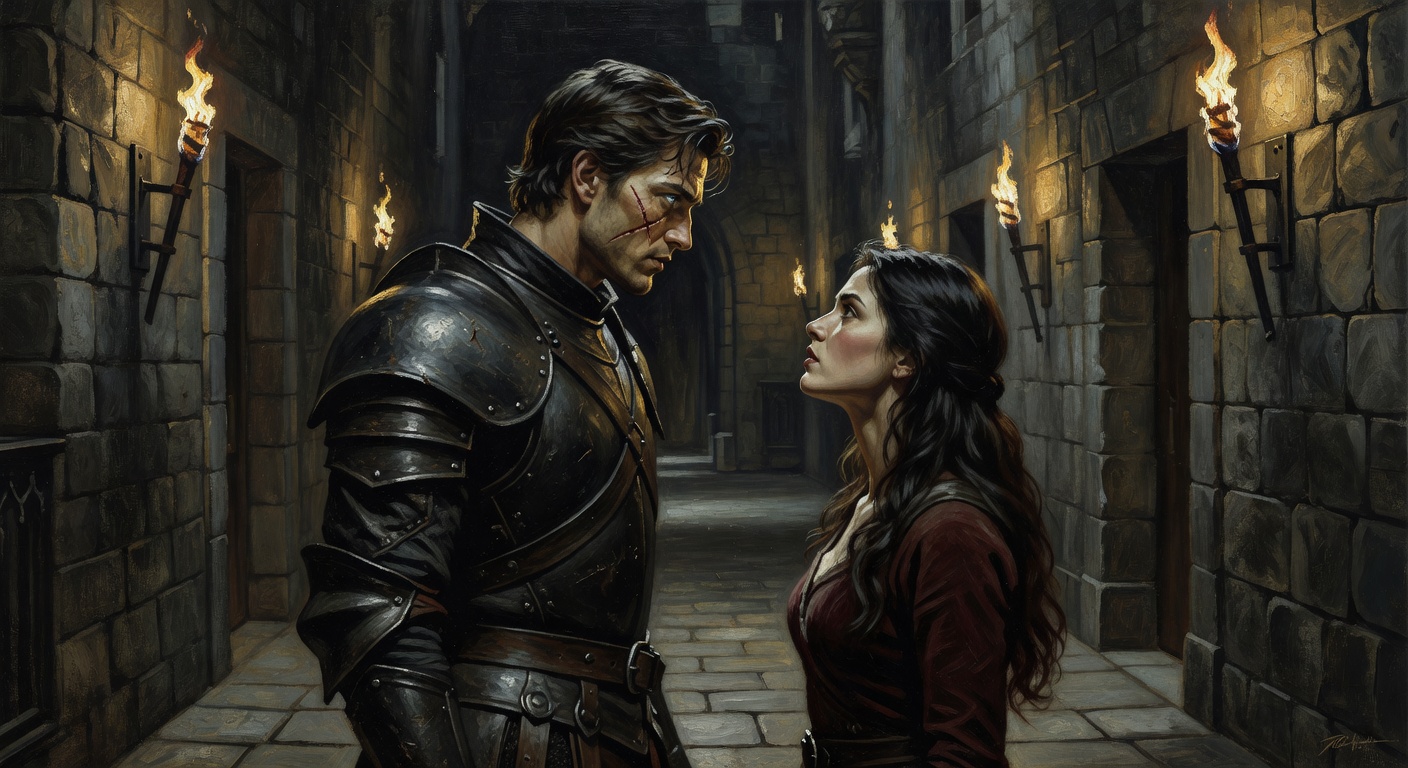
The Thornwood Accord
Two rival houses. One impossible alliance. A scarred commander who doesn't trust you. Enemies-to-lovers romantasy with choices that change everything.
Story Memory: Why Long Stories Work
The hardest problem in AI interactive fiction is not generating good prose. It is maintaining coherence over time.
Most AI tools send the last few pages of the story to the model each time it writes the next scene. Everything older than that window gets dropped. By chapter seven, the AI has no idea what happened in chapter one.
NovelFlame solves this with a structured memory system. Instead of keeping a raw transcript, the engine maintains a running record of facts that matter: character traits, relationships, injuries, promises, betrayals, items collected, locations visited. This record is available every time the AI writes the next chapter, regardless of how long the story has been running.
The result is that chapter ten knows about the promise you made in chapter two. The guard who caught you sneaking around the armory still remembers in chapter eight. Your character’s broken arm does not heal itself unless the story addresses it. These details are what turn a sequence of generated scenes into a story worth finishing.
Reading on Mobile
AI interactive fiction is primarily a mobile experience. Over 70% of fiction reading happens on phones, and the format is naturally suited to it. Short sections between choices. Natural stopping points. Sessions that fit into a commute or a lunch break.
NovelFlame is built mobile-first. The reading interface is designed for one hand. Choices appear at the bottom of the screen where your thumb already is. Images load inside the text flow without layout shifts. You can add it to your home screen and it works like a native app, with offline reading and the ability to pick up where you left off.
This matters because the format only works if the technology gets out of the way. If you are fighting the interface instead of sinking into the story, the immersion breaks. The best AI interactive fiction feels like reading a book on your phone, not like using an app.
Experience AI Storytelling Yourself
NovelFlame offers free demo stories across multiple genres with no signup required. The demos are polished, prebuilt showcases produced with the same story engine described above, so you can feel the writing quality, branching structure, and visual layer without signing up. To see the engine generating scenes from your own choices in real time, you start your own story after signup.
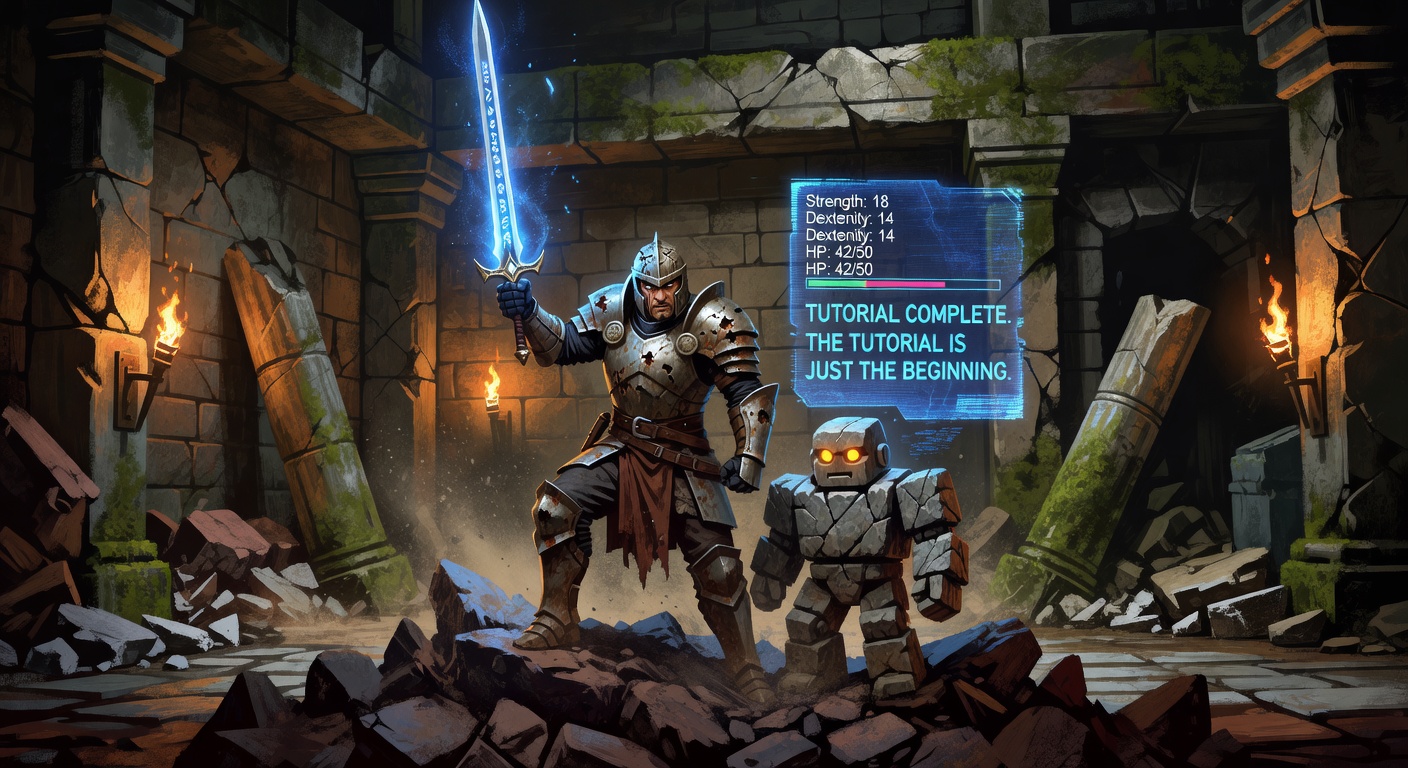
Dungeon Floor Zero
You wake on cold stone with no memory. A character creation screen floats before you. The System gives you 24 hours.
Browse more at the interactive fiction games hub, or explore the text adventure side of the genre for the classic parser-fiction tradition.
Get notified about new stories
Related Articles
7 Best AI Dungeon Alternatives in 2026 (Honest Breakdown)
Looking for an AI Dungeon alternative in 2026? A numbered, honest comparison of NovelFlame, NovelAI, OOC, DreamGen, Perchance, and more, with pricing.
How We Keep AI Characters Consistent Across Dozens of Story Images
AI image models reinvent your character every time you ask. Here is the actual engineering NovelFlame uses to keep characters consistent across a whole illustrated story.
Why Most AI Stories Sound the Same (And Our Fix)
AI fiction has a quality problem. Every platform uses the same models, and the output sounds identical. Here's why NovelFlame reads differently.