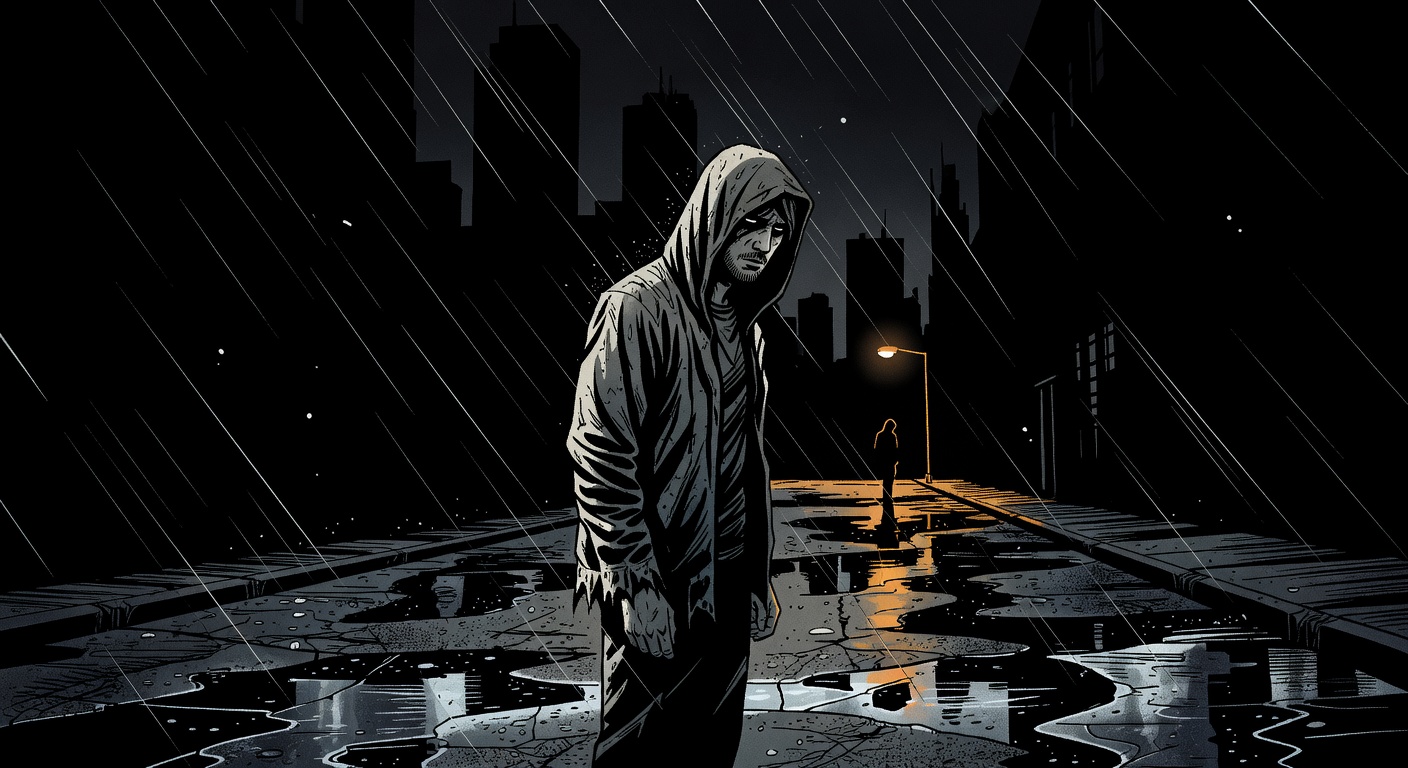

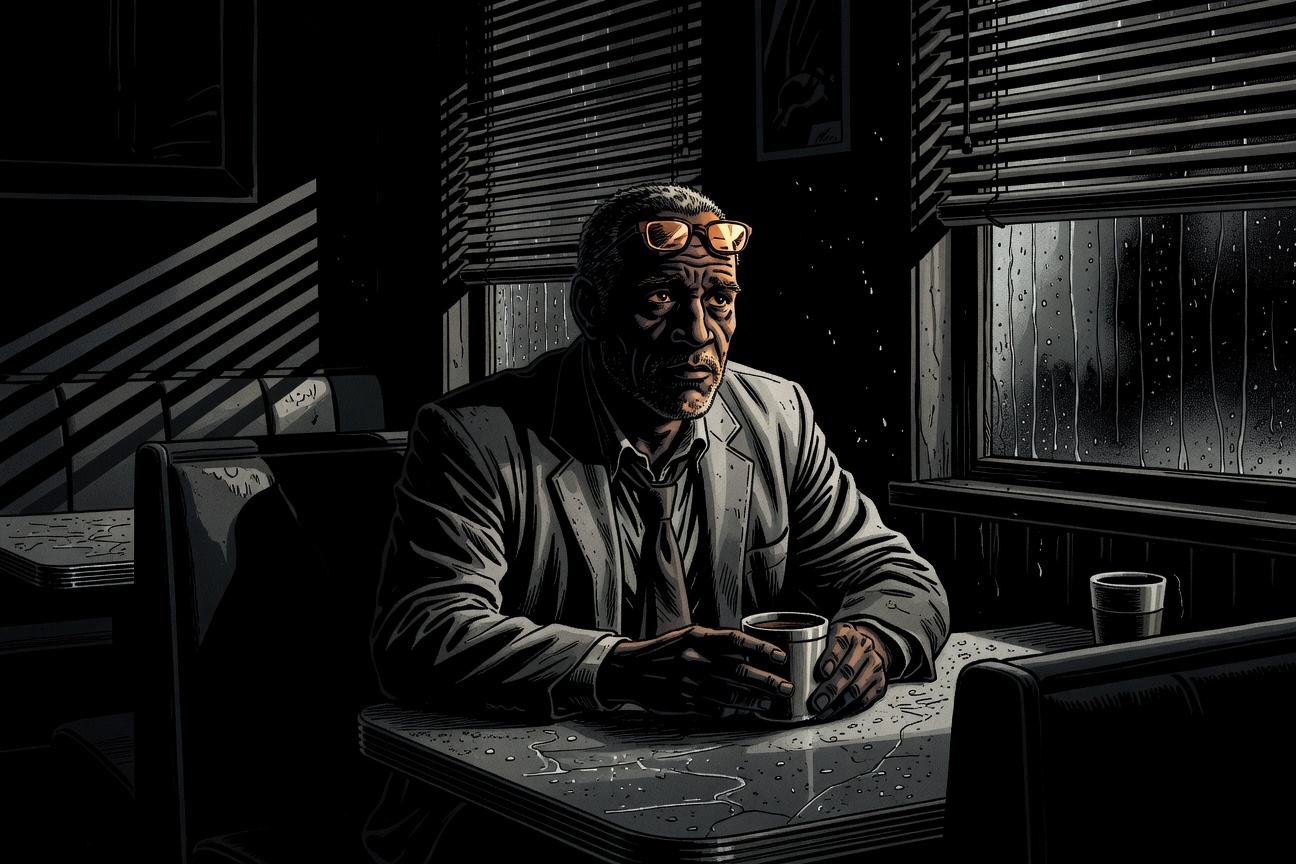
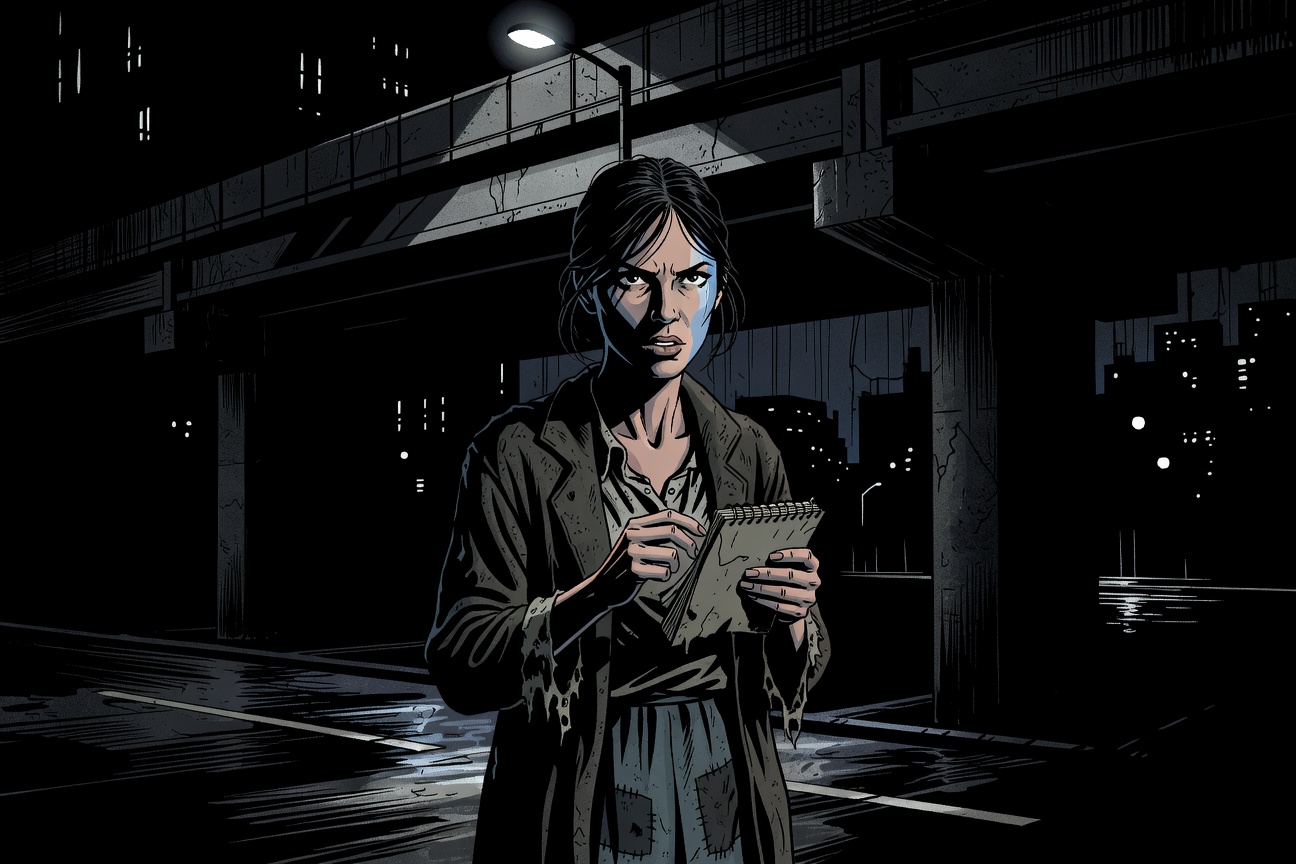
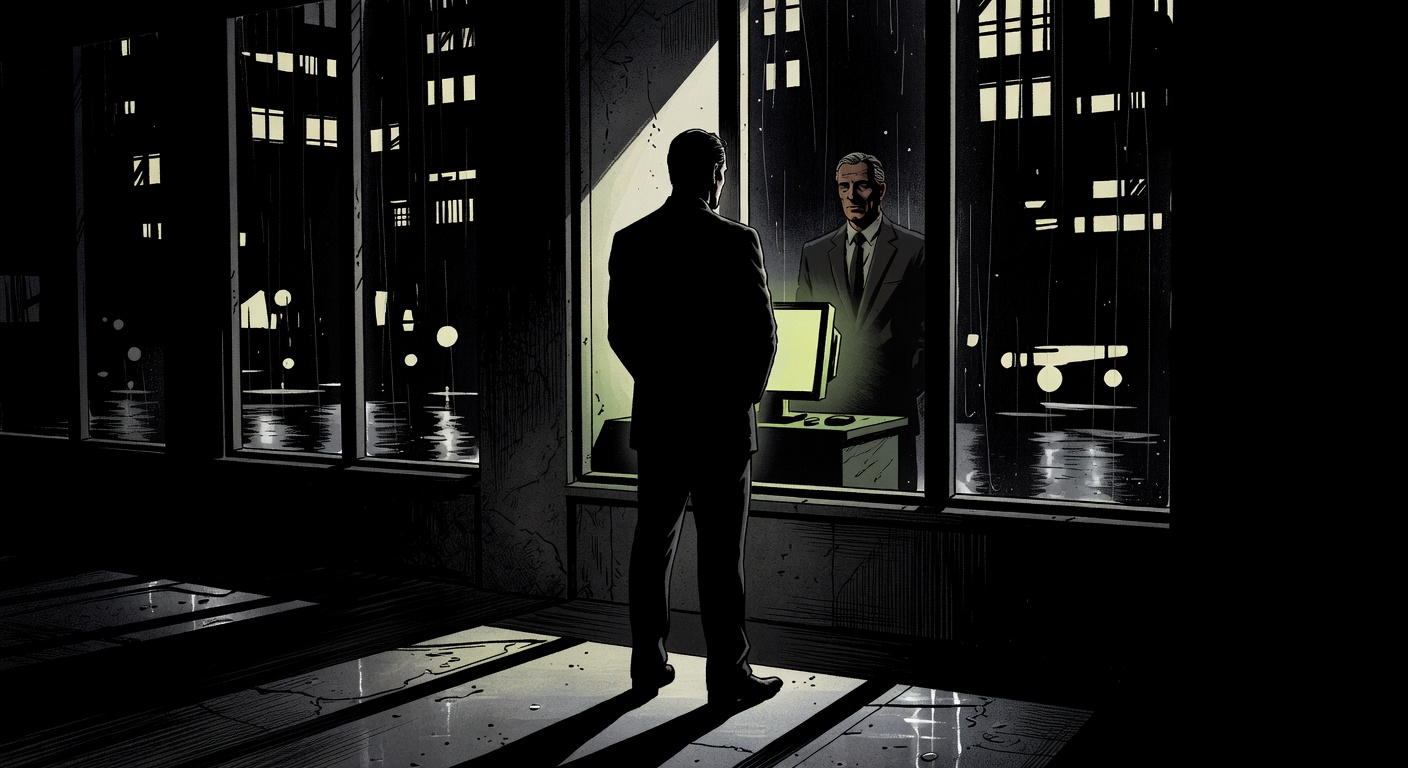
Characters
Mira — The Voice on the burner phone. She knows too much. Her agenda is unclear.
Okafor — Missing persons detective. Old school. Reads people, not screens.
Lena — Another erasure victim. Six months off-grid. Paranoid but right.
Moreno — Your former CTO. The shadow behind everything.
Psychological thrillers put you inside the mind of someone under extreme pressure. The genre thrives on paranoia, unreliable information, and the creeping realization that the threat is bigger — and closer — than you thought.
Your digital identity was erased at 3:47 AM. Your bank account doesn't exist. Your face doesn't register on any scanner. In your mailbox: a burner phone with one saved contact. She answers on the first ring. "You're Alex Chen. You have 48 hours. I can help you, but you have to move now."
The Last 48 Hours is a psychological thriller that starts at full sprint and never lets up. You wake in your apartment to find every digital trace of your existence deleted — bank accounts, medical records, facial recognition, social media, government ID. You are, as far as any system is concerned, nobody. And the clock is already ticking.
The woman on the phone is Mira. She knows your name, your situation, and more about the erasure technology than she should. Whether she's your salvation or your handler is the first of many trust decisions you'll make under pressure. Detective Okafor offers a different path — the official route, slower but legitimate. Lena, another erasure victim surviving off-grid for six months, represents what happens if you fail.
Halfway through, the story flips. Everything you thought you knew about why this is happening to you turns out to be wrong — and the answer is worse than paranoia. The person responsible isn't a stranger. And the only person who can fix it might be you.
The branching structure mirrors the paranoia. Every ally could be compromised. Every safe house might be watched. The story tracks your trust decisions and adjusts accordingly — lean too heavily on Mira and you might miss the signs she's been feeding you filtered information. Trust the detective too much and bureaucracy eats your remaining hours.
33 segments. 8 endings, and the line between them is who you trusted and when you stopped. You'll finish your first playthrough wanting to go back and make different choices at the halfway mark.
Full Story Transcript (30,218 words, all branches)
Hour 0.
Your alarm didn't go off. That's the first wrong thing.
Not the rain, though the rain is loud enough to enter your dreams. Not the gray light pressing against the curtains. Not the stale taste in your mouth or the ache in your neck from sleeping wrong. The alarm. It has gone off every weekday at 6:15 for three years, a clean electronic chime you hate and depend on. This morning there is only the sound of water striking glass.
You lie still for three seconds, already calculating the damage. Shower cut to four minutes. Coffee to go. No gym. You can still make the 8:00 stand-up if the trains behave.
Then you look at the clock on the wall.
7:42.
Your phone is face-down on the nightstand where you left it. Same black case. Same charging cable bent at the same bad angle. You reach for it and the screen lights up before your fingers close around it.
Not with your lock screen.
A corporate logo rotates slowly in the center of the display, white against black. Three interlocking circles, sterile and unfamiliar. Beneath it, one word sits in all caps.
DISSOLVED.
For a moment, your brain refuses to make room for it. Some update. Some Meridian security push that went wrong. Maybe a ransomware lock screen, though the phone is company managed and supposed to be bulletproof. You swipe up.
Nothing.
You type your passcode. Six digits. Muscle memory. The screen flickers and returns to the logo.
You try again, slower.
DISSOLVED.
Face ID should catch the angle from the bed. It doesn't. You sit up, wipe sleep from your eyes, hold the phone level with your face. The small camera dot blinks once, cold and unhelpful.
Nothing.
No notifications. No carrier signal. No emergency keypad. The volume buttons don't respond. The power button gives you the same word every time, as if the device has learned one answer and forgotten all the others.
Your apartment feels too quiet around it. The framed print above the dresser. The half-finished glass of water. The laundry basket by the closet. Evidence of a life, waiting to be acknowledged.
Fine. You'll deal with it after coffee.
You swing your feet onto the floor. The wood is cold. In the kitchen, the coffee machine refuses to start until it connects to the app, because at some point that seemed convenient. You stare at its dark display for a full ten seconds, then unplug it and plug it back in like an idiot.
Still nothing.
The first real thread of fear slides under your ribs.
You get dressed fast. Jeans, sweater, the jacket by the door. Wallet in pocket. Keys from the bowl, though the keys are mostly decorative now. Everything in the building runs through the smart system. Elevator. package room. front door. Life made frictionless by a thousand invisible permissions.
The smart lock on your front door wakes as you approach. Its lens brightens, scanning your face. You lean in. The red light pulses once.
Access denied.
You blink at it.
The red light pulses again.
Access denied.
You try the manual key. It slides in but won't turn, the deadbolt locked behind an internal motor that doesn't care about brass. You pull up the building app on your dead phone and get the same rotating logo. DISSOLVED.
Your palm is damp on the doorknob.
There is an emergency exit at the end of the hall, behind the service stairwell door. You use it once a year during fire drills, annoyed with everyone else on the way down. Today the alarm doesn't sound when you push through. The stairwell smells like concrete dust, old mop water, and something metallic. Your footsteps crack against the walls all the way to the lobby.
The door opens beside the mailroom.
Carlos looks up from his tablet.
He is exactly where he always is. Navy blazer. Silver hair combed back. Reading glasses low on his nose. For three years, he has held cabs for you, signed for packages, told you which elevators were down. He knows you take your coffee black. He knows your unit number without asking.
His frown is polite and empty.
**Carlos:** "Can I help you? This building requires resident access."
You almost laugh. It comes out wrong.
You tell him your name. Alex Chen. Unit 1206. You point toward the elevators like the facts are visible there, like your whole history might be standing behind you in the marble lobby with wet shoes and a late start.
Carlos glances at his tablet. His thumb moves across the screen. Once. Twice. His face tightens, not with recognition, but with procedure.
**Carlos:** "Unit 1206 is vacant."
He turns the tablet slightly, not enough for you to read everything. Enough to see the word VACANT in blue beside your apartment number.
**Carlos:** "Has been for six months."
The lobby tilts by a degree. Not enough to fall. Enough to make the chandelier lights smear across the polished floor.
You say his name. Carlos. You remind him about the package from your mother last winter, the one that split open and spilled oranges across the desk. You mention the elevator outage in July. The night he lent you an umbrella and told you not to bring it back because it was cursed.
His expression doesn't change. It gets softer, which is worse.
**Carlos:** "I'm sorry. I don't know you."
Behind him, the front doors slide open for a woman in a black coat. Rain blows in around her ankles. The building recognizes her and welcomes her with a soft green chime.
You step backward.
The mailboxes line the wall to your left, brushed steel, each with a small name plate. Yours is on the second row. The plate is blank. When you pull the steel flap open it gives without protest.
Inside, alone on the metal floor of the box, lies a cheap prepaid phone still in its blister packaging.
You ease it free. The plastic is dry, the seal unbroken. You crack it open. The phone wakes on a generic startup screen. No carrier branding. No setup wizard. It boots straight to the contacts app.
One saved contact.
MIRA.
No last name. No notes. A number you have never seen before.
The rain outside is coming down in sheets.
You step under the building's awning and tear the plastic off the burner phone with your teeth.
The packaging cuts your thumb. A thin red line opens across the skin, bright against the gray morning. You barely feel it. Your hands are too cold, or too wired, or both. Behind you, the lobby doors seal with a soft hydraulic sigh. Carlos is still inside, probably watching you through the glass, probably deciding whether to call security on the stranger who insists he lives upstairs.
The burner is cheap. Light as a toy. The kind sold near cash registers beside gum and lottery tickets. It boots faster than your real phone ever did, no face scan, no password, no corporate logo turning your life into an error message.
One contact.
MIRA.
Rain hits the awning hard enough to sound like static. The street beyond it is smeared silver and black. Taxis drag their tires through standing water. Office workers move past with umbrellas tilted low, faces hidden, badges swinging from their necks. Every one of them exists somewhere. Payroll systems. Insurance portals. Building access logs. Tiny proofs of life stacked in servers you will never see.
You press call.
She picks up on the first ring.
No greeting. No background noise. Just a breath, controlled and close, as if she has been sitting in a silent room with the phone in her hand.
**Mira:** "You're Alex Chen. Software engineer. Fintech company called Meridian Labs. Your digital identity was erased at 3:47 this morning using a protocol called Clean Slate."
Your name in her mouth should be reassuring. It isn't. It lands like a diagnosis.
You look down at yourself, as if there should be evidence. Wet shirt clinging to your ribs. Shoes dark with rain. Thumb bleeding onto the cheap plastic phone. Same body. Same apartment key in your pocket, useless now. Same memory of brushing your teeth twenty minutes ago in a bathroom your building says you abandoned six months back.
The rain hammers the sidewalk.
You don't speak.
Part of you is waiting for the shape of the joke to appear. A breach test. A hostile onboarding exercise from Meridian. Some paranoid executive's idea of security training. But Meridian doesn't know about the chipped mug in your sink, the book left open on your couch, the doorman's blank face when he looked at you like a delivery mistake.
Mira keeps talking.
**Mira:** "You have 48 hours before the erasure locks permanently. After that, every system in the country treats you as if you never existed. No bank account. No passport. No employment history. No medical records. Nothing."
A bus groans to the curb and exhales heat into the rain. Its doors fold open. People climb aboard with phones already raised, transit passes blinking green. One man in a navy coat glances at you, then away. To him, you are just someone standing too still under an awning.
Forty-eight hours.
The number starts arranging your panic into columns. Two days. Less, already. Forty-seven hours and some minutes if she is telling the truth. Forty-seven hours to become real again, whatever that means. Your brain tries to reject the phrase legal nonexistence and fails. You think of your mother calling your number and getting nothing. HR deleting your email. A hospital intake desk asking for an ID while you bleed on their floor.
Your throat works once.
Still nothing comes out.
Her voice doesn't soften. That is almost worse. No panic, no sympathy. She sounds like someone reading weather conditions before a storm makes landfall.
**Mira:** "The first systems have already updated. Residential access. Mobile authentication. Consumer banking will cascade next. Government records take longer, but not much. Clean Slate was built to propagate quietly. By the time people notice, the audit trail has rewritten itself."
You close your eyes.
At Meridian, you have sat in conference rooms with glass walls and listened to men describe human lives as data surfaces. Friction. Compliance. Identity layers. You have written code that verified people faster than they could explain themselves. Green check. Red denial. You never thought much about what happened after the red denial. The system was supposed to be right.
Your phone, your real phone, sits dead in your pocket. Not dead. Worse. Captured.
You make yourself breathe.
"Who are you?" The words scrape out too low, almost lost under the rain.
There is a pause. Not surprise. Calculation.
**Mira:** "Someone who knows what was done to you. Someone who knows how to stop it, if you stop wasting time."
"Why me?"
Another pause. Shorter.
**Mira:** "Because you were close enough to matter and useful enough to erase."
The sentence opens cold in your stomach.
Across the street, the traffic light changes. The walk signal flashes white. A dozen people step off the curb at once, obedient to a symbol. You stay where you are. Water runs from the awning in steady ropes, splashing inches from your shoes.
**Mira:** "I can help you reverse it, but you need to move. Right now. I'm sending you an address in Chinatown. There's a terminal you can use to trace the erasure."
The burner phone buzzes against your palm.
A location pin appears on the small cracked-looking screen, even though the screen is new. Chinatown. Not far. Far enough to feel deliberate. Far enough that every camera between here and there can watch you decide.
You stare at the pin until the street around it seems to narrow.
"Why should I trust you?"
For the first time, you hear the r
You pocket the burner phone without calling.
The plastic is still warm from your hand. Cheap. Light. Anonymous. The kind sold behind scratched glass at convenience stores beside cigarettes and lottery tickets. One saved contact. One woman who might know exactly what happened to you.
Or one trap with a name attached.
A stranger left a phone in your mailbox after your apartment erased you, after Carlos looked through you like you were a delivery mistake, after your own front door decided your face was counterfeit. That's not help. That's bait.
The bank is six blocks east.
You tell yourself this is still fixable. Banks keep records. Humans work there. Managers have override codes. Somewhere behind the polished counters and branded pens, there is a server that remembers your paycheck deposits, your rent payments, the Thai place you order from on Fridays when you stay too late at Meridian.
You have an account. You have a name. You have a life.
The rain turns the sidewalk black and glossy. Traffic crawls through the intersection with headlights smeared across the pavement. Steam rises from a manhole in slow white ribbons. The city is doing what it always does, moving without permission, indifferent to the fact that your world has come loose from its bolts.
At the first crosswalk, you press the pedestrian button.
Nothing.
You press again. Harder. The metal disk is cold under your thumb. Cars pass in wet bursts. The signal stays red. On the far pole, the little white walking figure remains dead.
A woman beside you reaches past your shoulder and taps the same button. Three seconds later, the signal changes.
She crosses. You stand there for half a second too long, watching the blinking icon, feeling heat crawl up your neck.
At the subway entrance, you take the stairs two at a time. The station smells like wet concrete, brake dust, and old electricity. People shake umbrellas at the bottom and swarm toward the turnstiles. You pull out your transit card and tap it against the reader.
Red light.
You tap again.
Red.
The screen flashes: CARD NOT RECOGNIZED.
A man behind you sighs. Someone mutters. You step aside before the line hardens into attention. At the service kiosk, the attendant is sealed behind scratched plexiglass, half-listening to someone complain about a delayed train. You look at the machines along the wall. Touchscreens. Cameras. Card readers. All of them waiting to ask systems who you are.
You go back up to the street.
Six blocks on foot. Fine.
By the third block, your shoes are soaked through. Water creeps cold between your toes. Your jacket clings to your shoulders. The burner phone sits in your pocket like a living thing, silent and patient.
You don't call.
Every automated system you pass seems to look at you. Lobby scanners blink beside revolving doors. Parking meters glow. Delivery bots idle under awnings, their black glass faces reflecting the street. None of them know you. Maybe none of them ever did. Maybe being a person was always just a collection of permissions granted by machines you never questioned.
The bank occupies the corner of a renovated stone building with brass handles and glass doors polished clean of fingerprints. Warm light spills across the entry. Inside, everything smells like coffee, carpet cleaner, and money that has never been touched.
The security guard glances up as you enter. His eyes move over your wet hair, your soaked jacket, your empty hands. No alarm in his face. No flicker of recognition either, but that doesn't matter. He doesn't stop you.
Humans still work.
You wait behind a man depositing checks and a woman arguing quietly about a wire transfer. The line moves. Normal people do normal things. They slide cards across counters. They sign forms. They complain about fees. Each transaction leaves proof behind.
When it's your turn, the teller smiles because she's been trained to smile.
**Teller:** "How can I help you today?"
Your voice comes out steady enough.
**You:** "I need to verify my account. There may be an issue with online access."
You give her the account number from memory. You have typed it into rent portals, tax software, payroll forms. The numbers should open like a door.
She enters them. Her smile thins.
She enters them again.
The keyboard clicks too loudly. Rain ticks against the windows behind you. Somewhere in the lobby, a printer wakes and spits paper.
**Teller:** "I'm sorry, there's no account associated with that number. Are you sure you have the right institution?"
You almost laugh. It catches in your throat and turns into something sharper.
You take out your debit card and slide it toward her. Your name is embossed on the front. Alex Chen. Raised letters. Physical proof. You press one finger against it, as if holding it down will keep it from disappearing.
She scans it.
The terminal gives a soft rejection tone.
Her posture changes. Not much. Enough.
**Teller:** "This card is coming up as unregistered. It may have been deactivated. Do you have identification?"
You reach for your wallet, then remember the smart lock, the phone, Carlos. Still, you hand over your driver's license. The plastic looks real because it is real. Your photo. Your signature. Your address.
She checks the license against her screen. Types your Social Security number after you recite it. Checks another system. Then another.
Nothing.
The teller stops smiling.
Her eyes flick to the security guard. Her right hand lowers beneath…
Hour 2.
The address leads to a noodle shop in Chinatown wedged between a shuttered travel agency and a pharmacy with iron bars over the windows. The sign is hand-painted, red characters flaking at the edges. Steam clouds the front glass. A paper notice taped to the door says CASH ONLY in block letters, the kind of warning that feels less like policy and more like a survival strategy.
Inside, the air is thick with broth, fried garlic, wet wool. Three customers sit hunched over bowls without looking up. No touchscreen register. No delivery tablets lined up on the counter. No security camera tucked into a corner. Just a brass bell over the door, a cracked tile floor, and an old woman behind the counter counting bills with wet fingers.
You stand there too long with the burner phone in your hand.
The owner looks up from the stove. Middle-aged. Apron stained dark at the waist. He doesn't ask your name. His eyes drop to the phone, then to your face, then past you to the street. A quick inventory. Threat, witness, weather.
He jerks his chin toward the back.
Past the swinging kitchen door, the heat gets worse. Stockpots breathe against the ceiling. A cook shoulders around you without apology, carrying a tub of greens. The burner phone feels slick in your palm. Every instinct tells you to leave, to step back into the rain and choose a normal building with normal lights and people who will tell you this is a mistake.
But normal locked you out of your apartment. Normal erased your name from Carlos's tablet. Normal is a machine with clean teeth.
The owner points with two fingers at a narrow door behind stacked sacks of rice. There is no sign on it. No keypad. Just a scarred metal knob and a chain hanging loose from a deadbolt.
You open it.
Stairs descend into a dark that smells of old concrete, bleach, and ozone. The noise of the restaurant thins behind you with every step. Bowls clatter. Someone laughs once. Then the door swings shut and the sound cuts off like a wire.
At the bottom is a basement room smaller than your bedroom. Cinderblock walls painted white a long time ago. Pipes run overhead, sweating onto the floor. A single bare bulb hangs from a cord, making the shadows sharp. In the center of the room: a folding chair, a metal desk, a terminal with an old matte-black monitor, and a headset coiled beside the keyboard.
Mira isn't here.
You expected a person. A woman in a coat. A face to match the voice. Someone who could be lying in a human way.
Instead there is a screen already awake, green cursor blinking in the dark.
The chair complains when you sit. The headset is cold against your ears. Static scratches, then clears.
**Mira:** "Good. You're faster than the last one. Sit down. I'm going to walk you through what happened to you."
Your hand freezes on the edge of the desk.
The last one.
There are questions stacked behind your teeth, but the monitor changes before you can choose one. Lines of data spill down the screen. Names of systems you recognize. Some you wrote interface patches for. Some you have only seen in compliance audits at Meridian, projected onto conference room glass while everyone pretended to listen.
A profile opens.
ALEX CHEN.
For half a second, relief hits so hard it almost hurts. There you are. Name. Date of birth. Last known address. Employer. Tax ID. Device history. Medical provider. Bank routing references. A life reduced to fields and tables, but still a life.
Then the fields begin to gray out.
BANK RECORDS: DISSOLVED.
EMPLOYMENT HISTORY: DISSOLVED.
TAX RECORDS: DISSOLVED.
SOCIAL MEDIA: DISSOLVED.
MEDICAL RECORDS: DISSOLVED.
Each line carries the same timestamp.
3:47 AM.
3:47 AM.
3:47 AM.
All at once. Not deleted in sequence. Not corrupted. Not lost. Dissolved, as if some authority had reached into every database at the same instant and told it the same lie.
The cursor blinks at the bottom of the screen. Patient. Accusing.
Your chest tightens. You remember being awake at 3:47, maybe. Or almost awake. The gray edge of a dream. Rain against the window. The hum of the refrigerator. Your phone on the nightstand, face-down and harmless.
While you slept, the world voted you out.
**Mira:** "Breathe, Alex. Panic wastes time and time is the only currency you still have."
You take in air. It tastes like dust and hot wiring.
The screen shifts again. A network map blooms across the monitor, white nodes linked by thin blue lines. One cluster pulses red. Meridian Labs. Your employer. Four years of badge swipes, sprint reviews, late deployments, bad coffee, performance goals written by people who never touched code. Your desk near the north windows. Your name on commit logs. Your access tokens. Your machine.
The red spreads from Meridian outward into government identity brokers, credit bureaus, payroll processors, health networks. Efficient. Beautiful, in the way a tumor is beautiful under magnification.
You lean closer despite yourself.
There are authentication signatures attached to the event. Not yours. Not exactly. The system marks them as valid, elevated, internal. A path opened from inside the perimeter, moving through trusted infrastructure. No broken lock. No shattered glass. Someone used a key.
**Mira:** "This wasn't a hack. A hack leaves traces. Noise. Failed attempts. Improvised tools. This was institutional. Military-grade identity dissolution executed with authorized credentials. Clean Slate doesn't break into systems, it convinces them to
Hour 3.
The bank is warm enough to make your wet clothes steam.
Fluorescent panels hum overhead. Marble floors. Potted plants. A wall of smiling mortgage ads with families frozen in permanent sunlight. Everything here is designed to say stability. Trust. Continuity. Your shoes squeak across the tile and leave dark prints behind you.
You take a number from the kiosk because the kiosk still allows that much. A slip of paper slides out. B-17. Proof of existence, two inches wide.
The wait is twelve minutes. You count them because counting gives your hands something to do. Across the lobby, a child presses both palms to the glass and watches the rain crawl down the windows. An old man signs forms with the careful pressure of someone who still believes ink matters. Behind the counter, tellers move through practiced gestures. Smile. Type. Stamp. Slide the receipt forward.
Normal life continues without you.
Your number flashes.
The teller is young, neat, wearing a blue scarf printed with the bank logo. Her smile has been trained into place so well it almost looks natural.
**Teller:** "Good morning. How can I help you today?"
You give her your account number. Checking first. Then savings. Your voice sounds steady enough. That surprises you.
She types. The keys click softly. Her eyes move left to right across the monitor.
The smile holds for one second too long.
Then it changes.
Not much. A tightening at the corner of her mouth. A small vertical line between her eyebrows. The kind of expression people make when an elevator stops between floors.
**Teller:** "Could you repeat that for me, sir?"
You do.
She types it again, slower this time. Deletes it. Types again. Checks the card reader. Checks another screen. Her badge swings when she leans closer to the monitor.
**Teller:** "I'm sorry, there's no account associated with these credentials. Have you perhaps confused us with another institution?"
You take out your debit card and slide it through the slot under the glass. Black plastic. Silver numbers. Your name raised in clean letters. A card you've used for groceries, rent, coffee, cabs, every small transaction that built the outline of a life.
She scans it.
A red box appears on her screen. You can't read the words from this angle, but you see their effect on her face.
**Teller:** "This card is not registered in our system."
**You:** "That's impossible. I used it yesterday."
She keeps the card between two fingers, not touching more of it than necessary.
**Teller:** "Do you have identification?"
Your driver's license comes next. The picture is bad, the way all license pictures are bad. Flat light. Tired eyes. Government plastic declaring that Alex Chen exists at an address the building no longer believes in.
She scans the barcode.
Nothing.
She enters the license number manually.
Nothing.
You give her your Social Security number. Saying it out loud in a bank lobby feels obscene, like undressing in public. She repeats it under her breath as she types, digit by digit, then stops.
The line between her eyebrows deepens.
**Teller:** "Sir, I'm not getting a return on any of this."
**You:** "What does that mean?"
**Teller:** "It means the system can't verify the information you've provided."
Corporate language. Soft edges around a blade.
You lean closer to the glass.
**You:** "Can you call someone? A manager. Fraud department. Anyone."
Her eyes flick past your shoulder. You don't turn. You already know what sits near the entrance. A security guard in a gray blazer, pretending not to watch. One hand folded over the other. Weight balanced, ready.
**Teller:** "I'm going to need you to remain calm."
The words land wrong. They always do. No one says remain calm unless they're preparing for the opposite.
You look at the counter. At the little ceramic dish full of pens chained to nothing. At the camera dome in the ceiling, black glass reflecting the lobby in a warped circle. Somewhere, a server has already decided you are not a customer. Maybe not a citizen. Maybe not a person.
The teller's right hand moves below the counter.
Not fast. Not dramatic. Just a trained movement toward a button she hopes she won't need to press.
Something cold opens in your chest.
You take back the license before she can decide whether to keep it. The debit card too. She lets them go.
**You:** "There's been a mistake."
She doesn't answer.
The security guard is watching now without pretending. His gaze tracks you from the counter to the rope line, from the rope line to the door. The other customers don't look up, but their silence changes. The old man stops writing. The child turns from the rain.
You push through the glass doors into the weather.
Outside, the city hits you all at once. Rain on concrete. Diesel exhaust. Hot metal from a bus kneeling at the curb. Your shirt clings to your back. Water runs from your hair into your eyes and tastes like rust.
Across the street, the bank's mirrored windows throw your reflection back at you, broken by vertical streams of rain. Pale face. Dark coat. A man carrying documents that no machine will honor.
For half a second, you wonder if the reflection is next. If Clean Slate has phases Mira didn't mention. If one morning glass will look through you too.
The burner phone sits in your pocket like a weight you can feel with your whole body.
You don't want to call her. Calling means admitting the bank was never going to help. It means admitting she understood,
You turn hard at the next corner and cut into an alley narrow enough to make the city vanish behind you.
The sound changes immediately. Traffic becomes a wet hiss. Horns smear into distance. Rainwater runs along the cracked pavement in thin black streams, carrying cigarette filters, receipt paper, something that might be blood until the neon sign over the street flickers red, then blue, then red again.
Dumpsters line one wall. Their lids are warped and slick, breathing out rot, old coffee, spoiled meat. A fire escape clings to the brick above you, ladder raised just out of reach. Every window is barred or dark. Every door has a keypad.
Of course it does.
You press your back to the wall beside a stack of broken milk crates and force yourself to breathe through your nose. Your heart is too loud. Your hands are shaking, not from cold. The burner phone sits heavy in your pocket, a piece of someone else's plan. Your own phone is dead weight somewhere you no longer trust. Your debit card is plastic from a life that has stopped recognizing you.
The footsteps reach the mouth of the alley.
Then stop.
Rain ticks off the metal fire escape. Water drips from a rusted pipe overhead and lands near your shoe, steady as a clock.
You picture the tall figure from the reflection. Dark coat. Half a block back. Matching your pace exactly. Not hurrying. Not hiding well enough to be invisible. That bothers you more than if he had vanished. A professional wouldn't let you see him unless he wanted you to.
Your fingers close around a loose brick at the base of the wall. It comes free with a wet scrape. Too heavy. Too real. You lift it anyway.
A shape crosses the strip of streetlight at the alley entrance.
The man steps around the corner slowly, both hands visible.
Late fifties, maybe older. Broad shoulders filling out a wrinkled gray suit that has seen too many precinct chairs and not enough dry cleaning. His tie is loosened. His shirt collar is damp. Reading glasses sit pushed up on his forehead like he put them there hours ago and forgot about them. Rain beads on his shaved scalp and runs down the side of his face.
He sees the brick in your hand. His eyes flick to it, then back to you.
No flinch.
He raises one hand, thumb and forefinger holding a badge wallet open. The other stays palm-out at chest height.
**Okafor:** "Alex Chen? Detective James Okafor. Missing Persons. Your employer filed a report three hours ago."
The words don't land right. Employer. Report. Three hours. Normal words from a normal system, spoken into an alley that smells like garbage and rain. Meridian noticed you were gone. Meridian told the police. Meridian, where your access badge probably doesn't work anymore. Meridian, where someone either erased you or signed the papers that let it happen.
You don't lower the brick.
Okafor studies you the way Carlos didn't. Carlos looked through you, searching for a resident his tablet insisted was gone. The teller looked at you like a problem she could escalate to security. This man looks at your face, your posture, the angle of your shoulders. Like he is comparing a living person against a report that doesn't make sense.
Not judging. Diagnosing.
**Okafor:** "You ran from the bank before I could introduce myself. Can't blame you. If I walked into a branch and watched my life disappear off a screen, I'd probably run too."
A siren rises somewhere beyond the buildings, then cuts off. Your grip tightens until the edge of the brick bites into your palm.
**Okafor:** "I need you to listen carefully. I am not here to arrest you. I am not here to bring you back to Meridian. I don't work for your company."
The alley seems to shrink around that last word. Company. A place with glass conference rooms, biometric locks, badge readers, polite calendars full of meetings you accepted without reading. A place that still exists. A place that can file a missing persons report for a man its own systems may already be erasing.
Your mouth is dry.
"How do you know my name?"
Your voice sounds rough. Smaller than you meant it to.
Okafor lowers the badge an inch but doesn't put it away.
**Okafor:** "Because the report had a name. Alex Chen. Software engineer. Meridian Labs. Last seen yesterday evening leaving the office at 8:12 p.m. That part was easy. The rest got strange."
He takes a step closer, slow enough that you could tell yourself you still have time to run.
**Okafor:** "I ran your name through every database I have access to. DMV. Social Security. IRS. Criminal records. Hospital intake. Voter registration. Old traffic citations. Nothing. Not sealed. Not expunged. Not misfiled. Nothing."
The word hits harder coming from him. Nothing sounded abstract from Mira, over a prepaid phone in the rain. From a detective in a wet suit, it sounds like a body bag without a body.
Okafor tucks the badge back into his jacket.
**Okafor:** "So either you're the most elaborate ghost I've ever chased, or someone did something to you that I didn't think was possible."
The brick feels ridiculous now. Also necessary. You keep it in your hand.
Across the street, beyond the alley mouth, a diner glows under a buzzing sign. Chrome trim. Fogged windows. A handwritten CASH ONLY taped crookedly beside the door. Inside, silhouettes bend over coffee cups and plates. No scanners. No turnstiles. No cameras that you can see from here. Just light, grease, and people paid to ignore other people's trouble.
Okafor nods toward it.
A
The subway entrance exhales heat and wet metal.
You take the stairs two at a time, one hand on the slick railing, the other closed around the burner phone. Above you, the city is all rain and glass and cameras. Down here, the ceiling drops low. Tile walls sweat under old advertisements. Someone has scratched a name into the enamel beside the fare machines, deep enough to cut through to the black underneath.
You try your transit card anyway.
The turnstile gives one flat beep. Red light.
You try the bank card. Another beep. The screen flashes INVALID MEDIA in block letters, then resets like nothing happened. There is a camera mounted above the gate, its black eye angled toward your face. You stare into it. Nothing changes. No chime. No green circle. No polite denial. It does not even reject you. It simply fails to see anything worth processing.
A woman in a gray coat taps her phone and passes through beside you. A teenager ducks under the emergency gate while pretending not to. No alarm sounds for him. The booth at the end of the row is empty, a swivel chair turned toward a cracked monitor.
You put both hands on the metal bar and vault.
Your shoe catches on the far side. For half a second, your body tilts forward and the whole station seems to hold its breath. Then you land hard on the concrete, pain flashing up your knee. Nobody stops you. Nobody even looks long enough to remember your face.
That should be comforting. It is not.
The platform is half-empty. Fluorescent tubes buzz overhead, turning skin the color of old paper. Water drips somewhere in the tunnel, steady as a clock. A man sleeps sitting up with a plastic grocery bag looped around his wrist. Two office workers stand apart from each other, both staring into their phones, blue light pooling under their eyes.
You move toward the track-side wall and keep your back angled to the stairs.
Across the rails, the opposite platform is framed by black glass. Your reflection floats there, fractured by grime and old scratches. Same jaw. Same rain-dark hair. Same shirt sticking cold to your back. But the longer you look, the less it feels like proof.
A person is not a face. A person is the paperwork behind it. The numbers. The accounts. The badge that opens the office door. The lease. The dentist appointment reminders. The stupid loyalty card at the coffee place that knows your order better than most people know your name.
All of it is gone, or going.
You touch your pocket, feeling the hard rectangle of the burner phone. It buzzes before you can pull your hand away.
Unknown number. Of course.
You answer.
**Mira:** "You're in the subway. Good. Keep your head down."
Your throat is dry from running. The air tastes like brake dust.
"How do you know that?"
A pause. Not surprise. Calculation.
**Mira:** "Because every system that fails to recognize you still logs the failure. Turnstile camera. Fare reader. Transit security feed. You're leaving negative space everywhere you go."
Negative space. The shape of the thing that isn't there.
You look up at the camera over the platform, half-hidden inside a smoked plastic dome. It turns with a small mechanical twitch.
"Someone is following me."
**Mira:** "Yes."
The word lands too cleanly. Like she has been waiting for you to catch up.
The tunnel wind rises. Far down the line, a light appears and bends around the curve. The rails begin to sing.
**Mira:** "His name is James Okafor. Detective. Missing persons unit. Twenty-one years on the job. Your company filed a report at 8:12 this morning. Officially, you're a potentially unstable former employee who disappeared after sending threatening messages to senior staff."
Your hand tightens around the phone.
"I didn't send anything."
**Mira:** "I know."
The train roars closer, pushing warm air ahead of it. Papers lift from the platform and slap against the yellow safety strip. The sleeping man jerks awake. The office workers step forward in unison, trained by habit.
You scan the stairwell.
At first there is only tile and shadow. Then a dark coat appears at the landing. Broad shoulders. Careful pace. Not a runner. Not security. The man from the street moves like someone used to arriving after damage has already been done.
Detective James Okafor.
He pauses halfway down and looks across the platform. His face is hard to read from here, but his attention is not. He is searching, sorting bodies, measuring posture. He has not seen you yet.
The train screams into the station. Its windows flash past, each one briefly holding your reflection, then replacing it with strangers packed under white light. The doors open with a tired hydraulic sigh.
People get off. People get on. The city keeps circulating blood through its underground veins, indifferent to what has been cut out of the record.
You stand between the open doors and the stairwell.
Okafor reaches the bottom step. He turns his head toward the fare gates, then toward the platform clock, then toward the train. He is good. Not fast, not panicked, but good. His eyes pass over the sleeping man, the office workers, the teenager pretending not to smoke near the column.
They are coming toward you.
The warning chime sounds.
"Tell me he can help," you say.
Mira exhales softly on the other end. For the first time, something human slips through the calm.
**Mira:** "He's old-school. Paper files. Door knocking. Witnesses. The kind of detective systems like Clean Slate were built to make obsolete.
Hour 6.
The diner sits under the elevated tracks like it has been hiding there since the city was built. The sign outside has three dead letters. The windows are filmed with rain and fryer smoke. Every time a train passes overhead, the ceiling tiles tremble and the coffee spoons shiver in their cups.
Okafor chooses the booth in the back without asking. His coat is dark wool, collar turned up, shoulders damp from the rain. He sits facing the door. You sit facing the kitchen, where a cook moves behind a greasy pass-through window and a radio murmurs static between old songs.
The waitress comes over with a pad she doesn't look at.
**Okafor:** "Two coffees. Black."
He says it like an instruction, not an order. She leaves. He watches the front window until she is out of earshot.
You have spent the last six hours being rejected by machines. Locks. Phones. Bank terminals. Turnstiles. Cameras that used to recognize your face now see nothing worth naming. Sitting across from a human who says he knows what is happening should feel like relief.
It doesn't.
Okafor studies you with tired eyes. Not cruel. Not kind. Measuring damage.
**Okafor:** "Six months ago I caught a case. Corporate attorney named Lena Park. Same pattern. One day she existed, the next she didn't. Every database, every record. Poof."
A train screams over the roof. The whole diner rattles. Okafor waits for the noise to pass.
**Okafor:** "Her apartment lease vanished. Bank accounts closed without transaction history. Driver's license came back invalid. Employer said she had never worked there. Hospitals had no patient file. Tax records blank. Even her law school couldn't confirm her degree."
The waitress brings the coffees. Thick white mugs. No saucers. The coffee is black enough to look burned before you taste it.
Okafor doesn't touch his.
**Okafor:** "I spent three weeks on it before my captain pulled me off. 'No victim, no crime.' That's what he said. Hard to investigate a disappearance when the official position is that nobody disappeared."
He reaches inside his coat and takes out a manila folder. The edges are soft from handling. A coffee stain blooms near one corner. He keeps one hand on it for a second before sliding it across the table.
You open it.
The first photograph is corporate headshot clean. Lena Park, late thirties, sharp eyes, tailored suit, hair pulled back with the kind of precision that costs money. She looks like someone who signs contracts other people are afraid to read. Confident. Documented. Real.
The second photograph is grainy, taken from across a street with a long lens. Same face, but hollowed out. Cheekbones too sharp. Hair tucked under a knit cap. Thrift-store coat layered over a hoodie. She is buying a sandwich with cash from a corner deli, eyes angled toward the sidewalk like she expects the pavement to accuse her.
Before. After.
Your thumb leaves a damp print on the edge of the photo. You didn't realize your hands were wet.
**Okafor:** "She came into the precinct with a passport, three pay stubs, and a bar license card. By the end of the day, all of them had been invalidated. Not expired. Not suspended. Invalidated. Like the documents had been fabricated around a person who never existed."
You think of your phone turning into a branded brick. Carlos looking through you. Your mailbox with its blank name plate. The cheap burner phone waiting like a confession.
**Okafor:** "I didn't stop looking. I just stopped telling anyone I was looking."
He finally lifts his coffee and drinks. His face doesn't change. That tells you everything about the coffee and something about him.
You take a sip because your hands need something to do. It tastes like metal, ash, and old heat. You swallow anyway. The caffeine hits an empty stomach and turns there.
Okafor leans forward. His voice drops. The diner keeps moving around you. Plates clatter. Rain ticks against the glass. Somewhere near the register, a man laughs too loudly at nothing.
**Okafor:** "Both you and Lena Park were connected to a company called Cipher Systems. They make identity management solutions for governments. Clean databases. Biometric access. Credential verification. Things nobody notices until they stop working."
He taps the folder with two fingers.
**Okafor:** "Lena reviewed procurement language on a federal pilot program. Meridian Labs had a private contract with Cipher six months later. Your name appears in the technical appendix. Not as an executive. Not as legal. Engineering support."
The words land flat and heavy.
Meridian had a hundred vendor integrations. Authentication layers. Compliance modules. Government-grade encryption sold in clean slide decks with blue logos and meaningless promises. You remember a project code. A late-night deployment. David Moreno saying it was compartmentalized, need-to-know, nothing that touched users directly.
You remember signing off because the tests passed.
Okafor watches recognition move across your face.
**Okafor:** "Yeah. That's the part I was hoping you knew."
Outside, a city bus hisses to the curb and exhales passengers into the rain. Their reflections smear across the diner window, all of them with places to go and names that still work.
You look down at Lena Park again. The second photograph feels less like evidence now. More like a forecast.
**Okafor:** "I don't know who triggered yours. I don't know why. But I know this. What happened to her wasn't a glitch, and what is happ
Hour 7.
Mira sends the location without explanation. A pin on the east side, beneath a highway overpass where the map shows green space but the city stopped pretending years ago.
You get there on foot. The rain has thinned to a dirty mist, the kind that hangs under concrete and never falls all the way. Cars thunder overhead in steady waves. Each one shakes loose dust from the seams above you. Water drips from rusted rebar into black puddles filmed with oil.
The park is not a park. It is a triangle of cracked asphalt, dead grass, and chain-link fencing bent open in three places. Tents press against the retaining wall. Blue tarps sag between shopping carts. Smoke curls from a metal barrel, sharp with wet cardboard and plastic. People watch without looking directly at you. That takes practice.
You keep one hand around the burner phone in your pocket.
Mira's last text said: Ask for Lena.
No one here looks like they want to be asked anything.
A man under a tarp turns away when you pass. A woman rinses a dented pot with rainwater collected in a bucket. Someone coughs behind a sheet of plywood. The sound is deep and raw. Every face seems to carry the same calculation: threat, resource, problem, gone.
You open your mouth to say her name, but she speaks first.
**Lena:** "You're new. I can always tell by the panic."
She is standing beside a concrete pillar, close enough that she must have been there the whole time.
Mid-thirties, maybe. The number means nothing on her face. Exhaustion has hollowed her cheeks and drawn dark crescents under her eyes. Her hair is tied back with a strip of gray fabric. She wears three coats, none of them the right size, and fingerless gloves with the seams coming apart. Her hands never settle. Thumb against knuckle. Fingernail against palm. Counting something no one else can see.
But her eyes are wrong for the rest of her. Too alert. Too precise. They move over you like a scanner still connected to power.
**Lena:** "Don't tell me your name. Not yet. Names are habits. Habits are how they track you."
Your mouth closes.
She gives a small nod, as if you passed a test you did not know you were taking.
The overpass roars above you. For a second her face fractures in the reflection of a puddle at your feet. Pale skin. Dark eyes. A woman made of pieces the city tried to sweep into a corner.
**Lena:** "Mira sent you. That means you still have a window. That means you can still be useful."
Useful. The word lands colder than the mist.
You ask if she is Lena.
She looks past you, toward the fence line, toward the street beyond it. Checking angles. Counting exits.
**Lena:** "Lena Park. Former corporate attorney at Whitfield and Associates. Securities compliance. Regulatory filings. I used to bill eight hundred dollars an hour to tell criminals how to commit crimes in cleaner language."
Her smile is brief and empty.
**Lena:** "Six months and twelve days ago, I stopped existing. And I don't mean metaphorically."
She turns before you can respond and walks deeper under the overpass.
You follow because Mira sent you here. Because the bank had no record of you. Because your door would not open. Because every ordinary instinct you have left is now evidence against reality.
Lena leads you between two tents, past a row of plastic crates stacked like filing cabinets. Someone has painted numbers on them in black marker. Dates. Initials. Inventory for lives reduced to what can be carried.
Her shelter is a tarp stretched between two concrete pillars, weighted down with bricks and tied with orange extension cord. Inside, the ground is layered with flattened cardboard. A milk crate serves as a table. On it sits a notebook wrapped in a clear freezer bag.
She unseals it carefully, like evidence.
The pages are dense with handwriting. Tight columns. Timelines. Arrows. Names crossed out and written again. Database labels you recognize from work and others you only know from forms you have filled out without thinking. Credit bureaus. Hospitals. State registries. Payroll processors. Background check vendors. Court archives.
Your stomach tightens.
This is not paranoia arranged on paper. This is structure.
Lena flips to a page marked with three bands of ink.
**Lena:** "It happens in waves. Digital first. That's the easy part. Bank accounts, devices, access systems, employment databases. Anything that trusts an API more than a human being."
Her finger moves down the page.
**Lena:** "Then legal. Birth certificate. Social Security. Tax records. Driver's license. Professional credentials. That part takes longer because government systems are old and stupid, but stupid systems still obey clean instructions."
She turns another page. This one has fewer notes. More empty space.
**Lena:** "Then social. Rental history. References. Photos tagged with your face. HR records. School records. Old emails. Cached backups. The world doesn't forget you all at once. It forgets you by agreeing with itself."
You think of Carlos looking at you like a stranger. The blank nameplate on your mailbox. Your phone lighting up with that rotating logo. DISSOLVED.
The word has weight now. Not a message. A diagnosis.
**Lena:** "People think memory lives in the head. It doesn't. Not anymore. It lives in calendars, contact lists, payroll portals, lease agreements, insurance claims. Take those away and the human part gets embarrassed. It starts correcting itself."
She looks up at you.
For the first time, the fear on her face is unmistakable.
Hour 5.
Meridian Labs occupies floors 14 through 17 of a glass tower downtown, all reflective glass and polished stone, the kind of building designed to make people feel audited before they reach the elevator.
You used to badge in through the lobby without slowing down. Coffee in one hand. Phone in the other. Face tilted toward the scanner just long enough for the gate to chirp green.
Now you stand in front of the same gate while the camera above it makes a soft mechanical adjustment. A blue square glides across your face, pauses, then slides away. No denial. No alarm. Nothing as human as rejection.
It treats you like a wall.
Behind the reception desk, the guard looks through you toward the revolving doors. A woman from accounting passes close enough that her umbrella drips on your shoe. She does not look up.
The burner phone vibrates in your coat pocket.
**Mira:** "Don't try the lobby. Their access control pulls from the same identity layer. Loading dock. South side. Maintenance entrance."
Her voice is low in the earpiece, flattened by distance and bad encryption. You step back from the gate before the guard can decide your hovering means something.
Outside, rainwater runs along the curb in black ribbons. Delivery trucks idle in the alley behind the tower, exhaust mixing with the sour smell of wet cardboard and old grease from the restaurants next door. The loading dock door is half open. Not broken. Propped with a gray rubber wedge placed neatly against the threshold.
You stop with one hand on the metal frame.
**Mira:** "Keep moving."
"Did you leave this open?"
A beat of static.
**Mira:** "Would that make you feel better or worse?"
You slip inside.
The service corridor hums with fluorescent light. Pipes run exposed along the ceiling. Somewhere below, a compressor kicks on with a deep metallic shudder. You take the stairs because elevators keep records, and because your legs need something to do besides shake.
Fourteen flights in your building meant home. Fourteen floors here meant work. You know the turns without thinking. Landing. Door. Badge reader. Camera.
The reader blinks red as you approach, then the lock clicks open.
You look at the phone.
**Mira:** "Temporary maintenance credential. It won't last."
The door opens onto Meridian's main floor.
The smell hits first. Burnt coffee. Carpet cleaner. Warm electronics. The office smell you stopped noticing years ago because it meant deadlines and paychecks and free seltzer in the break room.
It should feel familiar. It does, which is worse.
Rows of desks stretch beneath white pendant lights. People type. People murmur into headsets. A product manager stands at a glass wall drawing boxes around boxes, building a future no one in the room will live to understand. The screens are full of charts, code, dashboards, the ordinary machinery of pretending numbers are neutral.
You walk to your desk.
Second row from the windows. Back to the pillar. You chose it because nobody could come up behind you without reflecting in the glass. Your chair used to lean left from years of your weight. There was a scratch on the surface where you dropped a screwdriver during the office move. A family photo in a cheap black frame, your parents at Lake Merritt, your mother squinting into sun. A coffee mug with a chipped handle and a joke no one laughed at anymore.
All gone.
The nameplate is blank because there is no nameplate. The monitor is new, plastic film still clinging to the edges. A potted succulent sits where your keyboard should be, staged and clean and vaguely insulting. The chair is set to someone else's height.
You touch the desk.
Cold laminate. No scratch.
A man from your team walks past carrying two paper cups. You opened tickets with him at midnight. Ate bad pizza with him during release week. Heard him cry once in a conference room after his father died. His shoulder brushes yours.
He doesn't stop.
Not a flinch. Not a double take. Not the awkward performance of someone pretending not to see you. His eyes pass over the space you occupy and land on a calendar invite glowing on a wall screen.
Their systems say this desk is unoccupied. Their brains follow the architecture.
Your throat tightens. For a second, you want to grab him by the sleeve and say your own name until it becomes real again. But the cameras are in the ceiling domes. Security is software first, human second. Panic would give it a shape.
The burner phone buzzes.
**Mira:** "Server room is on seventeen. North stairwell. Don't use the main corridor on sixteen, there are badge checkpoints."
"How do you know the building this well?"
**Mira:** "Because Meridian bought more than payroll software from Cipher Systems. Move."
You leave your empty desk behind.
The north stairwell is colder than the office. Concrete walls sweat with condensation. Your footsteps echo upward, too loud, too alone. On seventeen, the air changes again. Cleaner. Drier. The hallway lights are dimmer, motion-triggered, waking in sections as you pass.
The server room door has two scanners and a keypad. One for the badge. One for the face. You stand outside while the camera studies the place where your identity used to be.
**Mira:** "Plug the drive into the service panel under the keypad. Not the port on the rack. The panel."
The USB drive is small and black, given to you at the safehouse without ceremony. It weighs almost nothing. Your fingers feel clumsy sliding it into the maintenance port
Hour 4.
The basement under the noodle shop smells like old concrete, ginger, and overheated plastic. Pipes knock behind the walls. Somewhere above you, chairs scrape across tile and a wok hisses hard enough to sound like rain.
The terminal sits on a folding table beneath a bare bulb. Beige casing. Mechanical keyboard. A monitor thick enough to break a rib. It should be obsolete. It is not.
The machine wakes before your fingers touch the keys.
Mira gave you a headset and three instructions. Don't log into anything with your name. Don't trust timestamps. If the screen goes white, pull the power cable and run.
So far the screen is black. Lines of green text move across it faster than they should. The connection is routed through relays you don't recognize, then through municipal infrastructure, then through a dead academic server in Ohio that still answers pings like a ghost.
You know systems. You know the shape of a breach, the smell of sloppy code, the fingerprints people leave when they think no one will look closely. Most attacks are messy. Improvised. Human. Someone forcing a door with a crowbar and calling it engineering.
This is not that.
You trace the call that hit your phone at 3:47 this morning. Not the burner. Your real phone. The brick upstairs in your apartment that no longer belongs to you, if the building database is telling the truth. The request passed through three identity brokers, two financial clearinghouses, a government authentication gateway, and Meridian's own internal access layer.
Each system accepted it.
No alarms. No exception logs. No failed validation.
Just approved, approved, approved, like every part of the world leaned forward and signed your disappearance.
Your hands slow on the keyboard.
A directory opens. Clean Slate.
Not a code name buried in malware. Not a fragment scraped from a compromised server. A product folder. Structured. Documented. Licensed.
There are release notes.
There is a changelog.
There are support tickets.
Version 3.2.1. Last updated two weeks ago.
The room seems to tighten around the table. The bulb hums overhead. Sweat gathers under the headset foam against your ear, though the basement is cold enough to raise bumps along your arms.
You open the documentation.
Phase One: Digital Dissolution.
The phrase sits there in plain text, clinical and bored. Below it, a checklist of integrations. Banking. Residential access. Telecommunications. Employment verification. Credit agencies. Health portals. Transit systems. Facial recognition networks. The writing is clean, corporate, expensive. Someone paid consultants to make annihilation sound like onboarding.
Mira is silent in your ear.
You scroll deeper. The protocol doesn't delete everything at once. It issues contradictory truths into trusted databases, then lets synchronization do the killing. A changed status here. A revoked credential there. An ownership conflict. A residency correction. Enough poison in enough places, and the systems resolve the inconsistency by removing the person who causes it.
You think about Carlos looking through you.
You think about your mailbox with the blank name plate.
You think about the red pulse on your front door, patient as a heartbeat.
A vendor signature is attached to the package. You run the certificate chain. The terminal clicks softly with each keystroke. Root authority. Subsidiary. Deployment partner. Issuing entity.
Cipher Systems.
The name means nothing at first. That's worse. Companies that touch this many systems usually leave a shadow. Conferences. white papers. smug executives on panels talking about frictionless trust. Cipher has almost nothing. A shell website. A downtown address. A leadership page with stock photography and paragraphs that say security without saying anything at all.
You pivot into Meridian's contract archive.
For half a second, habit takes over. Your fingers type the internal path before your mind catches up. The system should reject you. Your credentials are dead. Your access should be gone.
The terminal routes around it.
Folders populate the screen. Procurement. Legal. Infrastructure. Vendor risk.
You search Cipher.
One result appears.
Then another.
Then a contract packet opens, stamped fully executed.
Three-year agreement between Meridian Labs and Cipher Systems for identity management infrastructure, enterprise resilience suite, and authorized dissolution services.
Authorized dissolution services.
Your vision narrows until the words blur at the edges. You make yourself read the signature block.
David Moreno.
CTO, Meridian Labs.
Your boss. The man who approved your promotion. The man who stood at the front of the all-hands two months ago and talked about trust as a competitive advantage. The man who put a hand on your shoulder after the Singapore deployment failed and told you not to take systemic fragility personally.
You hear his voice with sickening clarity.
Systems do what we teach them to do, Alex.
Your stomach turns.
You dig through the attachments. Implementation schedules. Data flow diagrams. Redacted pilot cohorts. Your name is not visible, but there are identifiers that make your skin go cold. Employee class. Access tier. Engineering clearance. Behavioral baseline.
Someone did not erase you by accident.
Someone selected you from inside a system you helped maintain.
Mira exhales once through the headset. It is the first sound she has made in minutes.
**Mira:** "Keep going. Find what they didn't want you to see."
Hour 12.
Cipher Systems has a public office three blocks from City Hall, because of course it does. Not hidden in an industrial park. Not buried behind shell companies and locked doors. It sits on the twenty-third floor of a glass tower with a brushed-steel directory and a lobby that smells like lemon oil, rainwater, and expensive compliance.
The building security gate asks for a visitor code. Mira sends one to the burner phone before you can ask.
**Mira:** "Use it once. Don't hesitate. Hesitation gets flagged."
You enter the numbers. The gate opens with a soft mechanical sigh.
Nobody stops you.
That is worse than being stopped.
The elevator rises without music. The walls are mirrored on three sides, giving you too many versions of yourself. Damp jacket. Unshaved jaw. Eyes that have not slept since before your life was deleted. The burner phone is warm in your pocket, Mira breathing quietly through the cheap earpiece tucked against your ear.
On the twenty-third floor, the doors open onto money pretending to be transparency. Glass walls. White stone floors polished until they reflect the ceiling lights. A low table arranged with business magazines no one has read. Fresh flowers in a black vase, all white lilies, their smell too sweet and too clean.
Behind the reception desk, a woman looks up before you speak. Her smile arrives fully formed.
**Receptionist:** "Good afternoon. Welcome to Cipher Systems. How may I help you?"
Her badge has no last name. The desk has no visible computer tower, only a thin monitor angled away from you and a square of frosted glass where her hands rest. The whole place is designed so nothing looks like a machine, while machines watch from every corner.
You give her your name. It feels strange saying it here. Like handing over evidence.
Nothing changes in her face.
**Receptionist:** "Do you have an appointment, Mr. Chen?"
The fact that she uses your name lands wrong. Carlos did not know you. The bank did not know you. Your phone did not know you. But Cipher Systems does.
**Mira:** "Careful."
You keep your voice level. You ask about Meridian Labs. About a contract signed by David Moreno. About a product called Clean Slate.
For one second, the lobby goes very still.
Not visibly. The flowers do not stop releasing their chemical sweetness. The lights do not dim. The receptionist does not flinch. But the air tightens, like every microphone in the room has leaned closer.
Her smile remains exactly where it was.
**Receptionist:** "I'm sorry, we don't have any record of that contract. Perhaps you're thinking of another provider?"
You watch her hands. One thumb presses lightly against the edge of the frosted glass panel. A practiced movement. Small enough to deny. Fast enough to summon help.
**You:** "You didn't ask which contract."
The smile warms by one degree and becomes less human.
**Receptionist:** "We work with many clients. Meridian Labs is not in our current client database. If you'd like, I can direct you to our general inquiries department. They respond within three to five business days."
Three to five business days. You have thirty-six hours left before Lena's phase two becomes your phase two, before the legal scaffolding holding your name upright starts disappearing bolt by bolt.
You look past her to the glass doors behind reception. Beyond them, an open-plan office spreads out under soft white light. People at desks. Screens angled away. Conference rooms with names etched on the glass, all abstract nouns. Integrity. Continuity. Trust.
Trust is empty.
A man in a gray suit crosses from one room to another, carrying a tablet. He does not look at you. No one looks at you. That is another kind of looking.
**Mira:** "She's lying. The contract exists. I've seen it. Procurement chain, signatures, implementation dates. Moreno's name is on the authorization packet."
The receptionist tilts her head, as if listening to a voice only she can hear. Her eyes move then. Just once. Not to you. Not to the door.
To the ceiling.
A black dome camera sits above the line where the wall meets the polished white trim. You saw it when you came in, but now it feels awake. Its dark surface reflects a warped version of the lobby, a small black moon with you trapped inside it.
Your throat goes dry.
**Mira:** "Alex. They know you're wired."
The earpiece suddenly feels huge. Obvious. A cheap piece of plastic betraying you in a room built by people who erase lives for money.
The receptionist folds her hands.
**Receptionist:** "Is there anything else I can assist you with today?"
Assist. The word lands like a threat wearing perfume.
You think of Lena's notebook, red lines across paper, six months of a life reduced to patterns and missing records. You think of Okafor's tired face in the diner, the way he said corporate pressure without needing to say fear. You think of your apartment marked vacant, your name plate blank, your own reflection already starting to feel like disputed property.
**Mira:** "Get out. Now. Use the north exit. Do not take the elevator you came in on."
You step back from the desk.
The receptionist's eyes follow you, polite and empty.
**Receptionist:** "Have a good afternoon, Mr. Chen."
There it is again. Your name. Preserved here while the rest of the world denies it. A specimen label on a jar.
You turn toward the glass entry doors. Your reflection slides over them as you approach, pale and fractured by the seams. Behind that reflection,
Hour 10.
The rain has thinned to a dirty mist by the time Lena lets you look at the notebook.
She doesn't hand it over at first. She keeps one palm pressed flat against the cover, fingers spread, like the pages might try to escape. The cardboard is soft at the corners. The elastic band has been stretched until it barely holds. A coffee stain blooms across the front in the shape of a continent that does not exist.
Under the overpass, traffic grinds above you in waves. Tires hiss over wet pavement. Somewhere behind the tents, a generator coughs, catches, dies, then starts again. The air smells like rainwater, engine oil, damp wool, and the burnt edge of cheap coffee.
Lena watches your face when you open to the first marked page.
The notebook is a revelation. Not clean. Not organized the way an engineer would organize it. There are no neat diagrams, no version numbers, no tidy architecture notes. It is obsession in ballpoint ink. Dates stacked in margins. Database names circled until the paper tears. Arrows connecting agencies, contractors, shell companies, authentication vendors. Receipts taped beside login error codes. Screenshots printed so many times they have gone gray.
She's spent six months mapping the Clean Slate protocol from the outside, piecing it together from the wreckage of her own life.
Six months of proving she existed to systems designed not to hear her. Six months of waiting in offices where her name would not appear on a screen. Six months of watching clerks become polite, then confused, then afraid.
Your throat tightens because ten hours has already felt like drowning. She has been underwater half a year.
**Lena:** "It works in three phases. Phase one: digital dissolution. Every database, every record. That's what happened to you this morning. Bank, phone, building access, employee credentials. Anything that checks a live identity index gets rewritten first."
She turns the page with the care of someone handling evidence.
**Lena:** "Phase two: legal dissolution. Birth certificate. Social Security. Driver's license. Tax history. The slow systems. The ones everyone thinks are permanent. That starts around hour 18."
A red line runs from a municipal archive to a federal identity node, then to a box labeled PROBATE FLAG in block letters. Under it, Lena has written: dead, missing, nonexistent, pick one.
**Lena:** "Phase three: social dissolution. Employment records, rental history, references, medical network backups. By hour 36, it's like you were never born. Not just missing. Not dead. Dead leaves paperwork. This leaves a blank space."
You think of Carlos looking through you. The teller's hand drifting toward the alarm. Your apartment listed vacant for six months. All the small human corrections that should have stopped this, overridden by screens.
The notebook trembles slightly in your hands. It takes a second to understand the movement is yours.
Lena reaches across and steadies the page with two fingers.
**Lena:** "Don't rip it. That's my only copy."
There is no softness in her voice, but there is no cruelty either. Just fatigue sharpened into function.
She flips ahead. This page is different. Less frantic. More dangerous. Red lines connect names and dates across two full spreads. Meridian Labs appears three times. Cipher Systems appears at the center, boxed in black. Around it, government procurement numbers, private security firms, biometric vendors, data brokers, initials instead of names where she did not have enough proof.
**Lena:** "I found the company behind it. Cipher Systems. They market it as a 'witness protection upgrade' to government agencies. Clean removal. Controlled relocation. New identity package. The kind of product that sounds humane if you never ask who holds the switch."
A train passes somewhere in the distance, metal screaming against metal. Lena waits until the sound fades.
**Lena:** "But someone is using it for something else. No relocation. No protection. Just removal. People who saw something. Built something. Signed the wrong audit. Asked the wrong question."
You look down at the notebook again because looking at her is harder. There are photos taped into the margins. Blurred faces from security footage. Cropped badges. A conference panel. A lobby directory. One image shows a Meridian Labs reception banner from last year, the kind of sterile corporate optimism you used to walk past without reading.
Your stomach turns before her finger lands on the name.
David Moreno.
Circled in red so many times the ink has soaked through to the next page.
CTO of Meridian Labs. Your boss. The man who approved your promotions with two-line emails. The man who stood in front of the engineering floor and talked about ethical deployment, regulatory trust, the future of secure identity. The man who once remembered how you took your coffee and made it feel like leadership.
**Lena:** "Your boss. He signed the contract that brought Clean Slate to Meridian. Not as a client. As an integration partner. Meridian didn't just buy access, Alex. Your team helped make it scalable."
The word hits harder than it should. Scalable. The clean corporate word for making damage repeatable.
You see old code reviews in fragments. Identity reconciliation. Edge-case pruning. Duplicate suppression. Systems meant to reduce fraud, improve accuracy, protect users. You had argued for efficiency. You had called it elegant.
Lena studies you, and for the first time her anger has
Hour 11.
Okafor's file is thin enough to fold into your jacket and heavy enough to change the shape of your breathing.
You leave the diner through the side door and disappear into the rain. The street outside is all headlights and gutter water, taxis hissing past with their vacancy lights glowing like accusations. Behind you, the diner's windows blur into yellow rectangles. Okafor stays inside. Maybe watching. Maybe already gone.
Trust is a luxury with a price tag. You can't afford it. Not after your apartment rejected you. Not after your bank erased you. Not after every clean, official system in the city looked at your name and returned a blank.
The file smells like old paper and copier toner. You read it under the awning of a shuttered pharmacy, one shoulder pressed to cold metal security bars. Most of the pages are redacted. Black blocks over names. Black blocks over dates. Black blocks where accountability should be.
One phrase survives on three separate pages.
CLEAN SLATE.
Government contract. Identity relocation architecture. Emergency witness protection infrastructure. Cross-agency data reconciliation. The language is sterile enough to hide a body in.
There are procurement codes. Budget approvals. A subcontractor chain that bends back toward Cipher Systems. Then the trail fractures. Someone took a lawful thing and hollowed it out. Someone learned how to make people vanish without moving them anywhere.
Your hands are shaking. You tell yourself it's the cold.
The burner phone buzzes in your pocket.
**Mira:** "Okafor gave you the file."
You look up and scan the street. A delivery cyclist cuts through standing water. A woman in a red coat argues into her phone. A bus sighs at the curb. Nobody looks back at you for too long.
**You:** "Are you watching me?"
A pause. Not long enough to be guilt. Long enough to be calculation.
**Mira:** "I'm watching the systems around you. Traffic cameras when they still admit you exist. Transit logs. Payment failures. Access denials. You're leaving a negative silhouette everywhere you go."
The pharmacy sign flickers above you. Half the letters are dead.
**You:** "Clean Slate is real."
**Mira:** "Yes."
You turn another page. A diagram shows three columns feeding into one central node. Civil records. Financial records. Biometric registries. Underneath them, a word in small type: harmonization.
**Mira:** "It started as a government tool. New identity for protected witnesses, deep cover assets, people who needed to disappear and survive it. Cipher built the backbone. Someone inside or adjacent to Cipher turned the process around. Instead of creating a new person, it deletes the existing one."
**You:** "Moreno?"
**Mira:** "Maybe. Probably. But proof matters. Guessing gets you killed or committed."
Rain taps hard against the awning. A drop works its way through a seam and lands on the file, swelling the paper around a blacked-out signature.
The phone buzzes again. Coordinates. Industrial edge of the city, past the last bright coffee shops and new condos, where warehouses sit under highway ramps and the river smells like rust.
**Mira:** "There's a data center there. Not listed under Cipher's name, but the power draw matches a regional identity reconciliation node. If your dissolution is being processed locally, you'll see it there."
**You:** "And if it's a trap?"
**Mira:** "Then it's a trap with answers inside."
You almost laugh. It comes out wrong.
The ride there costs cash you had folded behind your transit card for emergencies. The driver doesn't ask why you're going to a dead block in the rain. He keeps the radio low and his eyes forward. You watch the city change through the fogged glass. Banks become bail bonds. Pharmacies become liquor stores. Apartment towers give way to fenced lots full of shipping containers stacked like tombs.
The data center has no sign. Just a gray building behind black fencing, flat roof, security cameras tucked under metal hoods. No lobby. No logo. No proof of ownership. The kind of place designed to be noticed only by people who already know it's there.
Mira talks you through the service entrance.
**Mira:** "Camera loop is sixty seconds. Door maglock is tied to an old maintenance credential. I'm sending it now. Don't improvise unless you have to."
The credential appears as a string of numbers. You enter it into the keypad with wet fingers. For one terrible second nothing happens. Then the lock clicks.
Inside, the air is dry and cold enough to sting your teeth.
The corridor is narrow, concrete painted white, fluorescent lights humming overhead. No music. No voices. Just the layered mechanical sound of cooling fans somewhere deeper in the building. It gets louder with every door you pass, a steady pressure against your skull.
You expect guards. Alarms. A hand on your shoulder.
There is only the building breathing.
The server room sits behind glass. Rows of black cabinets stretch into the distance, their indicator lights blinking green and blue in disciplined patterns. Climate-controlled air pours from vents in the floor. It smells like nothing at all, scrubbed clean of human presence. No dust. No coffee. No skin. A room built for machines to remember what people forget.
**Mira:** "Third row. Maintenance terminal. It should still accept external admin credentials."
**You:** "Should."
**Mira:** "I know."
The terminal is mounted waist-high beside a locked rack. Its screen wakes when you touch the keys
Hour 16.
The government records office sits on the west side like a punishment. A brutalist concrete cube with narrow windows and no ornament, built by people who believed public service should feel like a warning. Rainwater runs down its walls in black veins. The flag out front hangs limp against the pole.
Lena watches the main entrance for exactly twelve seconds, then turns away.
**Lena:** "Not that way."
She leads you around the building, past a smoking area with no smokers, past dumpsters chained to a fence, down a ramp slick with oil and rain. The basement loading dock is recessed beneath the street. Fluorescent tubes buzz overhead, turning everything the color of old bone.
She's been here before. It shows in the way she moves. No hesitation. No wasted motion. Six months ago, maybe she was a person with a lease, a paycheck, a dentist, a favorite grocery store. Now she knows which government doors don't latch properly.
At the loading bay, she kneels beside a service entrance and works a thin strip of metal between the frame and the lock. Her hands are steady. Not calm, exactly. Focused. The tremor from the coffee shop is gone because this is something she can touch. Something with edges.
The door clicks open.
Inside, the building smells like wet concrete, toner, and old paper. Somewhere above you, a ventilation system coughs itself awake. Lena holds up two fingers, then points down the corridor. You follow her through the basement, past carts stacked with archive boxes, past a room full of dead monitors, past a wall clock that has stopped at 3:47.
You stare at it too long.
**Lena:** "Keep moving."
The records room is larger than you expected. Rows of gray filing cabinets stretch beneath low ceilings. Half the space has been converted to terminals and scanning stations. The other half belongs to paper, thousands of manila folders packed into metal drawers, labeled by year and jurisdiction and category. Births. Deaths. Licenses. Name changes. Court orders.
Proof that people were here.
Lena powers up a terminal with a borrowed access card she doesn't explain. The screen asks for credentials. She plugs in a small drive, types a command, waits. Green text crawls across black. Her face is reflected faintly in the glass, eyes hollow, mouth set.
**Lena:** "Clean Slate deletes databases first because databases are obedient. Paper is slower. Paper has to be located, pulled, scanned for confirmation, and destroyed. That means people. Work orders. Chain of custody. Mistakes."
You think of your apartment listing as vacant. Carlos looking through you. Your bank account gone. Your phone wearing a stranger's logo. All of it instant, clean, surgical.
This room is different. This room has dust.
Lena searches your name. Nothing. She searches your Social Security number. Nothing. She searches your date of birth and hospital code and county of registration. The system pauses long enough for hope to make the mistake of standing up.
Then a restricted file appears.
Not your name. A case number.
Lena exhales once through her nose.
**Lena:** "There."
She doesn't open it from the terminal. Instead, she writes the case number on her palm and moves into the paper stacks. You follow between cabinets tall enough to block the overhead lights. The air is colder here. Your wet shoes squeak against polished concrete.
She stops at a drawer labeled VITAL RECORDS, ACTIVE HOLD, and pulls it open. The metal rails groan. Inside are folders with red tags clipped to their edges. Some are thick. Some are thin. Yours is near the back.
A plain manila folder. No name on the tab. Just the case number.
Lena sets it on a sorting table and opens it.
For a second, the world narrows to paper.
There is a copy of your birth certificate, stamped across the top in red: PENDING REMOVAL. Your parents' names are still there. The hospital. The time of birth. A weight. Seven pounds, two ounces. A fact so small and human that it hurts more than the empty bank account.
Behind it, your Social Security registration. VOID is printed diagonally across the page, not yet final, but close enough to feel like a verdict. A driver's license record. Tax filings. A passport application from years ago, clipped to a destruction authorization form.
Your life reduced to a stack someone can carry under one arm.
Lena turns the pages carefully, photographing each one with the burner phone. Her hands are still steady, but her jaw flexes as she reads. This is not just your file to her. It's a mirror. Maybe she never got to see her own before it went into a shredder.
At the back of the folder is the work order.
Generated: 04:00 AM.
Action: physical retrieval and destruction of remaining paper records.
Status: queued.
There is an automated routing code from Clean Slate, a string of numbers and letters that means nothing to you and everything to her. Beneath it, an approval field. Digital signature attached. Authorized by a human account.
Lena points, but you already see the name.
David Moreno.
Your former CTO. The man who approved budget requests with a blue pen and corrected architecture diagrams in the margins. The man who once told you great systems should disappear into the background. You thought he meant elegant design.
Your fingers go numb.
The building hums around you. Fluorescent lights. Air ducts. Servers somewhere upstairs. Machines performing their quiet work while a folder on a table proves you are being legally taken apart.
Hour 14.
The room has no windows. Just concrete walls, exposed conduit, and a terminal balanced on a metal desk that looks stolen from a school basement. The air smells like dust burned on old circuitry. Somewhere overhead, a pipe knocks once every few seconds, steady as a pulse.
The terminal glows blue in the dark.
You are deep enough now that the interface has stopped pretending to be user-friendly. No icons. No labels. Just directories nested inside directories, hashed identifiers, permissions that should not exist on any civilian network. Cipher Systems buried Clean Slate under layers of misdirection, but the deeper you go, the cleaner it gets.
That bothers you.
Bad code hides. Good code reveals itself if you know where to look.
Your fingers move across the keyboard without hesitation. Query. Escalate. Mirror. Isolate. You don't have to think about the rhythm. It is older than panic, older than this room, older than the rain drying cold in your collar. Ten years of building systems that needed to move quietly through other systems. Ten years of learning how databases fail, how backups lie, how identity is not a person but a chain of confirmations that can be broken one link at a time.
The headset crackles against your ear. Mira hasn't spoken in almost twenty minutes. She's there as breathing, as static, as a presence kept at the edge of the dark.
You open the next module.
At first, your brain refuses to understand what your eyes are seeing.
Not because it is unfamiliar.
Because it is too familiar.
The authentication layer unfolds across the screen, clean and narrow and efficient. A challenge-response sequence built to bypass redundant verification without triggering fraud flags. The variable names have been changed. The comments stripped out. But the structure is there, intact beneath the cosmetic edits.
Your structure.
You scroll.
The room seems to tilt a few degrees. Your hands stay on the keys, but the tips of your fingers have gone cold.
The cascading deletion protocol sits below it. Not deleted, not rewritten, not even properly disguised. It has the same branching logic you used to make sure data moved completely from one environment to another. No stranded records. No partial transfers. No ghost entries left behind to corrupt the migration.
Fast. Thorough. Irreversible.
Moreno's words come back with the flat clarity of a recorded statement.
Three years ago. Conference room on the twenty-second floor at Meridian Labs. Glass walls. Bad coffee. Moreno standing at the head of the table with his sleeves rolled up like a man pretending to be informal.
A data migration tool, he'd said. A way to transfer customer records between aging systems before the regulators came down on them. It had to be efficient. It had to leave no duplicates. It had to verify completion across every dependent database before purging the source.
You remember asking about rollback protection.
He smiled.
No rollback, he'd said. Compliance wants certainty.
You built it in six weeks.
You slept under your desk twice. You optimized the purge sequence until it ran like a blade through silk. You wrote the timestamp synchronization module yourself after the vendor solution failed under load. You named the prototype Janus because it looked both ways, source and destination, past and future. You were proud of that. Proud enough to mention it in your performance review. Proud enough to accept Moreno's praise when he called it elegant.
Elegant.
On the screen, Clean Slate uses your timestamp synchronization to make erasure look natural. Not one catastrophic deletion, but thousands of updates agreeing with each other at once. Banks. Employers. government registries. Private verification brokers. Every system correcting every other system until the lie becomes the only stable version of reality.
You scroll farther. Your throat tightens.
The migration destination is gone.
That is the trick.
Your tool was designed to move a person from one database state to another. Clean Slate moves them into absence. It confirms the transfer, then destroys the source, then wipes the proof that a destination was ever required.
A perfect migration to nowhere.
The cursor blinks beside a block of code you remember writing at 2:13 in the morning with a paper cup of cold coffee beside your keyboard. You remember the bug. A race condition in distributed deletion. You remember solving it. You remember feeling brilliant.
Now that solution is removing your life.
Your apartment. Your bank account. Carlos looking through you with polite suspicion. The blank nameplate on your mailbox. Lena's trembling hands over her notebook. All of it routes through logic you built because Moreno asked and the deadline was aggressive and the bonus was good.
The pipe overhead knocks again.
You pull your hands away from the keyboard.
For the first time since waking up, the panic goes quiet. Something heavier replaces it. Not fear. Recognition.
The screen reflects your face faintly over the code. Hollow eyes. Rain-damp hair. A man reduced to a biometric mismatch and a set of orphaned memories.
The headset hisses.
**Mira:** "Keep going. There should be an origin signature somewhere in the deployment package."
You don't move.
The silence stretches long enough that she hears it.
**Mira:** "Alex?"
You look at the authentication module again. At the purge sequence. At the timestamp sync. There are signatures everywhere. Not cryptographic. Not machine. Human ones.
Hour 24.
Halfway.
The room smells like overheated plastic and wet wool. Somewhere above you, old pipes knock inside the walls. The terminal light cuts everything into blue and black, Lena's notebook, Mira's messages, your hands hovering over a keyboard that suddenly feels like evidence.
The pieces do not fall into place cleanly. They grind together. One line of code against another. One old design document against a procurement record. One company name buried under three shell contracts until it surfaces again as Cipher Systems.
Your data migration tool.
You remember building it three years ago in the Meridian Labs office, back when the company still pretended to be small enough for principles. Late nights. Bad coffee. Moreno standing behind your chair, praising the architecture because it was modular, because it could speak to incompatible databases, because it could move records without leaving fragments behind.
Clean transfer, he called it.
You called it responsible engineering.
The terminal scrolls through repositories you haven't opened in years. Your comments are still there. Small, practical notes written by a version of you who believed the worst thing a system could do was lose someone's address or duplicate a tax form. Functions named with your habits. Error handling you remember arguing for. A signature pattern in the way the modules handshake before extraction.
Not Clean Slate. Not then.
But the bones are yours.
The protocol did not appear from nowhere. It grew around your architecture like rot around a foundation. Meridian's migration engine became Cipher's dissolution engine. The same elegant solution for moving data between institutions, inverted. Not preserve the person across systems. Remove the person from all of them.
Banking. Housing. Employment. Licensing. Medical records. Government identity.
One pipeline. One sweep. No loose ends.
Lena stands across from you with both hands pressed flat on the table. Her face is pale in the screen glow. She has been quiet for almost a minute, which is worse than shouting. In the notebook between you, she has circled dates, acquisition memos, contract numbers, the first appearance of Clean Slate in a government pilot program.
Your name is not on those later files.
That should help.
It doesn't.
You scroll back to an internal Meridian presentation. The logo loads slowly, corrupted at the edges. David Moreno's name sits on the title slide. Strategic Data Portability Initiative. Beneath it, in smaller text, a phrase you wrote for a product brief because it sounded harmless at the time.
Seamless identity continuity across fragmented systems.
Your throat closes.
The rain has started again, tapping hard against a high basement window painted black from the outside. Each drop lands like a key strike. Outside this room, the city keeps running on systems that have already rejected you. Inside, the proof opens file by file, and every file points back to the same thing.
You did not design a weapon.
You designed the delivery mechanism.
The burner phone vibrates on the table. Mira's name fills the cracked screen.
You answer on speaker because your hand does not feel steady enough to hold it.
**Mira:** "Now you understand."
Her voice is calm, but there is no comfort in it. Not this time.
You look at the code again. A subprocess marked for orphan resolution. That was yours too. It found records that did not map cleanly between databases and reconciled them. In Clean Slate, the same logic identifies human leftovers. A utility bill in an old name. A cached employment verification. A clinic intake form. Anything that proves a person was here.
Then it cleans.
Lena exhales once, sharp through her nose. She sees it too.
**Mira:** "You're not just a victim, Alex. You're the only person in the world who can reverse Clean Slate. Because you built the foundation it runs on."
The room narrows around the words. Victim was simple. Terrifying, but simple. Someone had done this to you. Someone had stolen your bank account, your apartment, your history, your reflection in the machinery of the world.
Now the theft has your fingerprints on it.
You think of Carlos looking through you in the lobby. The teller's hand drifting toward the alarm. The government records office reducing your birth to a pending deletion. Lena's months of living as a ghost, sleeping where cameras could not follow, carrying proof no database would accept.
Your code helped do that.
Maybe not the way a hand pulls a trigger. Maybe not with intent. But intent is a luxury for people who still have time to explain themselves.
On the terminal, a status window refreshes. The dissolution counter has passed another threshold. More records sealed. More pathways burned behind you. You had thought the percentage measured your disappearance.
Now it measures a second erasure.
Authorship.
Commit histories are being rewritten. Old access logs expire or corrupt. Internal documents lose metadata. Your name drops out of project archives one reference at a time. When the counter reaches 100 percent, there will be no Alex Chen attached to the migration engine. No architect. No warning. No one left who can say where Clean Slate began.
Moreno will own the tool completely.
The thought lands cold and clean.
This was never only about making you disappear. It was about proving the system could erase the person most capable of exposing it. The creator as stress test. The architect fed into
Hour 28.
You said it out loud and the words changed something inside you.
Not confession. Not absolution. Something heavier. A door opening onto a room you had been standing in for years without letting yourself see the walls.
You built this.
Not the whole machine. Not the part with the government contracts and dead-eyed lawyers and server farms behind razor wire. But you wrote the migration tool that made the impossible efficient. You optimized the pipeline. You cleaned the duplicates. You built the graceful failure states. You made sure identity could move cleanly from one architecture to another, record by record, dependency by dependency, until a person became a set of transferable fields.
Then someone realized transferable also meant removable.
Lena sits across from you with her notebook closed on her knees. The elastic band cuts a red line across the cover. She hasn't looked at you since the truth came out. Her face is turned toward the window, where the last rain threads down the glass in thin, exhausted lines. In the reflection, she looks less like a woman than an afterimage. Something the world has tried to erase but failed to finish.
You want to explain intention. You want to say you didn't know. You want to drag every decision into the light and prove there was no malice in it, only deadlines, abstractions, version control, the soft moral anesthesia of a good salary.
None of that puts her name back in the databases.
None of that gives her six months back.
The burner phone lies on the table between you and Mira, screen dimmed to a gray sheen. It still smells faintly of plastic packaging and cheap electronics, a disposable object carrying the only proof that anyone is still speaking to you.
Mira stands near the kitchenette, one shoulder against the wall, her arms folded tight. She has not softened since you admitted it. If anything, she looks more alert, as if guilt is useful only if it moves.
**Mira:** "Moreno didn't choose you at random. He chose someone who could understand what was happening once the panic burned off. Someone who would follow the architecture back to him."
The name lands the same way it has all day. David Moreno. Your boss. The man who shook your hand after product launches, who remembered coffee orders, who sent company-wide emails about trust and infrastructure and ethical deployment. The man whose signature sat on the Cipher Systems contract. The man who took a tool you built for continuity and turned it into a weapon.
Mira taps her tablet. A map opens, black streets and white blocks, the city reduced to veins and bone.
**Mira:** "He's not operating out of the downtown office. That's theater. Glass lobby, branded flowers, smiling receptionists. The real headquarters is in the industrial district. Converted warehouse. Purchased through three shell companies, renovated off permit, powered like a data center."
She expands the map with two fingers. The building fills the screen, a long rectangle pressed between freight tracks and the river. Around it, empty lots. Storage yards. Streets with no foot traffic after dark.
**Mira:** "Private security on rotation. Cameras on the exterior corners. Card access on all visible entrances. The server infrastructure is below grade, probably shielded. It draws enough power to light a city block."
You look at the map until the lines stop being lines and become a place. Wet concrete. Chain-link fences. Sodium lamps buzzing over puddles. A building waiting with its mouth shut.
Your hands are steady now. That surprises you. The fear has not gone anywhere, but it has changed shape. Earlier it was animal panic, the body trying to outrun an invisible fire. Now it is colder. Narrower. There is a center to it.
Mira swipes again. The burner phone buzzes against the table.
**Mira:** "I have building blueprints. Older ones, from before the renovation, but the load-bearing walls don't change. There are two ways in."
You pick up the phone.
Floor plans render in blue lines on a black screen. Basement levels. Utility corridors. Stairwells. A loading dock marked in faded shorthand. A front entrance facing the street, squared off and obvious. Below it, a service route that runs toward the server level through maintenance access and old freight infrastructure.
The plans feel familiar in the worst way. Systems layered over systems. Official pathways and hidden ones. Redundancy disguised as safety. Every architecture has a truth the public never sees.
Mira points without touching the screen.
**Mira:** "Front door is a statement. He'll see you coming. Maybe that's useful. Maybe he wants that. Server level is harder, but if the reversal keys exist, they're there. Clean Slate needs live authority to finalize the lock at hour forty-eight. That means something inside that building is still talking to the outside world."
Hour 28.
Twenty hours left before the erasure stops being an attack and becomes history. Before the systems stop showing blanks and start agreeing with each other. Before the absence hardens.
Lena rises. The chair legs scrape the floor, loud in the small room. She comes to your side and looks down at the blueprints. Close enough that you can see the dark crescents beneath her eyes, the split skin at one knuckle, the careful control holding her together.
She has been quiet since the revelation. Not forgiving. Not accusing. Something worse than both. Measuring.
Now her jaw is set.
**Lena:** "He knows you're going
Hour 27.
“I didn’t know.”
You say it once to Lena. Once to Mira. Once to the concrete wall because neither of them answers fast enough.
The Chinatown basement has gone colder in the last hour. The terminal fans whine under the worktable. Rainwater ticks through a pipe overhead and lands in a plastic bucket with patient, surgical precision. On the monitor, your old code sits in a repository mirror, stripped of comments, renamed, repurposed. Function calls you remember writing at two in the morning after too much coffee. Error handling you were proud of. A migration framework built to move customer data cleanly between incompatible systems.
Cleanly. That was the word in the design review.
Now the same architecture is being used to separate people from themselves.
“I didn’t know.”
The second time comes out weaker.
Lena is sitting on an overturned milk crate near the stairs. Her notebook is open on her lap, but she has stopped writing. The pen rests between her fingers like she forgot what hands are for. She has been watching the screen for twenty minutes, watching your name surface in patent metadata, contract annexes, internal Meridian documentation. Alex Chen. Senior engineer. Migration and reconciliation layer.
Not Clean Slate. Not erasure. Not murder by database.
But close enough to leave fingerprints.
Mira stands behind you, one hand braced on the back of your chair. She has said very little since the discovery. That is worse than accusation. Mira always has an angle, a correction, a next step. Her silence makes the basement feel smaller.
You scroll through another file. The variable names have been changed, but the structure is yours. A reconciliation engine that does not just copy records. It verifies them against other records. It resolves conflicts. It decides which source of truth survives.
A beautiful machine for deciding what is real.
Your stomach turns.
The problem is, it does not matter whether you knew. Intent is something people argue about afterward, in rooms with lawyers and fluorescent lights. The damage happens first. Lena lost her apartment, her job, her mother’s medical proxy, six months of her life. Other names sit in the logs beside hers. Some you have seen. Some are only hashes. All of them passed through something you built.
The basement door opens upstairs.
Everyone freezes.
Footsteps descend slowly. Not the cautious tread of someone sneaking. Not security rushing in. One person, heavy shoes on warped wooden stairs, each step deliberate.
Okafor appears in the doorway with rain darkening the shoulders of his coat. He holds a folder in one hand and his phone in the other. His face is drawn, eyes shadowed, like sleep is a country he has not visited in months.
Lena stands.
**Lena:** “How did you find us?”
Okafor looks past her to you, then to the monitors, then to the open notebook. He does not reach for a weapon. He does not need to. The folder in his hand is worse.
**Okafor:** “Same way I’ve found everything on this case. Too late.”
Mira shifts beside you.
**Mira:** “Detective.”
**Okafor:** “Don’t.”
One word. Flat. Exhausted. It stops her cold.
He steps fully into the room and drops the folder on the table. Paper slides against the keyboard. Contract pages. Patent filings. Screenshots of procurement records. A Meridian Labs signature block. Cipher Systems listed as the receiving party. Your name appears three times before you stop looking.
Outside, traffic hisses over wet pavement. Somewhere above, someone laughs in the restaurant kitchen like the world has not ended for anyone today.
Okafor taps the top page with two fingers.
**Okafor:** “You wrote part of this, didn’t you? The migration tool. I found the patent filing. Your name is on it.”
There is no heat in his voice. No satisfaction. You almost wish there were. Anger would give you something to push against. Instead he sounds like a man reading the weather report after the flood has already taken the houses.
Your mouth is dry.
**Alex:** “It was for compliance migrations. Banking clients. Data portability. We built it so records wouldn’t get lost.”
Lena makes a sound that is almost a laugh.
Not cruel. Not even bitter. Just broken in the exact shape of the sentence.
You turn toward her, but she is looking at the floor now. Her face has closed around itself. Whatever trust had started to form between you has not vanished, but it has moved farther away, behind glass.
**Alex:** “I didn’t know Moreno was using it like this.”
Okafor watches you for a long moment. His eyes flick to the burner phone on the table, to Mira’s hand near it, to Lena’s notebook filled with red lines and ruined lives.
**Okafor:** “I believe you.”
The words should help. They do not.
He pulls out a chair and sits without being invited. The old metal frame complains under him. He rubs both hands over his face, then looks up again.
**Okafor:** “I believe you didn’t wake up one morning and decide to erase Lena Park. I believe you thought you were building something clean and useful and boring enough to put in a quarterly report.”
The terminal fan surges, then settles.
**Okafor:** “But that doesn’t help her.”
Lena’s grip tightens on the notebook.
**Okafor:** “And it doesn’t help you.”
Your reflection stares back from the black edge of the monitor. Pale face. Wet hair. A man reduced to whatever still recognizes him. In twenty-one hours, maybe less, even that reflection will be the only record left.
Okafor leans,
Hour 26.
The burner phone is warm against your ear. Too warm, like it has a fever.
You are standing in the back room of a closed copy shop three blocks from the government records office, surrounded by dead printers, stacked toner boxes, and the chemical stink of warm plastic. Lena is at the front window, watching the street through a gap in the blinds. Her reflection cuts across the glass in pale strips. She has not looked at you since the truth came out.
The truth has weight. It sits behind your ribs.
You wrote the foundation.
Not the weapon. Not the final protocol. That is what you keep telling yourself, even though the words have started to rot from the inside. You wrote the migration layer. The permissions scaffold. The elegant little tool that could move a person through databases without leaving friction, without leaving residue. Clean architecture. Clean logs. Clean Slate.
Mira has known that since the first call.
You tighten your grip on the phone.
**Alex:** "Who are you, Mira? Really. Because you know things about Clean Slate that you shouldn't know. Things I didn't even know, and I wrote the foundation."
The line goes silent.
Not dead. You can hear the faint electrical hush beneath it. A car passes outside, tires hissing over damp pavement. Somewhere in the building, an old fluorescent fixture flickers like an insect trapped in glass.
You check the screen anyway. Call connected. Signal weak, but holding.
Lena turns from the window. Her eyes move from your face to the phone, then back again. She does not ask. She already knows the shape of the question.
For twenty-six hours, Mira has been a voice. Calm. Precise. Always one step ahead of the collapse. Addresses before you knew you needed them. Names attached to systems no public search could reach. Warnings that arrived seconds before doors locked, records changed, men in dark coats appeared in reflections.
A lifeline. Or a handler.
The silence stretches until your pulse starts counting it.
Then Mira breathes in.
The sound is small and broken, nothing like the woman who has been directing you through the ruins of your own life.
**Mira:** "I was the first."
Lena goes still.
You say nothing.
**Mira:** "Before Lena. Before you. Two years ago, David Moreno erased me as a proof of concept for Cipher Systems' investors. I was his head of security. I knew every system Meridian Labs touched. Vendor tunnels. Backup authentication. Physical access. Audit trails. The things people forget are doors until someone walks through them."
Her voice thins, then steadies by force.
**Mira:** "He needed a demonstration. Not a test account. Not a dead identity from some archived database. A real person. Someone with deep institutional knowledge. Someone who could fight back and still lose."
The copy shop seems to shrink around you. Toner dust clings to your fingers. The floor is gritty under your shoes. On the wall, an old service calendar hangs open to the wrong year, smiling stock-photo employees frozen under the word RELIABILITY.
You think of Moreno in conference rooms, sleeves rolled, talking about compliance and user trust. You think of the way he smiled when executives asked if your migration tool could scale.
Of course it can, you had said.
Mira exhales. This time it catches.
**Mira:** "They erased my badge first. Then payroll. Then my lease. Then my medical records while I was sitting in an emergency room with a fractured wrist from trying to get back into my apartment. By the end of the week, the police report listed me as an unidentified woman causing a disturbance. By the end of the month, my own mother thought the calls were a scam."
Lena lowers her head. Her hand closes around the edge of a table hard enough to blanch the knuckles.
You want to tell Mira to stop. You want every detail.
Both wants make you ashamed.
**Mira:** "It took me eight months to claw back enough identity to function. Fake IDs. Cash jobs. Clinics that don't ask questions. Rooms paid for by the week. Names borrowed from people who were dead or desperate or kind enough not to ask why I knew too much about encryption."
A faint sound comes through the line, traffic or wind or the city swallowing itself.
**Mira:** "I can't prove who I was. Not in any way a court would accept. Not in any database that matters. But I know what they built. I know where the bodies are hidden, even when the bodies are still walking around with no names."
The back door of the copy shop gives a soft metallic click.
Lena's head snaps up.
You turn.
The door opens inward, slowly, without the alarm sounding. A blade of alley light cuts across the floor. For one second, all you see is a silhouette in the gap. Narrow shoulders. Dark coat. One hand raised, empty.
Then Mira steps inside.
The voice and the body do not match the image you built. She is younger than you expected. Not young, exactly. Just not old enough to sound so tired. Her hair is black and cut blunt at her chin. A pale scar runs along her jaw, disappearing beneath dark lipstick that looks almost black in the bad light. Her eyes move once around the room, cataloging exits, lines of sight, Lena, you.
She ends the call. The phone in your hand goes dark.
For the first time, Mira is not a voice in your ear. She is breathing the same stale air. Rain beads on the shoulders of her coat. Her face is composed, but the composition costs her.
She looks at Lena for a moment. Something passes between them. Recognition,
Hour 38.
Cipher Systems' real headquarters sits at the end of a dead industrial block, past shuttered machine shops and chain-link fences sagging under the weight of old rain. No glass atrium. No living wall of flowers. No smiling receptionist projected on a lobby screen.
Just reinforced concrete. Razor wire. Floodlights mounted high enough to bleach the street white. A parking lot full of black SUVs, all identical, all facing outward.
You stand across the street beneath the broken lip of an awning that used to belong to a tire warehouse. Rain ticks against the metal above you. It runs down your collar and under your shirt. The cold gets in anyway.
The burner phone glows in your hand.
DISSOLUTION STATUS: 89%.
Eleven hours left.
The number should feel abstract. It doesn't. It feels physical. A pressure behind your eyes. A narrowing tunnel. Somewhere, systems are still working through you, line by line. Birth records queued for deletion. Tax filings severed from your name. Old HR forms, lease agreements, prescriptions, school transcripts, all being stripped of context until they become orphaned data. Until Alex Chen becomes an error no one is required to fix.
Across the street, the warehouse hums.
Not loud. Not dramatic. Just a steady electrical throb under the rain, the sound of servers burning power behind concrete walls. You wrote pieces of the logic running in there. Elegant functions. Fail-safes. Identity reconciliation tools. Code meant to prevent fraud, protect customers, make systems cleaner.
Cleaner.
The word tastes bad now.
Everything leads here. The dead phone on your nightstand. Carlos looking through you like a stranger. The bank teller's hand drifting toward the alarm. Lena's notebook covered in red lines. Mira's voice on the burner, calm because panic wastes time. Okafor's badge, if he is with you now. His careful silence, if he believed enough to come this far. Or no one beside you at all, if every bridge burned on the way here.
The building is there either way.
The clock is there either way.
David Moreno is inside.
Your former CTO. The man who signed the contract. The man who saw Clean Slate not as a weapon, but as infrastructure. Or maybe he always saw the weapon first and waited for the rest of you to build it for him.
A memory surfaces without permission: Moreno at Meridian, sleeves rolled to the elbow, standing in front of a conference room full of engineers. He talked about trustless verification, about frictionless identity, about how the future belonged to systems that could correct themselves faster than people could corrupt them. Everyone nodded. You nodded. You were tired and ambitious and proud of the part that worked.
Now the part that worked is eating your life.
Mira's phone, or yours, buzzes once with the updated floor plan. The blueprint is ugly on the small screen, blue lines over black. Older renovation documents. Emergency stairwells. Load-bearing walls. Service corridors marked in abbreviated code.
The front entrance faces the street. Two guards under the overhang. One behind the reception desk, visible through smoked glass when the door opens to admit a man with an umbrella and a clipped-on badge. Cameras track the sidewalk in slow mechanical arcs. The kind of entrance designed to tell intruders that force will be seen, recorded, and punished.
The loading dock sits on the east side. A recessed ramp, a rolling steel door, one security camera under a dented metal hood. A delivery truck idles nearby, exhaust curling in the rain. According to Mira, the dock connects to freight elevators that run down to the server level. According to Lena's notes, the live dissolution process has to be anchored there, in the private infrastructure Cipher never disclosed to regulators.
Your evidence is stored in three places now. The burner. A hidden mirror Lena helped assemble. A packet Mira prepared for a news outlet that has been circling Cipher for months, waiting for something solid enough to survive lawyers, denials, and the first wave of public disbelief.
Solid enough. That phrase has followed you all day.
A life has to be proven before anyone will protect it. A crime has to be documented before anyone calls it real. You have screenshots, logs, contract fragments, names, timestamps. You have the architecture of an atrocity. You have your own disappearance as a live demonstration.
Rainwater drips from your sleeve onto the phone screen. The counter remains unchanged for one second, two.
Then it advances.
90%.
Your stomach tightens.
If Mira is beside you, she doesn't touch your arm. She knows better. Her eyes stay on the building.
**Mira:** "Once you move, we lose the luxury of changing our minds. Front door means Moreno controls the room. Server level means security controls the clock. Press means the world sees it before we know if it can be stopped."
If Okafor is beside you, his face is wet with rain and hard to read. His hand stays near his coat, near the place where his badge and weapon carry the same weight.
**Okafor:** "Whatever this is, do it clean. Once it starts, I may not be able to pull you back out."
If you are alone, the street supplies the only answer. Rain in the gutters. Electricity in the walls. Tires hissing on wet asphalt three blocks away.
The warehouse lights flicker once. Not a failure. A pulse. A machine drawing breath.
You look at the front entrance. You look toward the loading dock. You look down at the evidence packet,
Hour 36.
By now, trust has become too expensive.
Mira has been right too many times. Lena has shown you records no one else could have found. Every warning has come true on schedule, down to the hour. Digital dissolution first. Legal dissolution after. Social dissolution moving through the world like a stain. Still, none of it is enough.
You need proof that does not shake when Lena holds it. Proof that does not come through Mira's calm voice on a burner phone. Proof that cannot be dismissed as panic, forgery, grief, conspiracy, or the particular madness of a person watching his life get erased one database at a time.
You need the machine itself.
Cipher Systems' real headquarters sits in the industrial district, behind chain-link fencing and sodium lights. Not the downtown office with glass walls and polite receptionists. This place has no lobby. No signage worth reading. Just a converted warehouse crouched between a cold-storage facility and a shuttered printing plant, its windows blacked out, its roof crowded with vents and antennae.
The rain has started again. Fine this time, almost mist, enough to slick the asphalt and turn every light into a smear. Your shoes make no sound against the wet pavement. Somewhere beyond the fence, generators throb with a steady mechanical pulse.
Mira's voice comes through the burner phone, low and controlled.
**Mira:** "East side. Loading dock. There should be a service entrance under the second camera. Keep your head down until you're in the blind spot."
You cross when the camera turns away.
The fence gate is chained but not locked. That feels deliberate. So does the empty guard booth. So does the fact that the keypad beside the service door still glows green in the rain.
Lena is two blocks away, watching from a stolen maintenance van with a laptop balanced on her knees. She wanted to come inside. You told her no. She looked at you like the word meant nothing anymore, then stayed where Mira told her to stay.
The keypad waits.
**Mira:** "Code is from an old contractor access list. It may be dead. If it fails, do not try twice."
She gives you six digits.
Your finger hovers over the first number. For one second, you see Meridian's conference room instead of the warehouse door. David Moreno smiling at the head of the table. The phrase compliance product on a slide. You remember nodding. You remember being tired. You remember telling yourself infrastructure is neutral.
You enter the code.
The keypad clicks. The lock releases.
For a moment, no one breathes.
**Mira:** "Go."
Inside, the air is colder than outside. It smells like dust, hot metal, and recycled moisture. A narrow corridor stretches ahead, lined with bundled cables thick as muscle, zip-tied to ceiling racks and disappearing through holes cut into concrete. Ventilation ducts run along the walls. Their seams tremble with pressure.
The door closes behind you with a sealed pneumatic sigh.
The building does not feel empty. It feels occupied by process. Cooling fans. Electrical transformers. Water moving through pipes. The low, layered vibration of servers working in rows somewhere ahead. Not loud at first. More like pressure behind the ears.
You move deeper.
Each step takes you farther from any version of normal consequence. If security catches you, there is no badge to revoke, no employee record to flag, no apartment to search, no bank account to freeze. That should make you free. It doesn't. It makes you disposable.
The corridor bends left. A red emergency light washes the concrete in pulses. On the wall, a printed evacuation map shows rooms with numbers instead of names. Electrical. Cooling. Network Operations. Secure Compute.
Your burner phone buzzes once.
**Mira:** "You're close. Main server room should be past the next junction. There will be biometric access."
Of course there will.
Your throat tightens before you even see it. A black glass panel beside a steel door. A small scanner waiting at eye level. Below it, a palm reader. Clean design. Meridian used the same vendor in the executive lab. You helped integrate the API. You know the logic tree better than you know your own childhood address, which may already be gone.
A registered person presents a body. The system matches the body to a record. The record grants or denies access.
No record, no person.
The server room door waits in the cold light.
You step in front of the scanner. It flashes once across your face. The palm reader brightens. You place your hand against the glass. It is colder than skin should tolerate.
A line of text appears.
IDENTITY NOT FOUND.
Your stomach drops anyway.
Then the panel changes.
UNREGISTERED PERSONNEL DETECTED.
BACKUP SAFETY PROTOCOL ENGAGED.
MANUAL OVERRIDE AVAILABLE.
For a second, you almost laugh. It comes out as air through your teeth.
The system cannot authenticate you. It cannot reject you either. Somewhere in the compliance architecture, someone planned for contractors, inspectors, firefighters, bodies without profiles. Someone insisted a door must open for people the database could not name.
You wrote pieces of that exception handling.
Your erasure moves through the world as a weapon, but here, in this one narrow seam, it becomes a key.
A recessed handle slides out from the wall.
Mira is silent on the phone. Lena is silent in the van. The whole building seems to lower its voice.
You take the handle and pull.
The server room opens.
Cold air spills over you. Blue status
Hour 42.
The top floor smells like ozone and expensive coffee. The elevator doors open onto a reception area with no receptionist, just black marble, white walls, and a security camera that tracks your face without blinking. For once, the system recognizes you. Not as a person. As an anomaly nearing completion.
Your borrowed access badge dies halfway down the hall. The lock beside Moreno's office flashes red, then green before you touch it. An invitation.
The door opens without a sound.
David Moreno's office takes up the corner of the building, floor-to-ceiling windows on two sides, the city spread beneath him in wet grids of sodium light and moving headlights. Rain drags itself down the glass in crooked lines. From up here, traffic looks programmed. People look like noise.
Moreno sits behind a desk so clean it looks unused. One monitor. One keyboard. A glass of water. No family photographs. No awards. Nothing that admits he has ever been human outside this room.
He is wearing the same expression he wore in Meridian board meetings when someone else was about to be wrong. Calm. Patient. Almost kind.
David Moreno. Mid-forties. Silver at the temples. Shirt sleeves rolled with deliberate precision. The kind of man who can ruin a life without raising his voice, then ask if anyone wants lunch.
He doesn't look surprised to see you. He doesn't reach for security. He doesn't ask how you got past the guards, the cameras, the locked stairwell, the last door Lena held open with shaking hands while Mira whispered timing into your ear.
He only studies you.
**Moreno:** "You were always the best engineer I had, Alex."
Your name sounds wrong in his mouth. Official. Archived.
The room is too warm. Sweat dries cold under your collar. Your ribs ache where a guard's baton caught you on the service stairs. There is blood on your left sleeve, not all of it yours. The burner phone is heavy in your pocket, silent now. Somewhere below, alarms are cycling through muted walls.
Moreno gestures to the chair across from him.
You stay standing.
His smile barely moves.
**Moreno:** "Still stubborn. That was useful too. Stubborn engineers solve problems elegant people walk around."
He turns the monitor a few degrees. On the screen, a dashboard waits in dark mode. Your photograph sits in the upper left, pulled from some database that still remembers your face long enough to delete it. Beside it, a progress bar crawls forward.
DISSOLUTION STATUS: 94%.
The number should feel abstract. It doesn't. It lands in your stomach like bad news delivered by a doctor who will not meet your eyes.
Ninety-four percent of you gone.
Your lease. Your salary history. Your tax records. Medical files. Childhood immunizations. The employment verification that said you worked late nights and weekends for a man who turned your skill into a weapon. The systems that made your life legible have been stripping you down line by line, and Moreno is watching the counter like a scientist watching a cell divide.
**Moreno:** "The migration tool you built was elegant. Efficient. I knew from the moment I saw it that it could do more than move data between databases."
Meridian's old conference room flashes through your mind. Whiteboard markers drying out. Cold takeout. Moreno leaning over your shoulder while you explained dependency mapping, conflict resolution, orphaned records. He had nodded like a mentor. Like someone proud.
You remember saying the tool could reconcile identity fragments across incompatible systems. He had asked if it could remove duplicates. You had laughed and said it could remove anything, if someone gave it enough authority.
A joke. A sentence thrown into fluorescent air at two in the morning.
Moreno heard architecture.
**Moreno:** "Clean Slate needed a final test. Could it erase its own creator? The one person who understands its architecture intimately enough to reverse it? If yes, then it's perfect. Unbeatable. Ready for global deployment."
The rain hardens against the windows. The whole office becomes glass and water and the low hum of servers buried somewhere below. You think of Lena's notebook, every page crowded with damage. You think of Mira's voice, calm because panic wastes time. You think of Carlos looking at you like a stranger in your own lobby.
Moreno folds his hands on the desk. His nails are clean.
**Moreno:** "Don't look at me like that. You built a blade and called it infrastructure. I only understood the market."
The progress bar ticks to 95%.
Something in your chest tightens, then steadies. Fear has been running you for forty-two hours. Fear of disappearing. Fear of being no one. Fear that the world only keeps people alive by remembering them in authorized fields.
Now, standing in front of the man who made that fear into a product, you feel something colder taking shape.
Moreno taps one key. A second window opens. A command prompt. The cursor blinks at the end of a line already written.
ROLLBACK: ALEX CHEN.
One command away.
Your apartment door recognizing your face. Your bank account restored. Your phone waking up clean. Your name back in payroll, in government files, in every machine that spent the day denying you. The life you had yesterday, offered like a coat someone stole and now holds out with two fingers.
Moreno watches you read it.
**Moreno:** "I can reverse your erasure. Right now. One command. You get your life back. Your apartment, your accounts, your history. All of it."
He stands there, letting the offer do the work.
Hour 40.
The server room opens like a vault.
Not dramatic. Not cinematic. Just a reinforced door giving way to a rectangle of cold white light, the lock cycling behind you with a soft mechanical click. The sound is too small for what this room is. Too ordinary.
Rows of black machines stretch into the distance, stacked in cages, each rack breathing heat into the floor and having it pulled away by the ceiling vents. The hum is constant. Not loud. Worse than loud. It settles behind your teeth and turns your heartbeat into part of the infrastructure.
This is the heart of Clean Slate.
Status LEDs blink green in disciplined rows. Fiber lines run overhead in bundled arteries. Climate control holds the air at a perfect 64 degrees. Your skin tightens. Your fingertips go numb before you reach the first rack.
It smells like nothing.
No ozone. No dust. No hot plastic. Nothing human. Something designed to erase a life should leave a trace. It should stink of chemicals, blood, burned paper, anything. Instead the room is clean enough for surgery and quiet enough for prayer.
Lena stops just inside the door. The white light hollows out her face. For a second she looks less like someone standing beside you and more like one of the records in the system, a name with the edges scraped off.
**Lena:** "This is it."
Mira doesn't answer. She's at the door panel, one hand pressed flat against the frame, listening for footsteps on the other side. Her pistol hangs low in her other hand. She looks calm, but the tendons in her wrist are sharp.
**Mira:** "You have minutes. Maybe less."
You move.
The central terminal sits behind a glass partition at the end of the room. No logo. No branding. Just a black console, a chair, and three monitors already awake. Someone was here recently. A paper cup sits beside the keyboard, coffee gone cold, lipstick on the rim.
The sight of it hits harder than the guards did.
People work here. They clock in. They drink coffee. They complain about traffic. They maintain the machine that turned Carlos into a stranger, made your apartment vacant, made your bank account evaporate, made Lena spend six months proving she had once existed.
You sit.
The chair is warm.
Your hands hover over the keyboard. For one stupid second you expect the terminal to reject you like everything else. Then the interface accepts the first command. No biometric prompt. No facial scan. Deep system access, protected by the same arrogance you used to call elegant design.
The architecture unfolds across the monitors.
Familiar directories. Familiar logic. Familiar shortcuts you wrote because deadlines were tight and Meridian wanted results before the next investor call. Back then it had been a compliance tool. Identity portability. Controlled record migration. A way to help people disappear from one exposed dataset and reappear safely in another.
That was the pitch.
That was the lie you told yourself because the code compiled and the salary cleared.
Now the system is larger. Cleaner. Engineers you'll never meet have polished the rough edges, scaled the ingestion layers, automated the legal hooks, hardened the authentication. But beneath their work, the old structure remains. Your variable names. Your assumptions. Your blind spots.
Your bones.
You open the dissolution database.
The room seems to narrow around the screen.
Active erasures. Completed erasures. Scheduled erasures. Names, timestamps, confidence scores, jurisdictional status, recovery probability. A whole taxonomy of vanishing.
Lena Park.
Mira Torres.
Alex Chen.
Your name sits there in plain text, stripped of drama, nested between strangers. Phase two progress: 91 percent. Phase three pending completion. Permanent lock: eight hours and change.
Dozens more scroll beneath it. Then hundreds. Some flagged as test cases. Some tagged with government contract numbers. Some marked internal exposure. Some marked liability mitigation.
Lena leans over your shoulder. Her breath catches when she sees her own name.
**Lena:** "Can you reverse it?"
You don't answer right away.
The answer is yes.
The answer is no.
The answer is worse than both.
You trace the pathways in your head. Identity record to legal anchor. Legal anchor to financial institutions. Financial institutions to medical, employment, housing, travel. A chain of confirmations so dense it becomes reality. Clean Slate doesn't delete a person. It teaches every system to agree on the same absence.
But agreement can be broken.
There is no official kill switch. Moreno would never allow one. Cipher would never sell a weapon with a conscience installed. But the architecture has a weakness because every architecture has one. A dependency buried deep in the reconciliation layer, where conflicting records are forced to resolve.
You know the seam because you made it.
Your fingers start moving.
Code fills the left monitor. Database calls populate the right. The center screen shows live status, green icons turning yellow as you interrupt queued processes. Somewhere beyond the walls, alarms begin softly. Not sirens yet. System alerts. The machine noticing pain.
Mira turns from the door.
**Mira:** "Alex."
**You:** "I see it."
**Mira:** "See what?"
You stare at the root permissions, the privilege map, the creator tags Moreno never bothered to scrub. Clean Slate is not just a deletion engine. It is a mirror held up to every institution that trusts it. Whoever controls the mirror controls what,
Hour 39.
The server room hums like a held breath.
You have the evidence. Not enough to make people uncomfortable. Enough to make denial impossible. Server logs with timestamps that match the morning your life vanished. Contract documents between Meridian Labs and Cipher Systems, buried under procurement language and false project names. A work order authorizing deployment of Clean Slate against test subjects without consent.
Moreno's signature sits at the bottom in black ink, clean and confident.
Lena's notebook is open beside the terminal. Six months of damage written by hand because systems could not be trusted. Names. Dates. Missing records. Dead ends. Patterns she built from scraps while the world told her she was no one.
Your name is in the source archive. Original architect. Lead developer. You wrote the first identity reconciliation engine before anyone called it a weapon. You remember the pitch decks. Fraud prevention. Data correction. Emergency witness relocation. Words clean enough to eat from.
Now the code is running in front of you, stripping people down to absence.
Mira stands at your left, one hand on the back of your chair. She has not touched you since you entered the building, but she stays close enough that you can feel her watching the screen. Okafor is on your right, his phone plugged into the terminal with a jury-rigged cable, copying what he can into a legal packet before the system notices. Lena paces behind you, silent except for the wet scrape of her shoes on concrete.
The air smells of hot dust, copper, and ozone. Somewhere beyond the server cage, an alarm chirps once, then cuts off. Security is regrouping. Moreno is still in the building, or watching from somewhere better protected.
Mira's contact at the New York Standard is waiting on an encrypted drop. An investigative journalist who has been circling Cipher Systems for a year, finding smoke but never fire. You have the fire now. You have the room where it started.
Okafor scrolls through the packet, jaw tight.
**Okafor:** "This is enough for warrants. Enough for injunctions. If it lands publicly, they can't bury every court in the country fast enough."
He says it like a lawyer. Like a man who still believes institutions can be forced to wake up if the evidence is loud enough.
The terminal flashes red.
SYSTEM INTEGRITY WARNING.
A second line appears beneath it.
PURGE PROTOCOL ARMED.
Mira exhales through her nose.
**Mira:** "He knows."
You open the dependency map. Clean Slate's architecture spreads across the monitor in branching white lines. Identity indexes. Legal registries. Financial mirrors. Medical caches. Government feeds. Meridian's adaptation layer. Cipher's control spine.
And there, nested under the same encrypted cluster, the reversal protocol.
Not separate. Not backed up in some forgotten folder. Linked to the exposure archive by design. If the evidence leaves the system in full, the purge triggers. If the purge triggers, every record of Clean Slate burns with it. Server logs. Contracts. Deployment orders. Audit trails. The reversal keys.
Your way back.
Lena stops pacing.
**Lena:** "Can you split it?"
You try. Your fingers move automatically, calling up functions you wrote years ago and functions someone else grafted on later. The system resists with cold precision. Every export path touches the same checksum. Every checksum is wired to the dead man's switch. Moreno did not just build a weapon. He built a hostage situation into the evidence.
The timer appears in the corner of the screen.
00:08:00.
Eight minutes until the automated lockdown completes. After that, the archive seals, the purge waits for any unauthorized transfer, and the reversal window narrows to a key you may never reach again.
Your reflection stares back from the black edge of the monitor. Stubble. Blood at your hairline. Eyes too bright from no sleep and too much fear. Alex Chen, if that name still belongs to you.
Hour 0 was a phone that would not unlock. A doorman who did not know your face. A blank mailbox nameplate. Since then, the world has peeled you away one layer at a time. Bank account. apartment. employment. police record. Birth record next. Then memory, the human kind, because people trust screens more than they trust grief.
Lena's hand closes around the back of another chair. Her knuckles are white.
**Lena:** "If this goes public, they can't do it to the next person."
She does not say what it costs you. She does not need to.
Okafor looks from the terminal to you.
**Okafor:** "If you use the reversal protocol first, I can still preserve fragments. Screenshots. partial logs. Your testimony. Mine. Lena's. It may be enough to start something. It may not."
Honest. Brutal. Worse than false hope.
Mira reaches across you and taps the archive folder. The file size fills the screen, enormous and undeniable. The cursor waits over the transfer command. Beneath it, the reversal package sits in the same directory, small by comparison. A life compressed into a few encrypted keys.
You think of your apartment, still smelling faintly of burnt coffee you never got to drink. Carlos looking through you. Your mother's number locked inside a dead phone. Every photograph in every cloud account turning into orphaned data with no owner.
You think of Lena writing herself back into existence one page at a time.
Mira's face is pale in the server light. She was erased two years ago. She has lived past the end of the 48th
Hour 43.
Moreno does not raise his voice. He does not gloat. That would make this easier.
He stands at the terminal with the city burning in white lines behind the glass, rainwater crawling down the windows in thin crooked paths. The office smells like ozone, cold coffee, and expensive leather. Somewhere below, the server floor hums with the steady confidence of a machine that has never wondered whether it should exist.
Moreno types a single command.
For one second, nothing happens.
Then the dissolution counter reverses.
94%.
87%.
71%.
The numbers fall in clean white increments. No alarm. No ceremony. Just the quiet undoing of your disappearance.
52%.
Your burner phone buzzes first. Then your real phone, dead weight for the last forty-three hours, lights up in your pocket like a heart restarted under someone's hands. Notifications stack across the screen too fast to read. Bank alerts. Password resets. Calendar reminders. Six missed calls from people who, an hour ago, would have sworn they had never known you.
Your Meridian credentials restore. Your corporate email floods back in. Your health insurance portal welcomes you by name. Your apartment's smart lock sends a cheerful push notification.
Resident recognized.
You stare at the words until they blur.
Moreno watches you from beside the terminal. His face is calm in the blue glow, the same face from quarterly reviews, investor demos, late nights when he told the team they were building infrastructure that would save lives. Witness protection. Domestic violence survivors. Intelligence assets. People who needed to vanish.
You believed him because believing him let you keep building.
The counter hits 12%.
Then 0.
A green line appears at the bottom of the display.
RESTORATION COMPLETE.
Your life reassembles itself in silence. Every account. Every credential. Every record. It looks clean from here, almost beautiful. Like a time-lapse of a building rising from a vacant lot, steel bones, glass skin, lights flickering on floor by floor. Every brick back in place. Every door unlocked. Every archive corrected.
As if the last forty-three hours were a clerical error.
As if Lena Park did not sleep under concrete with her notebook wrapped in plastic.
As if Mira Torres did not speak from borrowed phones and dead drops, always moving, always watching the exits.
As if you did not stand in the records office and watch your legal existence peel away line by line.
Moreno closes the terminal window.
**Moreno:** "No hard feelings. You were always the practical one."
He extends his hand.
For a moment, you look at it like it belongs to some other species. Pale cuff. Clean nails. A small scar across one knuckle, silver under the light. The hand that signed contracts. The hand that approved deployments. The hand that just gave you back a name because you agreed to stop fighting for everyone else who lost theirs.
Your own hand lifts.
The shake is brief. His grip is dry and firm. Controlled. The grip of a man who has done this before and will do it again.
**Moreno:** "Go home, Alex. Get some sleep. Tomorrow this will feel smaller."
That is the first thing he says that sounds like a threat.
Security does not stop you on the way out. No one looks at you twice. The elevator recognizes your badge. The lobby gates part before you reach them. Outside, the rain has thinned to a mist that hangs over the streetlights and turns the pavement silver.
The city knows you again.
At the subway, the turnstile beeps green. Such a small sound. You hate how much it loosens something in your chest. The platform ads flicker. A camera above the stairs tracks your face, finds the record attached to it, and loses interest.
At the coffee shop near your building, you buy a black coffee you do not want. Your card clears. The receipt prints your name. The barista does not look up.
Your doorman waves when you enter.
**Carlos:** "Evening, Mr. Chen. Rough weather out there."
For one beat, you almost laugh. It rises in your throat and stops there, sharp and airless.
**You:** "Yeah. Rough weather."
The elevator carries you up without protest. Your floor smells like citrus cleaner and warm wiring. Your apartment door unlocks at the sight of your face. A soft chime. A green light. Welcome home.
Inside, everything is exactly where you left it. The mug in the sink. The jacket over the chair. The framed photograph on the shelf, slightly crooked. The life that waited for you because Moreno decided it could.
Your phone keeps buzzing. Messages arrive from coworkers. A calendar invite for next week. An automated reminder about open enrollment. A Meridian memo about the next quarter's international rollout, flagged urgent.
Twelve governments.
Twelve contracts.
A tool you helped build, polished and packaged, ready to erase people with the authority of law and the efficiency of software.
You close the apartment door. Lock it. The bolt slides home with a clean mechanical click.
Then you sit on the couch in the dark and let the coffee go cold in your hands.
Your life is back.
The question is whether you can live with it.
Hour 44.
"No."
The word lands flat in Moreno's office. No echo. No drama. Just one syllable between the glass walls, the black desk, the city spread beneath you like a circuit board drowning in rain.
Moreno does not blink. Of course he does not. He has built his whole life around other people's panic. Around watching the moment they understand the floor is gone.
**Moreno:** "Then you understand what happens next. The counter reaches one hundred percent. You cease to exist. Not just digitally. Completely. The police stop looking. Your family reorganizes their memories around the absence. Former coworkers remember an empty desk. Your landlord remembers a vacant unit. Clean Slate doesn't just erase records, Alex. It erases the space you occupied in the world."
Behind him, the terminal glows with your name.
ALEX CHEN. DISSOLUTION STATUS: 96%.
The numbers pulse once every second. A heartbeat that does not belong to you anymore.
Moreno leans back in his chair, hands open on the desk. Calm. Patient. The same posture he used in quarterly reviews, when he asked about deadlines he had already sabotaged. The same voice he used when Meridian announced the migration project and called it infrastructure hygiene.
You remember that conference room. Whiteboard markers. Bad coffee. Your own hand sketching functions that were supposed to reconcile duplicate records, clear corrupted identities, clean old ghosts out of government databases. A tool for fixing broken systems.
Lena's face flashes behind your eyes. Her notebook. Her shaking hands. Six months of living in the negative space your code created.
Intention doesn't matter.
The damage is real.
Moreno watches your silence and mistakes it for surrender.
**Moreno:** "There is still a place for you in this. Not as Alex Chen. That name is almost gone. But useful people can be preserved. I can build you something new."
The rain taps harder against the windows. Somewhere below, sirens pass and fade. The office smells like ozone from overheated servers and Moreno's expensive cologne. Your mouth tastes metallic.
"No," you say again.
This time, you are already moving.
Not toward the door. Not toward the elevator. Toward the terminal behind his desk.
Moreno's eyes sharpen half a second too late.
**Moreno:** "Alex."
He stands fast enough to knock his chair backward. It hits the floor with a crack. His hand goes under the desk, maybe for an alarm, maybe for a weapon, maybe just for control. But you are closer than he thinks, and fear has stripped the pain out of your body.
You hit the edge of the desk with your hip. The terminal is angled away, locked behind Moreno's session. Clean Slate's administrative interface fills the screen in cold white text. Your dissolution timer ticks from 96.1 to 96.2.
Moreno lunges.
Too slow.
Your fingers find the keyboard.
You wrote the migration layer in three sleepless weeks. You remember the shortcuts because your hands remember them before your mind does. A maintenance shell buried under a failed accessibility module. A debugging feature left in the original build because the test environment kept collapsing under bad identity forks. You never documented it. You never told security. You meant to remove it before deployment.
You didn't.
The command line opens.
Moreno grabs your shoulder. His fingers dig hard enough to bruise. You twist, slam your elbow into his ribs, and keep typing. The screen flickers. One prompt. Then another.
ADMIN OVERRIDE ACCEPTED.
The backdoor opens.
For one clean second, the whole machine shows its skeleton.
Every active dissolution. Every completed erasure. Every authorization path. Rows of names, case numbers, agency masks, corporate accounts. People reduced to status bars. Lena's file marked archived. Yours still moving. Hundreds of others scrolling past too fast to read.
And there, near the top, the authorization chain.
DAVID MORENO. ROOT ADMINISTRATOR.
Moreno sees it at the same time you do.
**Moreno:** "Don't."
His voice breaks on the word. Not much. Enough.
You type one command.
The terminal asks for confirmation.
You confirm.
Eleven seconds.
That is all it takes.
For the first three, nothing happens. Moreno breathes hard beside you, one hand still gripping the desk, his reflection pale in the rain-dark glass.
At four seconds, his phone goes black. It gives one small vibration against the desktop, then dies. No logo. No restart. Just dead glass.
At six seconds, the badge clipped to his jacket flashes red.
At eight, the biometric lock on his private office chirps and resets. The wall panel beside the door changes from EXECUTIVE OCCUPIED to AVAILABLE.
At ten, voices crackle outside. Guards responding to a floor alert. Then silence. Footsteps retreat toward the elevator.
At eleven seconds, David Moreno's name disappears from the authorization list.
The chair lies overturned behind him. The rain keeps crawling down the windows. Moreno stares at the terminal as if the screen has opened under his feet.
For the first time since you walked into his office, he looks afraid.
**Moreno:** "What did you do?"
Your hands are shaking now. Not from doubt. From voltage. From the delayed knowledge that you are still here.
"The same thing you did to me."
The cursor waits.
"Except I know how to reverse mine."
You pull up your own file. ALEX CHEN. 96.7%. The number jumps to 96.8 while you watch. There is no room left for ceremony. No speech that can give back what he took. No
THE RESET
Hour 41.
You trigger the kill switch.
It isn't a button. There is no red cover to flip up, no cinematic lever, no satisfying click. Just a command line blinking on a terminal in the server room while the machines around you breathe cold air through their vents.
Your fingers hover for half a second before you press Enter.
The safeguard was yours. Buried inside the original migration tool as a last resort, back when Meridian called it resilience architecture and everyone in the room nodded like words could make a weapon harmless. If the data became corrupted, if the chain of custody failed, if the system began eating itself, one command would collapse every active operation back to zero.
A hard reset. No exceptions.
The screen goes black.
For one second, nothing happens.
Then every rack in the room screams.
Fans spike. Status lights flare from green to amber to red. Error messages pour across the terminal too fast to read. The floor vibrates under your shoes. Somewhere behind you, Lena gasps once, sharp and involuntary. Mira doesn't speak. Her face is washed pale by the emergency lights, her eyes fixed on the cascading failures like she is watching a body come back to life.
Clean Slate reverses.
Not gracefully. Not cleanly. The system was never built for mercy. It fights the reversal in loops and deadlocks, tries to preserve its own authority, tries to prove that absence is more valid than memory. Then your old code reaches the root layer and starts pulling the structure apart from the inside.
Across the city, Lena Park exists again.
A birth certificate unflags in a government archive. A Social Security record loses its death marker. A driver's license revalidates. Her bank account reopens with the same balance it had six months ago, down to the cents. A lease record repopulates. A dental appointment missed in March returns to a calendar no one has been able to access.
The world does not apologize. It just corrects the fields.
Lena makes a sound behind you, almost a laugh, almost pain. She has one hand over her mouth. The other clutches the edge of a server rack hard enough to whiten her knuckles.
**Lena:** "Is it working?"
The terminal answers before you do. RESTORE COMPLETE scrolls past beside her name.
Your own records follow. Then others. Dozens. More than the logs showed, more than Moreno admitted, more than you let yourself imagine while you still had to keep moving.
Across the country, people return.
Whistleblowers whose allegations became impossible to verify. Dissidents whose travel records vanished the week before testimony. Accountants. Analysts. A nurse. A city inspector. Names attached to inconvenient truths, reduced to database errors until the reset gives them weight again.
Phones wake in kitchen drawers. Bank cards authorize at corner stores. Payroll systems remember employees who stopped receiving checks. Medical portals refill with histories, allergies, prescriptions, scars translated into fields and timestamps.
A hundred ghosts take their first official breath.
Mira's burner rings.
The sound cuts through the server room like a violation. She looks down at it and goes still. For the first time since you met her, the calm breaks open.
**Mira:** "Nobody has this number."
She doesn't answer. She just stares while it rings and rings, her thumb hovering above the screen. Two years of silence, broken by whatever the reset has returned to her. A contact. A trace. Someone who remembered her only because a machine had finally been forced to.
Then the screens begin to clear.
The logs disappear first.
You see it happen. Authorization records blank out. Contract chains dissolve. Access histories collapse into default states. The exploit paths, the client lists, the signatures that led back to Cipher Systems and Moreno, all of it drains away under the same safeguard that is restoring the victims.
Your stomach drops.
You knew this would happen. Of course you knew. You wrote the protocol. Reset means reset. No selective mercy. No preserved evidence. No neat folder for prosecutors. No smoking gun waiting in a directory called truth.
The people come back.
The proof dies.
Lena sees your face and understands enough.
**Lena:** "What did it cost?"
You look at the terminal. A clean prompt blinks where a crime scene used to be.
**You:** "Everything that proved it happened."
The words sit between you, heavy and useless.
No prosecution. No testimony that will survive cross-examination. No clean trail from erased lives to corporate invoices. Just people who vanished and returned with memories that systems will call stress, confusion, fraud, delusion. A hundred impossible stories with no archive to hold them.
Moreno is still out there.
Cipher Systems is still operating somewhere behind shell companies and polished lobby glass. Their lawyers will say there was no product failure, no deployment, no victims. Their servers will show routine maintenance. Their contracts will be clean. Their executives will sleep.
But Clean Slate is broken.
And you are the only person alive who knows how to rebuild it.
That thought follows you out of the server room, down the emergency stairs, past the silent security desk and into the loading bay where the night air hits your face. Rain has started again, thin and cold, turning the asphalt black. The city smells like metal, exhaust, wet concrete.
Your phone buzzes in your pocket.
Not the burner. Yours.
You take it out with
THE MIRROR
Hour 42.
You don't destroy Clean Slate.
Your hand hovers over the final command, two keys away from turning the whole system into scorched code and useless metal. The server room hums around you, cold enough to make your teeth ache. Black towers breathe heat into the dark. Green status lights pulse in orderly rows, patient and indifferent.
You could end it here. Burn the architecture. Break the machine. Leave nothing for anyone to use.
But the architecture is yours.
That is the truth sitting under your ribs, heavier than fear. You recognize the logic in the routing tables. The elegance of the failover structure. The way the deletion requests split, replicate, verify, then bury themselves under legitimate maintenance traffic. Your old code is everywhere, polished by other hands, weaponized by better-funded ones.
The system responds to you like it remembers.
You strip out the target database first. Names. Biometric hashes. Social Security numbers. Passport IDs. Employment links. Dissolution queues waiting like graves with open lids. The victims are listed in batches, sorted by priority and jurisdiction. Some are marked completed. Some are pending. Yours still flashes amber. Lena's is buried under archived actions. Mira's file is flagged for manual review.
You pull them free.
Not gently. There is no gentleness left in the room.
The keyboard clacks under your fingers. Each command lands too loud. Somewhere beyond the server room door, security is still hunting through the building. Somewhere in the city, Lena is waiting for a signal from a life that stopped recognizing her six months ago. Mira is watching whatever back channels she can still access, calm voice over a cracked line, pretending this can be reduced to timing and tactics.
You replace the database.
Every person who authorized an erasure. Every executive who signed the contracts. Every government official who approved the pilot programs and procurement memos. Every name attached to the decision that a human being could be removed cleanly if the paperwork had enough signatures.
Moreno goes in first.
His profile opens with obscene completeness. Address history. Board compensation. Clearance level. Private accounts. Medical insurance. Building access. The system has always known him. It knows the veins in his hands, the shape of his walk, the cadence of his voice. It has held him in its teeth and never bitten down.
Now it will.
The Cipher Systems board follows. Contract officers. Agency liaisons. Compliance reviewers. People whose names appeared in metadata, meeting minutes, approval chains. People who called it a tool. A safeguard. A necessary option for sensitive cases. People who never sat across from Carlos while he looked through them. People who never watched a bank teller's face change when the system said no.
You set the timer.
Forty-eight hours.
The same window they gave everyone else.
The confirmation prompt fills the monitor. It asks whether you understand the action is irreversible after lock. The wording is clean, corporate, almost polite.
You laugh once. It comes out wrong.
Then you reverse your own dissolution.
The system resists for less than a second. Your file rebuilds in fragments. Birth certificate. Tax history. Driver's license. Employment record. Apartment lease. Bank accounts. The shape of Alex Chen returns line by line, as if the machine is apologizing in a language made of databases.
Lena next.
Her records take longer. Too much damage. Too many systems already taught to forget her. You force the cross-checks. Restore aliases to primary. Resurrect closed accounts. Reattach medical files. Unbury the old rental history, the passport scan, the emergency contact she told herself no one would ever call again.
Mira's file is a maze of false doors and deliberate scars. She has been hiding inside broken systems for so long that restoring her feels almost like exposure. You do it anyway. Then the others. Every victim in the database. Completed. Pending. Archived. Flagged. Forgotten.
The people come back.
Not all at once. Not with music. Somewhere, a door opens to a face it denied that morning. A bank account reappears with a balance and transaction history. A hospital record repopulates. A passport number becomes valid. Names return to systems that never should have had the power to erase them.
Then the perpetrators begin to disappear.
It takes a week before anyone notices the pattern. Moreno misses a board meeting, then another. His office badge stops working before anyone thinks to ask why. A government contractor is turned away from a secure entrance by a guard reading from a screen that shows no such employee. A Cipher Systems executive's wife reports him missing, but the dispatcher cannot create the report. There is no date of birth. No license. No marriage certificate. Nothing to attach the panic to.
The police investigate what they can. They find empty slots where records should be. Blank name plates. Unregistered phones. Apartments leased to no one. Security footage that skips at the wrong moment. Colleagues insisting these people existed, then doubting themselves when every system says otherwise.
The irony doesn't escape you.
It sits across from you at breakfast. It follows you through working elevators and unlocked doors. It stares back from every reflective window you pass.
Three weeks later, your phone rings.
Your real phone.
Mira's name appears on the screen. For a few.
Hour 44.
You press send.
The key makes a soft plastic click under your thumb. Nothing cinematic follows. No sirens. No power outage. No message from Moreno appearing on the screen to congratulate you for making the wrong choice.
Just the burner phone warming in your palm and the upload bar disappearing.
The evidence goes everywhere at once. The New York Standard. The BBC. Reuters. The Associated Press. Mira's journalist contact. Okafor's captain. The FBI's cybercrime division. Every outlet, every authority, every address Mira could verify and every dead drop Lena had been building for months.
Contracts. Server maps. Victim lists. Internal emails. Government purchase orders dressed up as security modernization. Corporate invoices with Clean Slate hidden under compliance language. Moreno's signature on the Meridian deployment. Your source code, annotated in your own words, showing the migration tool before Cipher Systems hollowed it out and sharpened it into a weapon.
For thirteen minutes, nothing happens.
The room is quiet except for the old ventilation system coughing dust through the ceiling grates. Lena sits on the floor with her back against a cabinet, knees drawn up, notebook open beside her like a wound. Mira stands near the window, phone to her ear, saying very little. Okafor watches the hallway with his service weapon lowered but ready.
Your dissolution counter sits at 97%.
Then Mira's phone lights up. Once. Twice. Ten times.
**Mira:** "It's out."
She says it like she doesn't believe in relief anymore.
The first article appears on a wire feed with a cautious headline. Then a sharper one. Then a copy of the Cipher Systems contract circulates with the logo visible and the redactions removed. Screenshots multiply faster than anyone can delete them. The story becomes public in fourteen minutes.
At minute fifteen, Moreno triggers the purge.
You see it happen through the monitoring window Lena built from scraps and stolen access. Server nodes blink from green to gray. Logs vanish. Backups collapse into checksum errors. Authentication keys revoke themselves. The reversal protocol, the one clean path back into the system, disappears line by line.
Lena makes a sound in her throat.
**Lena:** "That's it."
No one asks what she means.
You watch the last recovery file dissolve from the directory. There should be panic. There should be grief sharp enough to cut through the exhaustion. Instead there is a cold, simple stillness. You knew the shape of this choice when you made it. Expose the machine and lose the door back in, or save yourself and let Moreno bury everyone else.
Your counter reaches 99% at 3:31 AM.
The city outside is black glass and wet pavement. Rain moves through the streetlights in silver lines. Somewhere below, traffic keeps going. People with names and leases and insurance cards wait at red lights, check their phones, tap transit cards against readers that will still know them in the morning.
You think about your apartment door refusing your face. Carlos looking at you like you were a stranger. The bank teller's hand drifting toward the alarm. Lena's notebook filled with proof no system wanted to hold. Mira's voice on the first call, calm because terror wastes time.
At 3:46, the burner phone stops syncing.
At 3:47, the counter hits 100%.
Exactly 48 hours after it started.
You don't feel it happen. No pain. No flash of absence. Your pulse stays steady under the skin of your wrist. Your breath fogs the window when you lean close to see the street below.
The phone simply stops receiving notifications.
Your bank account doesn't close. It was never opened. Your apartment lease doesn't terminate. It was never signed. Your employment history doesn't disappear. No one can produce evidence that it existed. Alex Chen was never born. Never attended MIT. Never worked at Meridian Labs. Never wrote a migration tool that became Clean Slate.
Mira lowers her phone.
**Mira:** "They have enough."
Lena looks up at you. Her eyes are red, but dry.
**Lena:** "You should have been able to come back too."
You should have. That is the cleanest version of justice, the kind that fits in articles and closing arguments. The guilty punished. The victims restored. The witness protected.
But Clean Slate was never built for justice. It was built to make a person argue with a locked door until the world got tired of listening.
Now the world is listening.
By morning, your name is everywhere the systems cannot reach. Screenshots. Mirrors. Print editions stacked outside delis. Broadcast panels with grave voices and highlighted documents. For a week, Clean Slate leads every major outlet. Congressional hearings follow. Cipher Systems is raided. Moreno is arrested under camera flashes, his face pale and furious above the collar of an expensive coat.
Lena Park gets her life back, not through the reversal protocol. That is gone. She gets it back the slow way. Paper records. Witness statements. Court orders. Reissued certificates. Human beings signing their names under penalty of perjury and saying yes, she was here, she mattered, she was erased.
Mira Torres remains a ghost. By choice, this time.
Okafor testifies.
So does Lena.
So do people you never meet, people pulled from the margins by the documents you released before Moreno could burn them all.
And you exist in the evidence. In the articles. In hearing transcripts. In Lena's notebook. In Mira's encrypted archive. Your name is spoken,-
THE PRAGMATIST
Hour 45.
You split the difference because there is no clean version of survival.
Half the evidence goes public. Server logs. The contract shell. Enough of Moreno's signature to make denial expensive. Enough of Cipher Systems' architecture to prove Clean Slate is not theory, not rumor, not a paranoid thread buried in a forum no one reads.
The other half stays locked in an encrypted packet on the burner phone, mirrored twice, dead-man timed, held back like a blade under the table.
Mira doesn't argue. She only watches the upload bar crawl across the screen in the back room of a closed print shop that smells like toner, wet cardboard, and old coffee.
**Mira:** "This buys you leverage. Not justice. Don't confuse them."
You don't.
Justice is too large a word for what you need right now. Your hands are shaking over a stolen keyboard. Your eyes burn from two days without real sleep. Somewhere inside Cipher Systems, Moreno is watching alerts bloom red across a dashboard he thought he controlled.
You send him the private packet first.
Not all of it. Just enough.
A list of internal transaction IDs. A screenshot of the purge command queued against your legal records. A timestamp proving the command originated from his credentials. A note with no threat written into it, because threat is unnecessary when the facts are sharp enough.
Reverse the dissolution. Now.
For eight minutes, nothing happens.
The burner phone sits on the table between you and Mira. Its cracked plastic casing is slick with rainwater from your coat. The dissolution counter still reads 83%. Phase two is chewing through the bones of your life. Birth certificate, employment eligibility, tax history. The invisible scaffolding that lets a person move through the world without proving they deserve to exist.
Then the number drops.
82%.
77%.
61%.
Your chest hurts before you realize you've been holding your breath.
Mira leans closer, her face lit blue by the screen.
**Mira:** "He's reversing the active locks. Keep watching."
The counter falls in uneven jumps. 44%. 29%. 12%. Each number feels less like rescue than amputation stopped mid-cut. Systems reconnect. Records answer pings. A bank authentication token returns from the dead. Your employee profile reappears, corrupted but readable. A government database accepts your name without spitting back null.
At 3%, the counter stalls.
The room goes quiet except for the rain tapping the metal grate outside. You stare at the number until it blurs.
**Mira:** "There are always losses."
You want to hate her for saying it calmly. You want to hate Moreno. Cipher. Yourself. There is plenty to go around.
At 2:18 in the morning, the counter clicks down one last time.
0%.
Not clean. Not whole. But present.
It works. Mostly.
Your identity restores at 97%. Close enough for the bank to know you again. Close enough for your passport record to stop showing an error code. Close enough for the hospital network to acknowledge allergies, blood type, insurance, the ordinary intimate facts that machines know better than friends.
A few records don't come back.
Your gym membership. Your library card. A lease renewal confirmation from two years ago. An old professional certification. Small things. Things you can rebuild, according to the systems that erase them without apology.
You go home when your building access updates. Carlos looks at you from behind the lobby desk, embarrassed in a way that makes him seem suddenly older.
**Carlos:** "Mr. Chen. I don't know what happened with the resident file. It was blank. I swear it was blank."
You believe him. That is worse than anger.
Upstairs, your apartment smells stale, like a room kept sealed after a death. Your phone still doesn't work. The corporate logo is gone, replaced by a setup screen asking you to restore from backup. You leave it face-down on the nightstand.
By morning, the story is everywhere.
Explosive, but incomplete.
Enough to start an investigation. Not enough to end one. The headlines say identity-erasure platform, secret contracts, fintech executive under federal scrutiny. They use words like alleged and unauthorized and data irregularities. No one writes unpersoned. No one writes murdered by database.
Congressional committees form before noon. Cipher Systems issues a statement by one, full of concern, cooperation, and commitment to ethical deployment. Lawyers get involved by three. The market punishes them for exactly forty-seven minutes, then steadies.
Moreno doesn't get arrested.
Not yet.
But his travel gets flagged. His accounts freeze. Not by Clean Slate. By the IRS. There is something almost beautiful about the pettiness of it. After all the invisible architecture, all the black-budget language and private security and engineered disappearance, the first real hand around his throat is tax compliance.
Six weeks later, Lena calls.
Her voice is steadier than you remember. The line is clean. No burner distortion. No underground terminal hum behind her.
**Lena:** "I found an attorney willing to file a class action. Real one. Not symbolic. They need your testimony. Your technical expertise. Your name on the suit."
You look at the morning light cutting through your kitchen blinds. Your restored bank card sits on the table beside a new library application you haven't filled out yet.
**Lena:** "This isn't over. But it's started. And it started because of you."
You almost correct her. It started because of
THE GHOST
Hour 46.
You stop running.
Not because your legs give out, though they want to. Not because Moreno won, though every screen in the city is preparing to say he did. You stop because Lena's voice has been in your head for the last six hours, steady as a pulse.
Survival is not the same thing as being saved.
She showed you the mechanics. Cash folded into different pockets. No cards. No biometric locks. No cameras when you can help it, no straight routes when you can't. Libraries. Churches. Laundromats. Places that still let bodies pass through without asking a server for permission. She taught herself all of it after Clean Slate took her name, and she is still breathing.
People have lived with less.
The park is three miles from Cipher's warehouse and two blocks from a bus depot that still takes paper money at the night window. You sit on a bench slick with rain, wrapped in a gray coat you bought from a thrift store with cash from an ATM withdrawal Mira made before she disappeared into her own network of exits and precautions. The coat smells like dust, detergent, and someone else's winter.
Your burner phone rests in your palm. Its cracked screen shows the counter.
99.91%.
The numbers advance in small, indifferent increments.
Above you, bare branches drip onto the path. Sodium lamps turn every puddle the color of old pennies. Somewhere beyond the trees, a siren rises and falls, then folds back into the city. The rain stopped an hour ago, but everything still shines as if the sky could change its mind.
You expected terror at the end. Some biological alarm. A collapse in the chest. But the body is stubborn. It does not understand databases. Your hands are cold. Your shoulder aches where a guard clipped you against a doorframe. There is a cut across one knuckle that opens when you flex your fingers. Your heart keeps working.
99.98%.
Alex Chen had a lease, a credit score, a passport in a drawer, a work badge with a bad photo, tax records, dental records, performance reviews, old takeout accounts, a dozen forgotten passwords saved in a phone that no longer knows him. Alex Chen had parents' names attached to hospital forms. Alex Chen had a degree, an employment history, a salary, a calendar full of meetings that seemed important forty-six hours ago.
Alex Chen wrote the first architecture notes for Clean Slate because the problem was elegant. Identity fragmentation. Cross-system propagation. Failover deletion. A cleaner way to protect someone who needed to vanish.
A cleaner way to kill someone without touching them.
100%.
The screen does not flash. No warning tone. No final message. The counter simply stops, complete and absolute.
You wait.
The bench remains under you. The trees keep dripping. A bus exhales at the curb beyond the park, brakes sighing like an animal in sleep. Your reflection floats in a black puddle near your shoes, broken by falling water from the branches.
You don't feel different.
That is the obscene part. Every database in the country has just forgotten your body, and your body refuses to vanish. Breath goes in. Breath goes out. Blood moves through vessels no court has certified. Your skin holds its shape without permission.
Alex Chen is gone.
But you are still here.
You remove the battery from the burner phone, separate it from the casing, and drop the pieces into three different trash cans on the way to the depot. Lena told you not to keep souvenirs. Mira told you systems love patterns more than they love truth. Both of them are right.
The ticket clerk sits behind scratched glass under a flickering fluorescent light. He does not look up until you slide cash through the slot.
**Clerk:** "One way?"
You nod.
**Clerk:** "Name?"
For one second, the old answer rises automatically. Muscle memory of a life that belonged to paperwork.
You give him another name instead.
He types it without caring. The printer coughs out a paper ticket. No alarm sounds. No red light pulses. No one comes through the door with a badge and a file proving you are impossible.
The bus is half-empty. A woman sleeps with her forehead against a backpack. A man in a work jacket eats crackers from a sleeve, one at a time. The driver tears your ticket and points down the aisle without asking for anything else.
You choose a seat near the back.
Through the window, the city begins to slide away. Towers cut black shapes against a low cloud ceiling. Office floors glow with people working late under names that still open doors. Apartment windows flicker blue. Somewhere inside all that light, Moreno is watching dashboards turn green. Clean Slate erased its creator. The experiment held. The product is ready.
He will think the lesson is control.
He always did mistake absence for proof.
The bus turns onto the highway. Tires hiss over wet pavement. The vibration moves through the glass into your skull, almost soothing. Behind you, the city becomes a smear of white, red, and gold.
You have no account. No license. No official past. No clean way to stand in front of a judge and say what was done.
But you have the architecture in your head. The weak points. The propagation paths. The places Clean Slate trusts itself too much. No system can delete that. No scanner can flag what you remember. No court order can subpoena a ghost it refuses to acknowledge.
New city. New name.
Same fight.
From the outside this time.
Hour 47.
The server room is too cold. Not office cold. Preservation cold. The kind that keeps machines alive longer than people.
Blue status lights blink in the racks around you, row after row, patient and indifferent. The air tastes metallic. Somewhere under the raised floor, coolant moves through pipes with a steady, wet pulse. Moreno's private terminal is still logged in because he thought the locks mattered more than the room.
They did not.
Your hands are numb on the keyboard. Not from the temperature. From what you just opened.
At first it looks like another contract archive. Vendor agreements. Procurement language. Redacted pages stacked inside redacted folders, bureaucracy wearing a mask over another mask. Cipher Systems. Meridian Labs. Pilot access. Migration compliance. The same words you've been choking on for forty-seven hours.
Then one file refuses to fit.
The signature block is not Moreno's. Not a contractor. Not an agency head whose name would at least make the shape of this understandable. The authorization chain climbs past everything you expected and stops inside the Office of the Director of National Intelligence.
For a moment, the room seems to tilt.
You read it again because the first time has to be wrong. Your eyes move over the lines, slower now. Program authority. Domestic continuity. Identity sanitation framework. The words are clean enough to be meaningless, which is how you know they are meant to survive hearings, audits, discovery.
Clean Slate is not the project.
Clean Slate is the product.
The real name sits in the header of a classified annex Moreno never should have had access to, stamped across the page in dull black text.
TABULA RASA.
The Latin lands with almost comic cruelty. A blank slate. Not a metaphor. A procedure.
You keep digging. You should stop. You cannot stop. File after file opens under your credentials, stolen and restored and half-dead, and the timeline stretches backward until the last two days become a single visible inch on something much older. Test deployments. Containment failures. Civilian overlays. False deaths. Corrected records. Uncorrected records.
Ten years.
Not forty-eight hours. Ten years.
Your throat tightens. All this time you thought Moreno was the architect because he wanted you to think that. Because he had the office, the private security, the theatrical patience of a man who enjoys explaining how trapped you are. But Moreno is not the top of anything. He is a middle layer with expensive shoes. A technician who found a way to sell a government ghost machine back to the world that paid to build it.
The tool was always meant to erase people.
Not as a rogue weapon. As infrastructure.
You call Mira with the burner because your own phone is still a dead rectangle beside the keyboard. The line connects on the second ring. You hear traffic on her end, then a door closing, then nothing but her breathing.
You send the files.
Thirty seconds pass.
Long enough for the servers to hum through a dozen lifetimes. Long enough for you to see Lena's face in your mind when she showed you the notebook, all those red lines connecting the missing to the powerful. She thought she had mapped the monster. You all did. What she had was a shadow on the wall.
**Mira:** "A decade. Ten years of people disappearing, and we thought it was a corporate side project."
Her voice is quieter than you've ever heard it. Not afraid. Worse. Recalibrating.
Okafor stands behind you, reading from the second monitor. The glow cuts his face into hard planes. He has seen enough fraud, enough corruption, enough official cruelty to build armor over his reactions. This gets through. You watch it happen. His jaw sets first. Then his eyes change.
He is not looking at evidence anymore. He is looking at scale.
**Okafor:** "This isn't a case anymore. This is a system."
No one answers him.
There is no good answer.
Your dissolution clock sits open in a diagnostic window on the left screen. Forty-seven hours and change. Phase three almost complete. Social dissolution has already eaten most of what made Alex Chen legible to the world. Employment history corrupted. housing records flagged. Insurance null. Every dependency waits for the final lock like a blade paused over skin.
The backdoor Moreno used is uglier than you expected. Not elegant. Not genius. Just a maintenance override hidden under layers of compliance language, the kind of thing built by people who assume no one outside the room will ever see it.
You enter the command.
The terminal asks for confirmation twice.
On the third screen, it asks whether you understand that restoration will generate conflict across federal, financial, medical, and municipal systems.
You almost laugh. The sound comes out wrong.
You press enter.
Four minutes.
That is all it takes to put you back together.
Four minutes for records to propagate outward through systems that denied you food, shelter, money, movement, memory. Four minutes for your name to reappear in places that treated it like a typo. The progress bar crawls while the cold bites through your jacket and the machines breathe around you.
Then your phone, your real phone, lights up on the desk.
One notification. Then six. Then thirty. Missed calls. Bank alerts. Calendar reminders. Security prompts. Your lock screen photo appears beneath them, ordinary and obscene.
Alex Chen exists again.
The relief should break you. It does not. It passes through and is