AI RPG That Remembers Your Choices (Finally)
You are six chapters into an AI RPG. Your character is a rogue who betrayed the thieves’ guild, stole a relic from the temple, and promised the blacksmith you would return it. The blacksmith’s daughter is travelling with you. You have a broken leg from a fight with a stone golem in chapter four.
Then chapter seven opens and the blacksmith greets you like a stranger. The relic is not mentioned. Your leg works fine. The daughter is gone. The AI forgot everything.
This is the single most common complaint about AI story games, and it is not a bug. It is how most of them are built.
Why AI Story Games Forget
The short version: most AI tools send the last few pages of the story to the AI each time it writes the next part. Everything older than that window gets dropped. The AI literally does not know what happened at the beginning of your story by the time you reach the middle.
This is not laziness on the developer’s part. It is a technical constraint. Language models can only process a certain amount of text at once. Sending the entire story history every time would be slow and expensive. So most tools compromise: they keep the recent pages and hope the reader does not notice when earlier details disappear.
The problem is that readers always notice. RPGs are built on accumulated choices. The whole point of choosing to betray the guild is that the guild should come after you later. If the AI forgets the betrayal, the choice was meaningless. And meaningless choices kill the one thing that makes interactive fiction worth playing.
What “Remembering” Actually Means
Real story memory is not just keeping a longer chat log. It means the AI has a structured understanding of what has happened in your story: who your character is, what they have done, who they have met, what promises they have made, what injuries they are carrying, what items they are holding, what relationships they have built or damaged.
That structured understanding needs to be available every time the AI writes the next chapter, regardless of how long the story has been running. Chapter twenty needs to know about the promise you made in chapter three, even if the raw text of chapter three was dropped from the active window long ago.
This is the difference between a story engine and a chatbot wearing a narrator costume. A chatbot generates text based on what it can see in front of it. A story engine generates text based on what it knows about the world, the characters, and your accumulated choices.
The Memory Problem in Practice
Here is what happens in a typical AI RPG without story memory. You can test this yourself on most platforms.
Chapters 1-3: The AI is excellent. It knows your character, the setting, the supporting cast. Choices feel meaningful. The world is responsive.
Chapters 4-6: Small inconsistencies start appearing. A character the AI described as having red hair now has black hair. A locked door from chapter two is suddenly open without explanation. The AI is losing details from the early chapters.
Chapters 7-10: The AI is improvising. It generates plausible-sounding text but the connection to your earlier choices is gone. The rogue who betrayed the thieves’ guild is now being treated as a trusted member. The world feels generic because it is no longer shaped by your decisions.
Chapter 11+: The AI has essentially started a new story. The setting might be the same, but the narrative continuity is broken. You are reading a series of loosely connected scenes, not a coherent RPG.
This pattern is so common that most AI RPG players have learned to keep their stories short. Play for three or four chapters, then start over. The unspoken rule is: do not get attached to a long-running story, because the AI will not be able to maintain it.
How NovelFlame Handles Story Memory
We built NovelFlame specifically to solve this problem because we ran into the same wall as players and decided it was worth engineering around.
The story engine maintains a structured record of your story as it unfolds. Not a raw transcript, but a running summary of the facts that matter: character traits, relationships, inventory, injuries, promises, betrayals, locations visited, choices made. Every time the AI writes the next chapter, it receives this structured context alongside the recent text.
The result is that chapter twenty knows about the promise you made in chapter three. The blacksmith’s daughter remembers that you saved her father’s relic. Your broken leg does not magically heal unless the story addresses it. Characters who should be angry at you stay angry at you.
This does not mean the AI is perfect. It is still generating text, and generated text can occasionally surprise you. But the structural memory means the surprises are interesting (“the guild sent an assassin you did not expect”) rather than frustrating (“the guild does not remember you exist”).
What Story Memory Changes About the Experience
When the AI actually remembers your choices, three things change:
Choices start to matter. If you know the AI will remember that you stole the relic, stealing the relic becomes a real decision with real consequences. If you know the AI will forget, stealing the relic is just flavor text. Story memory is what turns an AI chat into an AI RPG.
Characters feel real. A character who remembers your previous conversations, who holds grudges, who warms up to you over time, and who references something you said three chapters ago feels like a person. A character who greets you fresh every chapter feels like a prop.
Long stories become possible. With story memory, a ten-chapter epic is better than a three-chapter sprint because the accumulated weight of your choices makes every new chapter richer. Without it, longer stories just mean more opportunities for the AI to contradict itself.
Try It Yourself
The fastest way to feel the difference is to play a story that uses structured memory and see how your choices carry forward. This demo runs about fifteen minutes:
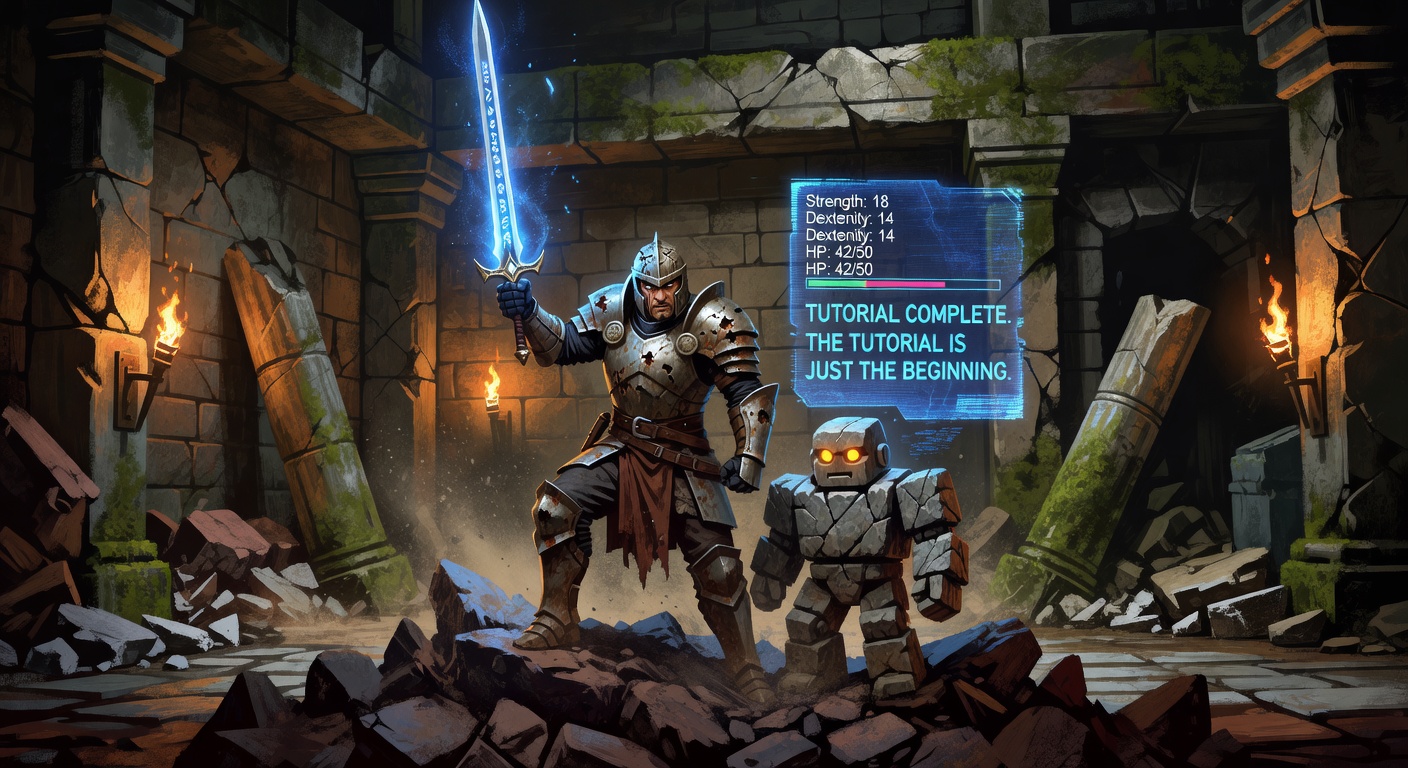
Dungeon Floor Zero
You wake on cold stone with no memory. A character creation screen floats before you. The System gives you 24 hours.
Pay attention to whether the story remembers what you did in the first few chapters by the time you reach the end. That is the test.
For more on how AI text adventures have evolved, explore the text adventure games hub. If you have been using AI Dungeon and running into the memory wall, the comparison page breaks down the specific differences.
Get notified about new stories
Related Articles
AI Story Generator With Images: What to Look For in 2026
What separates a real AI story generator with images from a text tool with a separate image tab. Inline illustrations, character consistency, and genre-matched art styles explained.
Interactive Fiction Books: From Print to AI-Powered Stories
How interactive fiction books evolved from page-flipping gamebooks to AI-generated stories with branching narratives, illustrations, and real choices.
AI Choose Your Own Adventure: Beyond the Books
How AI choose your own adventure stories go beyond the page-flipping format with real branching, generated illustrations, and stories that remember your choices.