Interactive Fiction Books: From Print to AI-Powered Stories
Interactive fiction books have been around longer than most people realize. The format, stories where the reader makes choices that change the outcome, predates computers entirely. Before text adventure games, before hypertext fiction, before AI-generated stories, there were physical books that asked you to turn to a different page based on what you wanted to do.
The tradition is older, richer, and more varied than most people know. And the line from those early gamebooks to modern AI interactive fiction is straighter than it looks.
The Print Tradition
Choose Your Own Adventure (1979-1998)
The series that defined the genre for a generation. Edward Packard wrote the first one (The Cave of Time) and R.A. Montgomery published it through Bantam Books. Over 250 million copies were sold across 184 titles. If you are over thirty, you probably owned at least one.
The format was simple. Read a page or two of story, then choose: “If you enter the cave, turn to page 47. If you follow the river, turn to page 23.” Each path led to a different set of choices and a different ending. Most books had between fifteen and forty endings, ranging from triumphant victories to sudden deaths.
The books were brilliant at what they did. The choice moments created genuine tension, even though the stakes were fictional. The short passages kept the pace fast. And the multiple endings gave every book replay value that a linear novel could not match.
Fighting Fantasy (1982-Present)
Ian Livingstone and Steve Jackson created Fighting Fantasy as a hybrid of Choose Your Own Adventure and tabletop RPGs. You rolled dice to resolve combat, tracked your stats (Skill, Stamina, Luck), and managed an inventory. The Warlock of Firetop Mountain sold over two million copies in its first year.
Fighting Fantasy proved that interactive fiction books could handle mechanics, not just choices. The dice rolls added genuine uncertainty. The stat tracking created consequences that carried across the entire book. And the difficulty was real: you could die, often unfairly, which made survival feel earned.
The series is still active. New Fighting Fantasy books are published regularly, and digital adaptations have brought the classics to mobile.
Lone Wolf (1984-1998)
Joe Dever’s Lone Wolf series took the gamebook format further than anyone else. Twenty-eight books told a single continuous story where your character carried stats, equipment, and abilities from one book to the next. Finishing The Flight from the Dark with a Sommerswerd meant you started Fire on the Water with a Sommerswerd. Progress was persistent.
This was remarkable for print. Most gamebook series treated each book as standalone. Dever designed a thirty-two book epic where your choices in book one could affect your options in book twenty. The entire series is now available free online through Project Aon, and it remains one of the best examples of long-form interactive fiction in any medium.
Visual Novels (1990s-Present)
Japan developed its own interactive fiction tradition: the visual novel. Titles like Steins;Gate, Clannad, and Fate/stay Night combine text-heavy storytelling with character art, background illustrations, and branching narrative paths. The format is closer to a novel than a game. Most of your time is spent reading, and the choices (which can be infrequent) determine which story arc you experience.
Visual novels proved that interactive fiction could sustain complex, emotionally resonant narratives over forty or fifty hours of reading. The romance and mystery genres are especially strong in this format.
The Digital Bridge
The transition from print to digital interactive fiction happened in stages.
Hypertext fiction (1987-2000s) used clickable links to create branching narratives in web browsers. Michael Joyce’s Afternoon, a story is usually cited as the first. Twine, released in 2009, made the format accessible to anyone who could write. Thousands of Twine stories have been published, ranging from experimental poetry to full-length RPGs.
Choice-based platforms (2009-present) turned interactive fiction into a commercial product. Choice of Games publishes text-heavy RPGs with stat tracking and romance options. Inkle Studios shipped 80 Days, which won a TIME Magazine game-of-the-year nod. These platforms showed that the audience for interactive fiction books extended well beyond the nostalgia crowd.
Parser fiction (1977-present) is the computer text adventure tradition, running parallel to gamebooks and including landmarks like Zork, the Inform authoring language, and the Interactive Fiction Competition. This lineage is covered in detail in the text adventure games hub.
All of these digital formats expanded what interactive fiction could do. They added clickable links, stat tracking, professional production values, full hypertext branching, real commercial reach. What they did not change was the underlying constraint that defined the print tradition: every path still had to be written by hand. A Twine author still had to author every node. A Choice of Games title still required every meaningful choice to fan out into hand-written prose. The ceiling was the same one Choose Your Own Adventure hit in 1979, just hit at a different scale.
Where AI Enters the Story
The constraint that defined every format above was the same: every possible path had to be written in advance. An author could write thirty endings for a CYOA book. A visual novel team could write five major routes. A Twine author could build a hundred nodes. But the branching tree always had a ceiling. More paths meant more writing, and there were only so many hours in the day.
AI removes that ceiling. When the story is generated in real time, every branch is new. The AI does not look up a pre-written chapter; it writes one based on your accumulated choices, the world state, and the genre conventions the story is following. A romance story generates romance prose. A mystery story plants fair-play clues. A horror story builds dread. The branching tree is as wide as the reader’s choices demand.
This does not make AI interactive fiction “better” than printed gamebooks. The craftsmanship of a hand-authored Fighting Fantasy book, where every encounter is carefully balanced and every path is playtested, is a different kind of excellence than an AI-generated story that adapts in real time. They are different experiences serving the same fundamental desire: stories where the reader’s choices matter.
What AI does is remove the tradeoff between depth and breadth. A printed gamebook can be deep (Lone Wolf’s twenty-eight book arc) or broad (CYOA’s forty endings per book), but doing both requires an impossible amount of writing. AI can sustain both: a long narrative arc with genuine branching at every chapter, because the cost of generating a new branch is effectively zero.
What Modern AI Interactive Fiction Looks Like
If you grew up reading CYOA or Fighting Fantasy, the jump to AI interactive fiction is smaller than you might expect. You still read a passage. You still make a choice. The story still changes based on what you chose. The fundamental loop is identical.
What is different:
Illustrations are generated per scene. Instead of a single printed illustration per chapter, the AI creates images that match your specific story. The castle you approach looks like the castle your story described, not a generic fantasy castle.
The story remembers everything. Unlike a CYOA book where each passage is self-contained, AI interactive fiction tracks your choices across the entire story. Alliances, betrayals, injuries, promises: they all carry forward.
Pacing adapts to the genre. A mystery slows down for investigation. A thriller compresses time. A romance lets the tension build. You can adjust the pacing yourself, which is something no printed gamebook could offer.
Nine genres are supported. The printed gamebook tradition leaned heavily on fantasy and adventure. AI interactive fiction covers romance, horror, sci-fi, thriller, mystery, historical, supernatural, and LitRPG alongside the classic fantasy and adventure genres.
Try one for yourself:
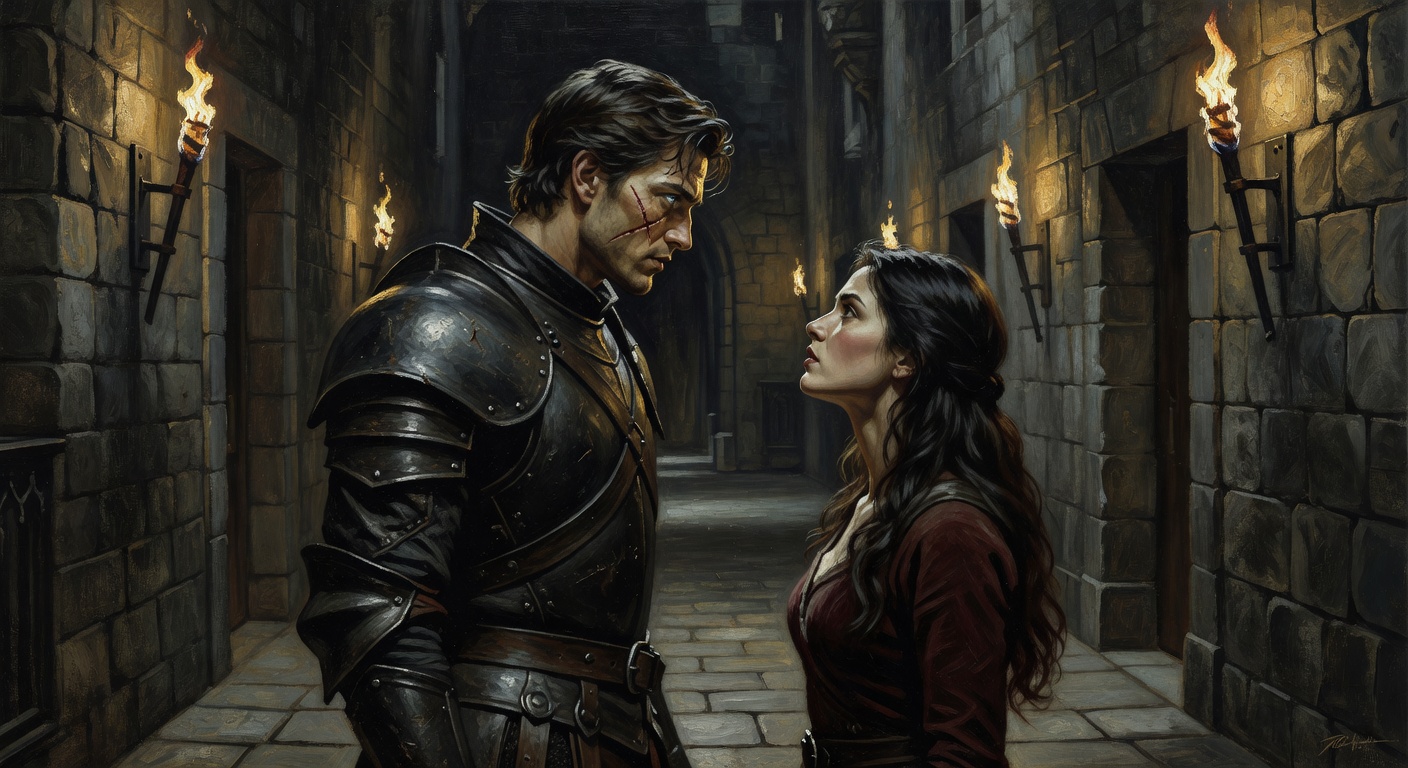
The Thornwood Accord
Two rival houses. One impossible alliance. A scarred commander who doesn't trust you. Enemies-to-lovers romantasy with choices that change everything.
The Thread That Connects It All
From The Cave of Time in 1979 to AI-generated interactive fiction in 2026, the thread is the same: stories where reading is an active experience. You are not watching the protagonist make decisions. You are making them. The consequences are yours. The story is shaped by your participation in it.
The technology changed. The scale changed. But the thing that makes interactive fiction books worth reading, the moment you reach a choice and feel the weight of the decision, has not changed at all.
Browse the full collection at the interactive fiction games hub, or explore the text adventure games tradition if you are coming from the parser-fiction side.
Get notified about new stories
Related Articles
AI Story Generator With Images: What to Look For in 2026
What separates a real AI story generator with images from a text tool with a separate image tab. Inline illustrations, character consistency, and genre-matched art styles explained.
AI Choose Your Own Adventure: Beyond the Books
How AI choose your own adventure stories go beyond the page-flipping format with real branching, generated illustrations, and stories that remember your choices.
AI RPG That Remembers Your Choices (Finally)
Why most AI story games forget what you did three chapters ago, and how story memory changes the experience from a chat log into a real RPG.