Building an AI Interactive Fiction Platform
I tried using ChatGPT to write a short story last year, and while the prose was fine, the reading experience was painful: no chapters, no images, no sense of progression, just a wall of text that rushed from “once upon a time” to “the end” like it had somewhere else to be. That question, what if AI stories had structure, turned into NovelFlame. Here is what I learned building it.
The Speed Problem Hit Me First
You know when you’re reading a thriller and it’s all action-action-action with no breather scenes? That’s every AI story. The model wants to solve your plot as fast as possible.
I tried fixing this with prompts. “Write slowly.” “Add more description.” “Take your time.”
None of it worked.
What worked was building a pacing system. NovelFlame knows where you are in the story arc. If you are at the beginning, it gives you worldbuilding and character moments. If the climax is approaching, it shifts to shorter sentences and faster rhythm. The AI doesn’t just write text anymore. It writes with timing.
The best part: readers can adjust this. Some people want their romance novels to simmer for 50 pages. Others want to get to the good stuff. One slider, completely different reading experience.
Raw AI Prose Has a Smell
I’ll be the first to admit I’m not a professional editor. But even I could spot the patterns after reading enough AI stories.
Every sentence lands between 12 and 18 words. The word “delve” shows up three times per page. Characters don’t walk, they “traverse.” They don’t think, they “ponder.”
I built a proprietary quality pipeline. The AI writes the story, then our process refines it. The result: horror gets choppy, uncomfortable prose. Romance gets rhythm variation. Fantasy gets richer vocabulary without the purple prose.
We tested this on 100 stories across 9 genres. Our quality process caught 96% of those telltale AI patterns. More importantly, readers stopped saying “this feels like AI wrote it.”
Real Choices Were Harder Than I Expected
Most interactive fiction gives you fake choices. Door A or Door B both lead to the same room, just described differently.
Real branching means the AI needs to remember what path you’re on. It needs to track consequences. That choice you made in chapter 2 needs to matter in chapter 8.
I built a context system that actually works. The story compresses earlier events, injects them when needed, and maintains separate timelines for each branch. It’s not perfect. Sometimes a character forgets they’re supposed to be angry. But it’s good enough that readers feel their choices matter.
See for yourself:
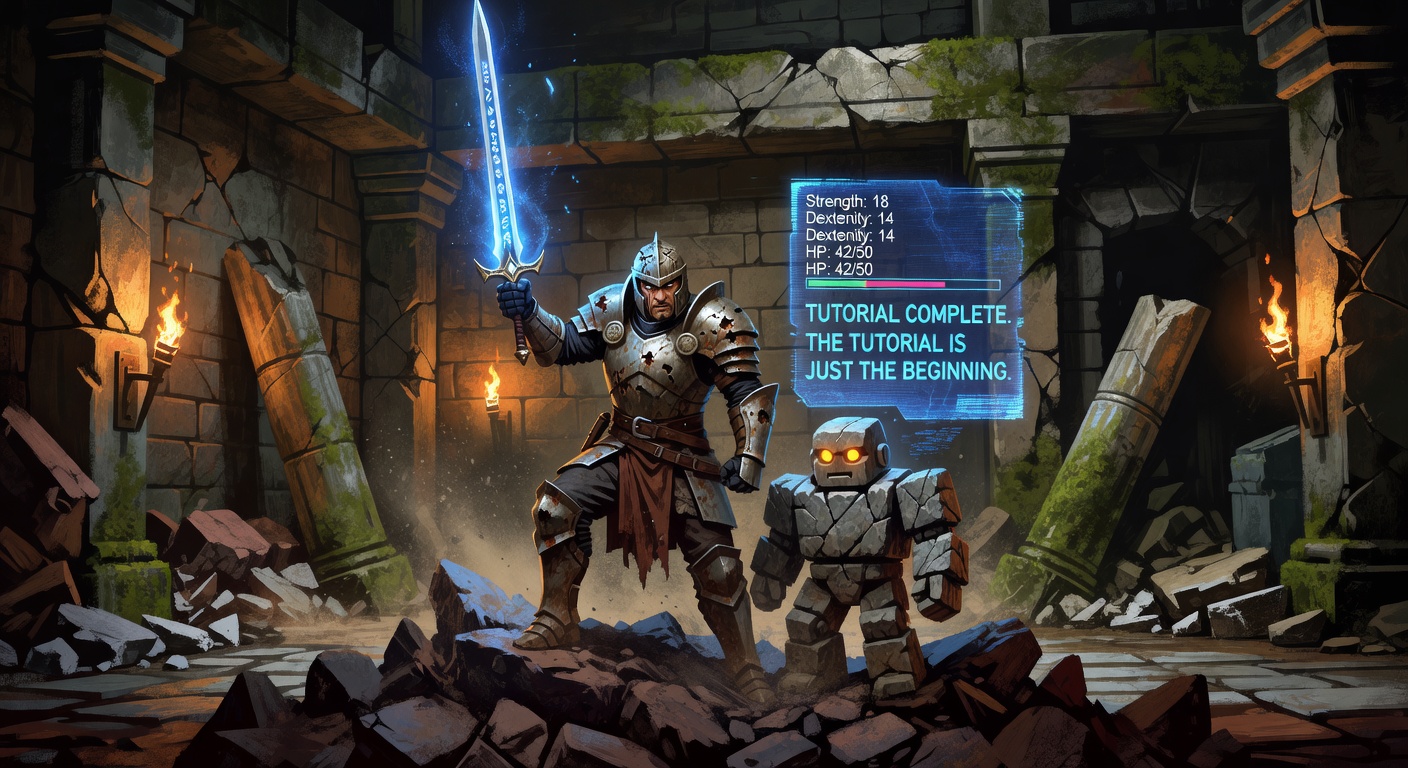
Dungeon Floor Zero
You wake on cold stone with no memory. A character creation screen floats before you. The System gives you 24 hours.
I Got So Many Things Wrong
Image drift. I thought I was clever using AI to generate an image for each scene. I was not. The pictures kept drifting from what the text described, and I had to rebuild the whole image system around the scene itself.
Settings overload. My first version had 15 different knobs readers could turn: prose style, chapter length, detail level, dialogue percentage. Nobody used them. People want to click “Start Reading” and read, and everything else gets in the way.
Mobile reading. I built everything desktop-first because that is where I write code. It turns out 70% of fiction reading happens on phones, so I had to redesign everything for thumb-scrolling.
Genre Isn’t Just a Category
This was the breakthrough that made NovelFlame different. Genre isn’t a tag you slap on a story. It’s how the story gets written.
Horror doesn’t just have scary things happen. It uses specific prose techniques: short sentences when tension peaks and sensory details that feel slightly wrong. Mystery doesn’t just have clues. It tracks them, ensures fair play, and maintains timelines across the entire investigation.
We support nine genres now: romance, fantasy, horror, sci-fi, thriller, mystery, historical fiction, supernatural, and LitRPG. Each one has its own approach to prose, pacing, and structure. Each one reads like it should.
If you want to see how genre shapes the reading experience, browse by category at the interactive fiction games hub or explore the text adventure games hub for the old-school side of the genre.
The Image Problem Was Worse Than the Text Problem
Generating story text is hard. Generating images that match the story is harder.
My first attempt was straightforward: describe the scene to an image model, paste the result into the story. The images were fine on their own. But they drifted from the text. The scene said a rain-soaked alley and the picture showed a sunny street. The story called for a letter and the model drew a book. It broke the immersion worse than having no images at all.
I rebuilt the image system three times. The version that works builds each illustration from what the scene actually says. The dragon that appears in chapter four matches the description the text gives it. The castle on the hill looks like the castle you were told about, not a random castle from a stock library.
The images are generated inline, inside the reading flow, at the moments the story calls for them: a first glimpse of a love interest, a creature emerging from fog, a letter that changes everything. They appear where a book illustrator would put them, not in a separate tab you have to click to.
Mobile First, Not Mobile Eventually
I built the first version of NovelFlame for desktop because that’s where I write code. Then I looked at the data. Over 70% of fiction reading happens on phones. People read in bed, on commutes, during lunch breaks. A desktop-first reading experience was missing most of the audience.
The redesign was more than making things smaller. The reading interface needed to feel like a book app, not a web page. Thumb-friendly choices at the bottom of the screen. Images that load inside the text flow without jarring layout shifts. A reading mode that locks the screen to the story and gets everything else out of the way.
You can add NovelFlame to your home screen and it works like a native app. Offline reading, full-screen mode, pick up where you left off. That took months to get right, but it’s the difference between a tool and a product people actually want to use.
What I’d Tell Someone Starting Today
Six months ago, I was just frustrated with AI stories. Now NovelFlame has readers going through full novels, making choices that matter, and, on Plus, seeing their stories end with a cinematic video built from their specific run.
The biggest lesson: solve the problem you actually have, not the one that sounds impressive. I didn’t set out to build an AI platform. I set out to make AI stories worth reading. Every decision flowed from that.
The second lesson: ship early and listen. The features readers actually wanted (pacing control, mobile reading, genre-specific prose) were not the features I thought they’d want (settings overload, desktop dashboard, word-count controls). The only way to learn that was to put it in front of people.
If you want to see what AI fiction can actually feel like, try a story. No signup needed. Pick a genre and start reading. That’s it.
Like what you find? NovelFlame Plus ($8.99 a month) lets you create your own stories, with illustrations on every scene.
Get notified about new stories
Related Articles
AI Story Generator With Images: What to Look For in 2026
What separates a real AI story generator with images from a text tool with a separate image tab. Inline illustrations, character consistency, and genre-matched art styles explained.
Interactive Fiction Books: From Print to AI-Powered Stories
How interactive fiction books evolved from page-flipping gamebooks to AI-generated stories with branching narratives, illustrations, and real choices.
AI Choose Your Own Adventure: Beyond the Books
How AI choose your own adventure stories go beyond the page-flipping format with real branching, generated illustrations, and stories that remember your choices.