From Zork to AI: How Text Adventures Evolved
The first text adventure game was written in 1976 on a PDP-10 mainframe. Nearly fifty years later, the genre is still here, but it looks nothing like it did. This post is the evolution narrative: how the genre got from Colossal Cave to AI-generated interactive fiction and what changed at every stop along the way. If you are looking for what to play today rather than how the genre got here, the best text adventure games recommendation list is the companion piece. Most of the evolution covered below happened quietly, outside the mainstream spotlight.
The Parser Era (1976-1995)
Will Crowther wrote Colossal Cave Adventure to simulate exploring Mammoth Cave in Kentucky. He was a caver and a programmer, and the game reflected both interests: you typed natural language commands (“go north,” “take lamp,” “kill snake”) and the program responded with descriptions of what happened. Don Woods expanded the game a year later, adding fantasy elements, and it spread across ARPANET.
Zork arrived in 1977, built by MIT students who wanted to push the format further. The parser was smarter, the world was bigger, and the writing was sharper. When Infocom formed to sell Zork commercially, they discovered something important: the text-only format was actually an advantage. While graphics games were limited by hardware (early PCs could barely draw a square), text adventures could describe anything, whether it was a cathedral, a spaceship, or an underwater city. The player’s imagination did the rendering.
Infocom’s golden age ran from roughly 1980 to 1986. They published thirty-five games across every genre: mystery (Deadline), science fiction (Planetfall), horror (The Lurking Horror), comedy (Leather Goddesses of Phobos). The writing was consistently excellent because they hired actual writers, not just programmers. Douglas Adams collaborated on Hitchhiker’s Guide. The company even shipped physical “feelies” (maps, letters, scratch-and-sniff cards) to extend the experience beyond the screen.
The parser era ended slowly. Graphical adventure games from Sierra and LucasArts offered something text could not: you could see the world. King’s Quest, Monkey Island, and Myst pulled the adventure game audience toward point-and-click interfaces. Infocom was acquired by Activision and eventually shut down. By the mid-1990s, text adventures were commercially dead.
The Indie Renaissance (1995-2019)
But they were not actually dead. A community of hobbyists kept the genre alive using free tools like Inform, TADS, and Twine. The Interactive Fiction Competition (IFComp), started in 1995, became the genre’s annual showcase. Without commercial pressure, the community could experiment freely.
The experiments were productive. Emily Short pushed the boundaries of parser fiction with games about language, identity, and social dynamics (Galatea, Counterfeit Monkey). Andrew Plotkin (known as Zarf) created atmospheric puzzle games that felt like playable poetry. Porpentine used Twine to tell deeply personal stories in a format closer to hypertext literature than traditional games.
Choice-based fiction emerged as a parallel track. Instead of typing commands, players clicked links to choose what happened next. Twine made this format accessible to anyone who could write HTML. Choice of Games built a commercial model around it, publishing text-based RPGs with stat tracking and branching storylines. Inkle Studios shipped 80 Days and Heaven’s Vault, proving that interactive fiction could reach mainstream audiences and review scores.
By the 2010s, the genre had split into two distinct traditions: parser fiction (type commands, solve puzzles) and choice-based fiction (click options, follow branches). Both were healthy, but both had a ceiling. Parser games were niche because the interface was intimidating. Choice games were accessible but limited by the fact that every branch had to be hand-written. An author could only write so many paths.
The AI Shift (2019-Present)
AI Dungeon changed the conversation in 2019. Built by Nick Walton as a student project using OpenAI’s GPT-2, it let players type anything and get a coherent (or semi-coherent) response. The early versions were rough. Characters changed names mid-scene. The plot would wander. The AI would forget what happened three paragraphs ago. But the potential was obvious: if the AI could generate the story in real time, you were no longer limited by the number of paths an author could write.
The technology improved fast. Better language models meant better prose, more consistency, and fewer moments where the AI produced something nonsensical. By 2023, AI text adventure games were a real category, not just a novelty. NovelAI, Character.AI, and a wave of smaller tools entered the space, each with a different take on what AI-powered interactive fiction should look like.
The approaches diverged. Some tools gave players maximum freedom with an open text box, no guardrails, and a “see what happens” approach. Others added structure through scenarios, character sheets, and world rules. The tradeoff was always the same: more freedom meant less coherence, and more structure meant less surprise.
What Changed and What Stayed the Same
The interesting thing about the evolution from Zork to AI is how much of the original appeal survived the technological leap. The core experience is still the same: you read a description, you decide what to do, and the world responds. The pleasure of discovery, the tension of a choice with consequences, and the satisfaction of a story that remembers what you did have not changed in fifty years.
What changed is scale. Infocom’s writers could create a world with maybe a hundred rooms and a few thousand possible interactions. Modern AI can generate an effectively unlimited world with coherent characters, consistent lore, and responsive plotting. The ceiling that hand-authored interactive fiction always hit (you run out of written branches) does not apply when the AI generates each branch on demand.
What also changed is presentation. Text adventures were always text-only by necessity, not by choice. The format existed because early computers could not do graphics well enough to be worth the tradeoff. Modern AI interactive fiction platforms can generate inline illustrations, video scenes, and audio alongside the text because the rendering constraint is gone. The story is still driven by words and choices, but the experience is richer.
Where the Genre Is Now
The text adventure genre in 2026 sits in an unusual place. The classic parser tradition is alive and well in the indie community. IFComp still runs every year. New Inform games are still published. Twine is still the most accessible tool for branching narratives.
The commercial space is dominated by AI-powered platforms that would have been science fiction to the Infocom team. NovelFlame generates structured stories with narrative arcs, inline illustrations, and pacing control across nine genres. AI Dungeon offers freeform generation with maximum player freedom. NovelAI provides a writing-tool approach for authors who want AI assistance.
The audience has grown too. Interactive fiction is no longer just for the puzzle-solving parser enthusiasts who kept the genre alive through the lean years. Mobile-first platforms put AI-generated stories in front of readers who have never heard of Zork but know they enjoy choosing what happens next.
The thread connecting all of it, from Colossal Cave in 1976 to a NovelFlame horror story in 2026, is the same: a world made of words, and the reader’s choices shaping what happens in it. The technology changed. The tools changed. The audience grew. The appeal did not.
Try a text adventure that uses all fifty years of evolution:
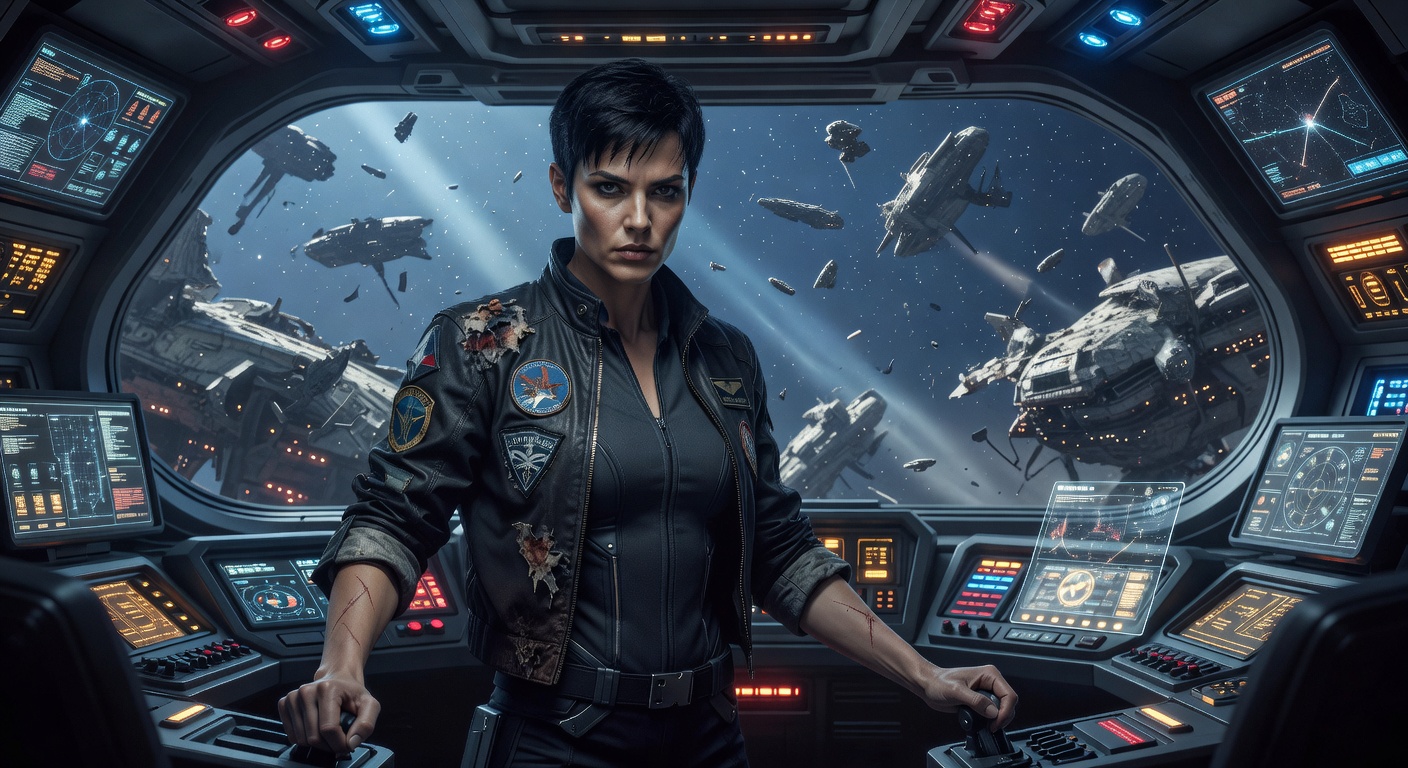
Salvage-7
Captain a deep-space salvage vessel into an alien graveyard in this AI interactive sci-fi story. Every choice changes what your crew finds waiting in the dark.
Explore more at the text adventure games hub, or browse interactive fiction games for the branching-narrative side of the genre.
Get notified about new stories
Related Articles
AI Story Generator With Images: What to Look For in 2026
What separates a real AI story generator with images from a text tool with a separate image tab. Inline illustrations, character consistency, and genre-matched art styles explained.
Interactive Fiction Books: From Print to AI-Powered Stories
How interactive fiction books evolved from page-flipping gamebooks to AI-generated stories with branching narratives, illustrations, and real choices.
AI Choose Your Own Adventure: Beyond the Books
How AI choose your own adventure stories go beyond the page-flipping format with real branching, generated illustrations, and stories that remember your choices.